Back to Home
Single-Frequency Lasers

SLM, narrow linewidth, coherence

Single-Frequency Lasers

Single-longitudinal-mode sources with narrow linewidth and long coherence length for interferometry, holography and metrology.

233 models57 seriesquote after qualification
Explore single-frequency laser applications ↓
Browse 52 product families

Choose a series to compare its wavelength models and open their specifications.

All laser product families →

233 models · 57 series

349nm CW Pulse UV Laser

1 model
ModelWavelengthOutput / average powerSpectral linewidthPower stabilityOptical noise
UV-FN-349-SLM349 nm50~100 mW<1 MHz<0.5%<0.25%

425 NM Blue Violet Laser, Diode Laser, Blue Laser |

8 models
ModelWavelengthOutput / average powerTransverse modeBeam divergence, full angle (mrad)Cooled methodOperating temperature (°C)Power supply (100-240VAC)Expected lifetime (hours)Power stability (rms, 4 hours ± 3°C)Noise of amplitude (rms, 20Hz-20MHz)M2Warm-up time (minutes)Polarization ratio
MDL-E-424425 nm1~30 mWNear TEM00<2.5×0.2Air cooled10-35PSU-H-FDA/PSU-H-LED>10000–––––Datasheet
MLL-III-425L425 nm1~100 mWNear TEM00<1.0Conduction10-35PSU-III-FDA/PSU-III-LED/PSU-A-D/PSU-III-OEM>10000<2%, <1%, <0.5%<1%, <0.5%<1.5 / <1.2<5–Datasheet
MLL-III-425425 nm1~500 mW–<2.5×0.2Conduction10-35PSU-III-FDA/PSU-III-LED/PSU-A-D/PSU-III-OEM>10000<2%, <1%, <0.5%<1%, <0.5%–<5–Datasheet
MLL-H-425425 nm500~1300 mWMultimode<2.5×0.2Air cooled10-35PSU-H-FDA/PSU-H-LED>10000<2%, <1%, <0.5%<1%, <0.5%–<5–Datasheet
MBL-U-425-SF425 nm1~10 mWTEM00–Air Cooled/ Water Cooled–PSU-SF>10000––~3.0<10>100:1Datasheet
MDL-III-425L425 nm1~100 mW–<1.0Conduction10-35PSU-III-FDA/PSU-III-LED/PSU-A-D/PSU-III-OEM>10000<2%, <1%, <0.5%–<1.5 / <1.2<5–Datasheet
MDL-III-425425 nm1~500 mWMultimode<2.5×0.2Conduction10-35PSU-III-FDA/PSU-III-LED/PSU-A-D/PSU-III-OEM>10000<2%, <1%, <0.5%––<5–Datasheet
MDL-H-425425 nm500~1300 mWMultimode<2.5×0.2Air cooled10-35PSU-H-FDA/PSU-H-LED>10000–––––Datasheet

444 NM Blue Violet Diode Laser.

11 models
ModelWavelengthOutput / average powerPower stability (rms, 4 hours ± 3°C)Transverse modeBeam divergence, full angle (mrad)Warm-up time (minutes)Cooled methodOperating temperature (°C)Power supply (100-240VAC)Expected lifetime (hours)Noise of amplitude (rms, 20Hz-20MHz)Operating temperature (℃)Polarization direction
MDL-E-444444 nm1~50 mW<2%, <1%, <0.5%Multimode1.4×0.2<5Air cooled10-35PSU-H-FDA/PSU-H-LED>10000–––Datasheet
TUN-443~445444 nm1~400 mW–––––––––––
FC-D-444444 nm1~450 mW–––––––––––
MLL-H-444444 nm1~3000 mW<2%, <1%, <0.5%Multimode1.4×0.2<5Air cooled10-35PSU-H-FDA/PSU-H-LED>10000<1%, <0.5%––Datasheet
MLL-F-444444 nm3~4.5 W<2%, <1%, <0.5%Multimode1.4×0.2<5Air cooled–PSU-H-FDA/PSU-H-LED>10000<1%, <0.5%10-35–Datasheet
F-444-HS444 nm1~4000 mW–Multimode1.4×0.2 / 1.4×0.2<5–25±3PSU-III-FDA/PSU-III-LED/PSU-A-D>10000–––Datasheet
MDL-H-444444 nm1~3000 mW<2%, <1%, <0.5%Multimode1.4×0.2<5Air cooled10-35PSU-H-FDA/PSU-H-LED>10000–––Datasheet
MDL-F-444444 nm3~4.5 W–Multimode1.4×0.2<5Air cooled–PSU-H-FDA/PSU-H-LED>10000–10-35–Datasheet
MDL-MD-444444 nm1~8000 mW<2%, <1%, <0.5%Multimode~3.4×3.8 / ~3.3×3.8<5––PSU-H-FDA/PSU-H-LED/PSU-N-LED>10000–25±3Horizontal+ Vertical / Horizontal/ VerticalDatasheet
MDL-HD-444444 nm8~16 W–––––––––––Datasheet
MDL-XD-444444 nm16~20 W–––––––––––Datasheet

1073 NM Infrared Laser, Solid State Laser, DPSS Laser |

2 models
ModelWavelengthOutput / average powerPower stability (rms, 4 hours ± 3°C)Transverse modenoise,Beam divergence, full angle (mrad)Warm-up time (minutes)Operating temperature (℃)Power supply (100-240VAC)Parameters of customed power supplyExpected lifetime (hours)Beam diameter at the aperture (1/e2, mm)Beam divergence (mrad)Polarization ratioOperating temperature (°C)Modulation optional
TUN-1054~10741073 nm1~40 mW<3%, <2%, <1%Near TEM00narrow / linewidth, / wavelength / tunable<1.0<520-30PSU-TUNTEC: 7-12kΩ>10000–––––Datasheet
MIL-F-10731073 nm1~1500 mW–TEM00––<5–PSU-H-FDA/PSU-H-LED/PSU-SR–>10000~1.5<2.0>100:1, Horizontal (Vertical optional)10-35DC-1kHz, 1kHz-10kHz, 10kHz-30kHz optional; TTL and Analog optionalDatasheet

Infrared Laser, 937 NM Infrared Diode Lasers, High Power Diode Laser System.

3 models
ModelWavelengthOutput / average powerPower stability (rms, 4 hours ± 3°C)Transverse modeBeam divergence, full angle (mrad)Warm-up time (minutes)Operating temperature (℃)Power supply (100-240VAC)Parameters of customed power supplyExpected lifetime (hours)Noise of amplitude (rms, 20Hz-20MHz)M2Cooled methodOperating temperature (°C)
TUN-918~941937 nm1~40 mW<3%, <2%, <1%Near TEM00<1.0<520-30PSU-TUNTEC: 7-12kΩ>10000––––Datasheet
MLL-III-937L937 nm1~200 mW<2%, <1%, <0.5%Near TEM00<1.0<5–PSU-III-FDA/PSU-III-LED/PSU-A-D/PSU-III-OEM–>10000<1%, <0.5%<1.5Conduction10-35Datasheet
MLL-III-937-SM937 nm1-50 mW––––––––––––

631 NM RED Diode Laser.

2 models
ModelWavelengthOutput / average powerPower stability (rms, 4 hours ± 3°C)Transverse modeBeam divergence, full angle (mrad)Warm-up time (minutes)Operating temperature (℃)Power supply (100-240VAC)Parameters of customed power supplyExpected lifetime (hours)Spectral line width (nm)
TUN-628-637631 nm1~40 mW<3%, <2%, <1%Near TEM00<1.0<520-30PSU-TUNTEC: 7-12kΩ>10000–Datasheet
TUN-626-635626 nm1~40 mW<3%, <2%, <1%Near TEM00–<520-30PSU-TUNTEC: 7-12kΩ>10000<0.1Datasheet

637 NM RED Diode Laser |

1 model
ModelWavelengthOutput / average power
Narrow Linewidth637 nm1-50 mW

395 NM UV Diode Laser.

5 models
ModelWavelengthOutput / average powerSpectral linewidthPower stabilityPower stability (rms, 4 hours ± 3°C)Transverse modeNoise of amplitude (rms, 20Hz-20MHz)Beam divergence, full angle (mrad)Warm-up time (minutes)Cooled methodOperating temperature (°C)Power supply (100-240VAC)Expected lifetime (hours)M2Output power after fiberFiber connectorFiber jacketOperating temperature (℃)Operating voltage (VAC)
MLL-III-395395 nm1~100 mW––<2%, <1%, <0.5%Multimode<1%, <0.5%<0.5×2.0<5Conduction10-35PSU-III-FDA/PSU-III-LED/PSU-A-D/PSU-III-OEM>10000––––––Datasheet
MLL-III-395L395 nm1~100 mW––<2%, <1%, <0.5%–<1%, <0.5%<1.0<5Conduction10-35PSU-III-FDA/PSU-III-LED/PSU-A-D/PSU-III-OEM>10000<1.5 / <1.2–––––Datasheet
MDL-III-395395 nm1~100 mW––<2%, <1%, <0.5%Multimode–<2.0×0.5–Conduction10-35PSU-III-FDA/PSU-III-LED/PSU-A-D/PSU-III-OEM>10000––––––Datasheet
MDL-III-395L395 nm1~100 mW––<2%, <1%, <0.5%Near TEM00–<1.0<5Conduction10-35PSU-III-FDA/PSU-III-LED/PSU-A-D/PSU-III-OEM>10000<1.5 / <1.2–––––Datasheet
FC-395395 nm–1~80 mW nm<2%, <1%, <0.5%––––<5Air cooled––>10000–1-500SMA905, FC/PC optionalMetal, PVC optional10-35100-240Datasheet

415 NM Blue Violet Diode Laser.

2 models
ModelWavelengthOutput / average powerPower stability (rms, 4 hours ± 3°C)Transverse modeNoise of amplitude (rms, 20Hz-20MHz)M2Beam divergence, full angle (mrad)Warm-up time (minutes)Cooled methodOperating temperature (°C)Power supply (100-240VAC)Expected lifetime (hours)
MLL-III-415L415 nm1~100 mW<2%, <1%, <0.5%Near TEM00<1%, <0.5%<1.5 / <1.2<1.0<5Conduction10-35PSU-III-FDA/PSU-III-LED/PSU-A-D/PSU-III-OEM>10000Datasheet
MLL-III-415415 nm1~300 mW<2%, <1%, <0.5%–<1%, <0.5%–<0.5×2.0<5Conduction10-35PSU-III-FDA/PSU-III-LED/PSU-A-D/PSU-III-OEM>10000Datasheet

457 NM Blue Laser.

1 model
ModelWavelengthOutput / average power
Single Longitudinal Mode Single Frequency457 nm1-350 mW

Infrared Laser, 845 NM Infrared Diode Lasers.

2 models
ModelWavelengthOutput / average powerSpectral linewidthPower stabilityM²Power stability (rms, 4 hours ± 3°C)Transverse modeBeam divergence, full angle (mrad)Warm-up time (minutes)Operating temperature (℃)Power supply (100-240VAC)Parameters of customed power supplyExpected lifetime (hours)Cooled methodOperating temperature (°C)
TUN-841~856845 nm1~40 mW–––<3%, <2%, <1%Near TEM00<1.0<520-30PSU-TUNTEC: 7-12kΩ>10000––Datasheet
MDL-III-845L845 nm–High Stability Infrared Laser nm<2%, <1%, <0.5%<1.5––<1.0<5–PSU-III-FDA/PSU-III-LED/PSU-A-D/PSU-III-OEM–>10000Conduction10-35Datasheet

Infrared Laser, 905 NM Infrared Diode Pulse Lasers, High Power Diode Laser System.

1 model
ModelWavelengthOutput / average powerPower stability (rms, 4 hours ± 3°C)Transverse modeBeam divergence, full angle (mrad)Warm-up time (minutes)Operating temperature (℃)Power supply (100-240VAC)Parameters of customed power supplyExpected lifetime (hours)
TUN-902~923905 nm1~40 mW<3%, <2%, <1%Near TEM00<1.0<520-30PSU-TUNTEC: 7-12kΩ>10000Datasheet

Infrared Laser, 915 NM Infrared Diode Lasers, High Power Diode Laser System.

1 model
ModelWavelengthOutput / average powerPower stability (rms, 4 hours ± 3°C)Transverse modeNoise of amplitude (rms, 20Hz-20MHz)M2Beam divergence, full angle (mrad)Warm-up time (minutes)Operating temperature (°C)Power supply (100-240VAC)Expected lifetime (hours)
TEM-LN-915915 nm1~400 mW<2%, <1%, <0.5%TEM00<1%, <0.5%<1.1<1.5<525±3PSU-III-FDA/PSU-III-LED/PSU-A-D>10000Datasheet
Browse all models by name

Open a model for its complete specifications and technical files. The comparison search above covers the full catalog.

Applications

Applications of single-frequency lasers

Single-frequency lasers operate on one longitudinal mode, producing a narrow optical spectrum and long temporal coherence. They are useful when a measurement depends on interference, resolving small frequency shifts or addressing a specific optical transition. The required wavelength, linewidth, noise and control options depend on the application.

Precision interferometry and metrology

Measure displacement, surface shape, optical path length and vibration by comparing the phase of two beams. Long coherence length supports interference when the measurement and reference paths differ, while low frequency noise helps resolve small changes in the measured path.

Selection priorities: Match coherence length to the path difference, then specify frequency drift, phase noise and beam pointing stability.

Holography and interference lithography

Record holograms, manufacture holographic optical elements or expose periodic patterns using overlapping coherent beams. Single-frequency operation helps preserve fringe contrast across unequal optical paths; stable power and a mechanically stable setup support consistent exposure.

Selection priorities: Check recording-material sensitivity, coherence length, polarization and stability over the full exposure time.

Raman and Brillouin spectroscopy

Probe molecular vibrations with Raman scattering or acoustic modes with Brillouin scattering. A spectrally narrow excitation line is especially valuable when measuring small frequency shifts close to the laser line, including low-frequency Raman and Brillouin measurements.

Selection priorities: Qualify linewidth, spectral purity, wavelength drift and rejection filters together with sample fluorescence and heating.

High-resolution atomic and molecular spectroscopy

Resolve narrow absorption or excitation features for laboratory spectroscopy, gas analysis and frequency-reference measurements. A narrow laser spectrum reduces source-related broadening; suitable tuning and frequency locking allow the source to scan across or remain on a selected transition.

Selection priorities: Confirm the exact transition wavelength, tuning range, mode-hop-free scan range and frequency-locking interfaces.

Quantum optics and atomic physics

Address atomic transitions for laser cooling, state preparation and readout, or provide coherent light for atom interferometry and optical lattices. These experiments need a source matched to the chosen atom or ion and to the frequency, intensity and polarization control required by the experiment.

Selection priorities: Specify detuning, linewidth, phase and intensity noise, polarization, delivered power and compatibility with the lock scheme.

Coherent LiDAR and Doppler measurements

Mix returned light with a reference beam to measure motion or range. Narrow linewidth and low phase noise support coherent detection in Doppler wind sensing, laser vibrometry and coherent ranging. Frequency-modulated continuous-wave (FMCW) ranging also requires a controlled frequency sweep.

Selection priorities: Set coherence time for the return delay and qualify phase noise, tuning bandwidth and, for FMCW, sweep linearity.

Fiber-optic acoustic and strain sensing

Interrogate fiber interferometers and coherent distributed sensing systems to detect vibration, acoustic signals or strain. Low laser phase noise helps distinguish changes in the fiber from fluctuations introduced by the source, supporting applications such as structural monitoring and seismic research.

Selection priorities: Match linewidth and frequency noise to the sensing distance, delay and bandwidth; confirm fiber delivery and polarization requirements.

Nonlinear optics and laser seeding

Use a single-frequency source as the input to a compatible optical amplifier or as a pump for frequency conversion. A narrow seed establishes the starting spectrum for amplification, while coherent pumping supports processes such as second-harmonic generation in a suitable nonlinear optical system.

Selection priorities: Match seed power, wavelength, polarization and isolation to the amplifier or conversion stage, then verify the output spectrum.
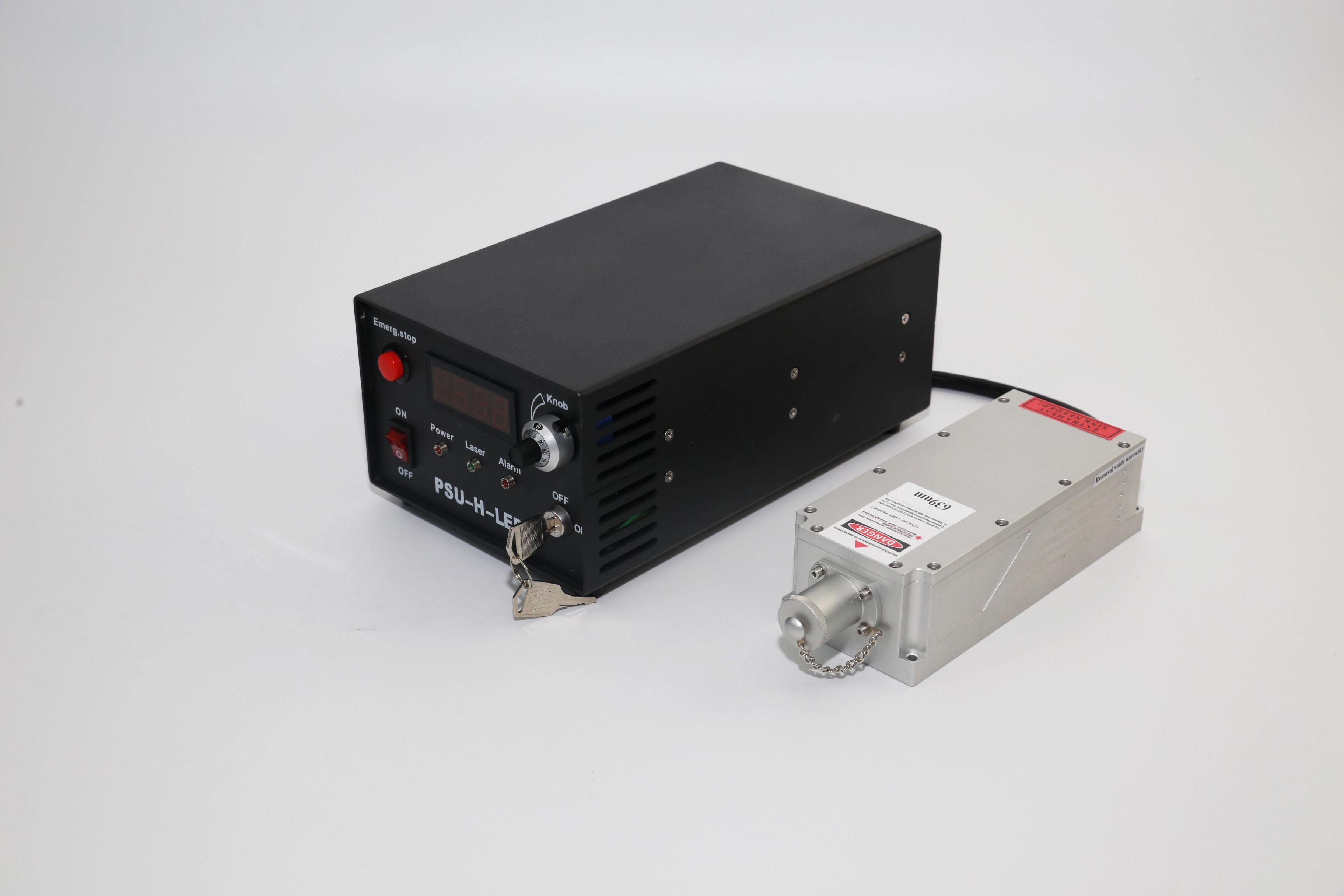
Match the source to the experiment

Single spatial mode and single longitudinal mode describe different properties: a TEM00 beam or single-mode fiber output alone does not establish single-frequency operation. Narrow linewidth also does not guarantee low frequency drift or low intensity noise. Confirm these specifications, tuning and locking options for the selected model and configuration.

Not sure which model fits?

Send the physics — wavelength, mode, power or energy, linewidth or pulse width, delivery, control and safety — and we qualify the source.