Fibre-Optic Spectrometers
Compact USBSpectrometers
Plug-and-play crossed Czerny-Turner spectrometers with an SMA905 fibre input: measure the wavelength and linewidth of lasers, LEDs and lamps, or record Raman, fluorescence, LIBS and absorption spectra. Wavelength range and resolution are configured to order, up to six synchronised channels stack for broadband LIBS, and every system ships with acquisition software.
0.1 nm
Best resolution
Aurora 4000, narrow range, 10 µm aperture
185–2500 nm
Wavelength coverage
UV-Pro to NIR InGaAs
80 %
Peak quantum efficiency
Sunshine back-thinned detector
170 g
Smallest
Firefly 4000 fits in a hand
Measuring a laser line, an LED or a lamp?
Aurora 4000 for resolution down to 0.1 nm; Firefly 4000 when the spectrometer has to travel or fit inside something else.
Weak Raman, fluorescence or LIBS signals?
Sunshine for its 80 % quantum efficiency and Raman-specific ranges; Metal when you need TE cooling and 60 s integrations.
Beyond 1100 nm, or wide range and high resolution at once?
Wood, with a two-stage cooled InGaAs array in 900–1700 nm or 1000–2500 nm versions; the Rainbow multi-channel when LIBS or plasma work needs 185–930 nm at 0.1 nm in one synchronised shot.
Spectrometers
Six Spectrometers, One Optical Bench
All share the f/4 crossed Czerny-Turner layout and the SMA905 input; they differ in the detector behind it — and the Rainbow stacks several of them.
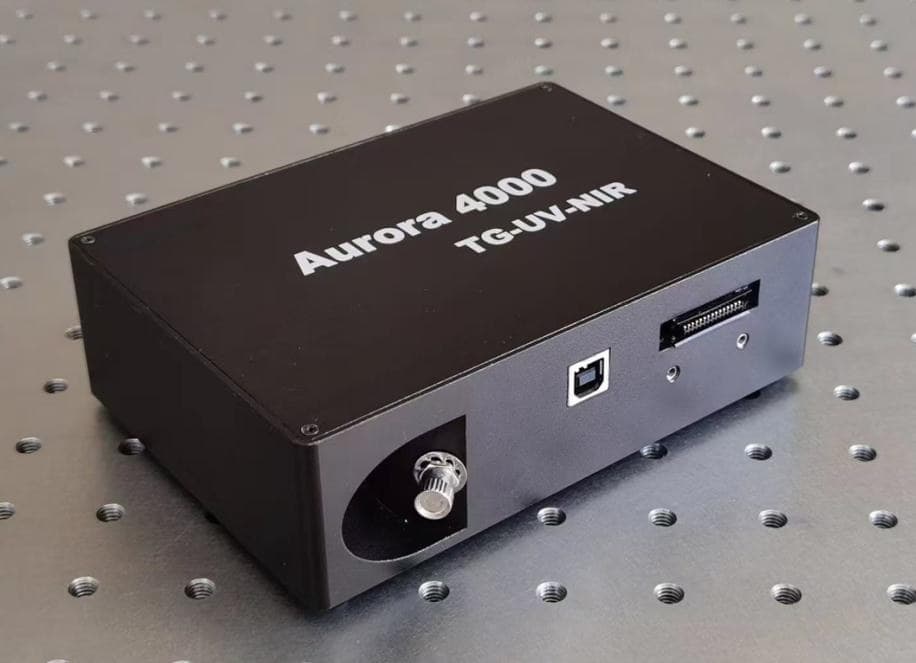
High resolution
Aurora 4000
A 3648-pixel linear-CCD spectrometer on a 101.6 mm crossed Czerny-Turner bench. With a narrow grating range and a 10 µm entrance aperture it resolves 0.08 nm; the standard 200–1100 nm configuration gives 0.75 nm. Wavelength range and resolution are configured to order.
- Resolution, up to (FWHM)
- 0.1 nm
- Detector range
- 200–1100 nm
- Linear CCD
- 3648 px
- Weight
- 840 g
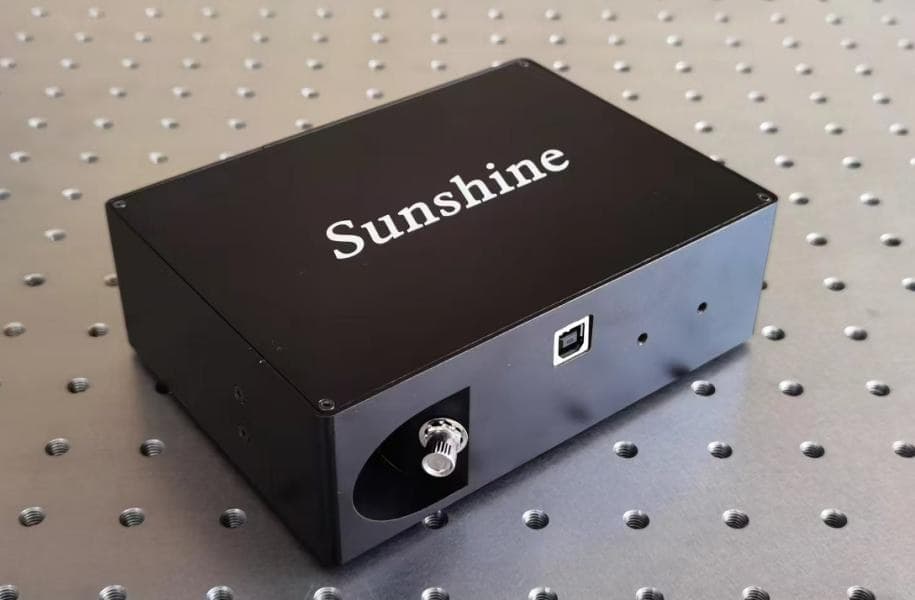
High sensitivity
Sunshine
A 2048-pixel spectrometer with 14 µm square pixels and up to 80 % quantum efficiency, for weak signals — Raman, fluorescence and LIBS — where the Aurora’s narrow 8 µm pixels would starve. Raman-specific ranges are available for 532 nm and 785 nm excitation.
- Quantum efficiency, up to
- 80 %
- Detector range
- 200–1100 nm
- Signal-to-noise
- ~450:1
- Weight
- 1000 g
Compact
Firefly 4000
The same 3648-pixel linear CCD as the Aurora 4000 in a 170 g housing that fits in a hand. The spectral window is limited to a 650 nm span within 200–1100 nm, with 1.0 nm resolution or better.
- Weight
- 170 g
- Footprint
- 89 × 64 × 32 mm
- Resolution
- < 1.0 nm
- Linear CCD
- 3648 px
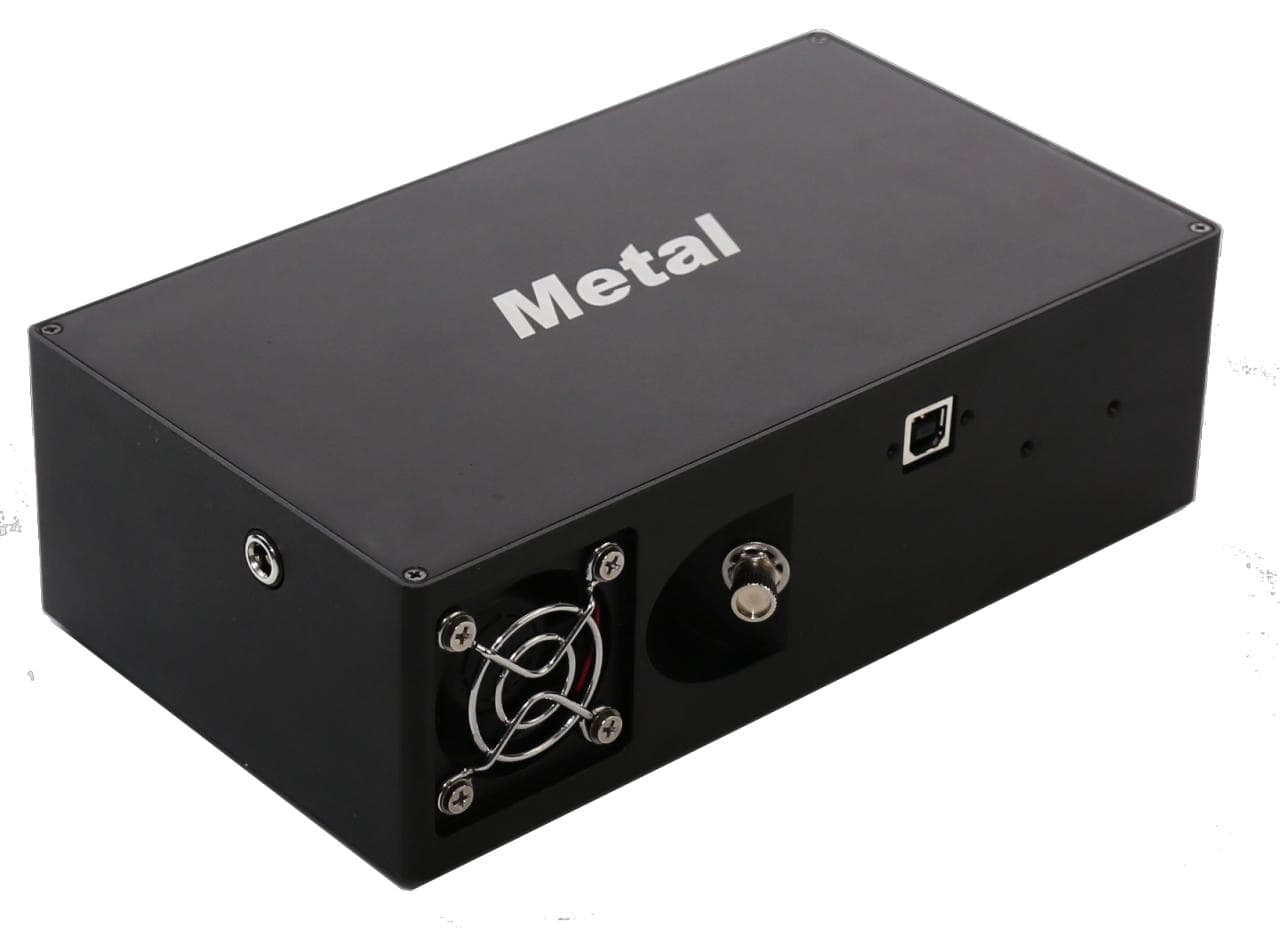
TE-cooled, back-illuminated CCD
Metal
A thermoelectrically cooled spectrometer with a Hamamatsu back-illuminated area-array CCD. Cooling 20 °C below ambient lowers the dark current enough for 60 s integrations, so weak Raman and fluorescence signals build up without the noise floor rising with them.
- Below ambient, TE-cooled
- −20 °C
- Maximum integration
- 60 s
- A/D conversion
- 16-bit
- Detector range
- 200–1100 nm
Near-infrared, InGaAs
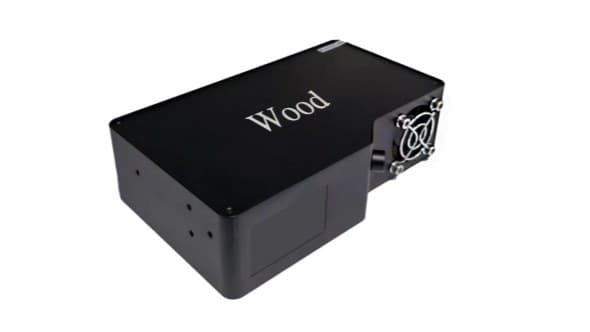
Wood
A near-infrared spectrometer built around a two-stage cooled 256-pixel InGaAs array, in 900–1700 nm or 1000–2500 nm versions. Sub-millisecond integration and a 1200:1 signal-to-noise ratio suit on-line monitoring in industrial and agricultural settings.
- Two ranges
- 900–2500 nm
- Signal-to-noise
- 1200:1
- Cooled InGaAs
- 256 px
- Minimum integration
- 0.1 ms
Multi-channel, synchronised
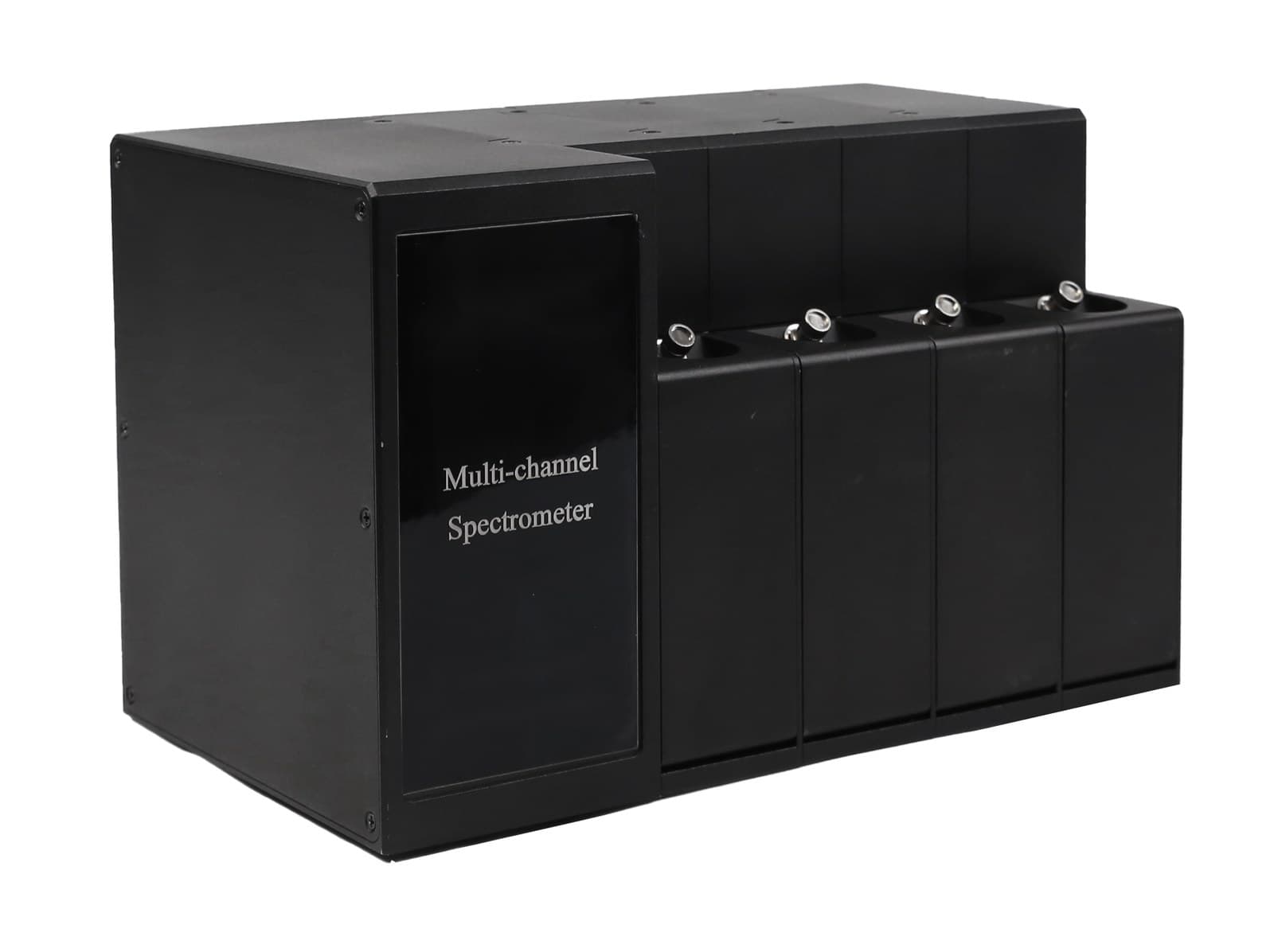
Rainbow multi-channel
Two to six Aurora-class 3648-pixel spectrometers in one housing, each covering a slice of the spectrum, with a synchronous delay device that fires all channels together. Wide range and high resolution at once — 185–930 nm at 0.08–0.22 nm in the standard configurations — with internal or external triggering for pulsed sources.
- Synchronised channels
- 2–6
- Resolution, up to
- 0.1 nm
- Delay jitter
- < 1 ns
- Delay control range
- 0–1 ms
Side by side
Headline Specifications
| Spectrometer | Detector | Wavelength range | Resolution | Signal-to-noise | Integration time | Size and weight |
|---|---|---|---|---|---|---|
| Aurora 4000 | 3648-px linear CCD | 200–1100 nm | 0.1–0.75 nm | 300:1 | 4 ms – 10 s | 149 × 105 × 46 mm · 840 g |
| Sunshine | 2048-px CCD, 14 µm, QE 80 % | 200–1100 nm | Grating and slit dependent | ~450:1 | 17 ms – 10 s | 149 × 109 × 50 mm · 1000 g |
| Firefly 4000 | 3648-px linear CCD | 200–1100 nm, 650 nm span | < 1.0 nm | 300:1 | 4 ms – 10 s | 89 × 64 × 32 mm · 170 g |
| Metal | TE-cooled back-illuminated CCD, 2048 px | 200–1100 nm | Grating and slit dependent | High (cooled) | 17 ms – 60 s | 192 × 109 × 61 mm · 1790 g |
| Wood | 256-px InGaAs, two-stage cooled | 900–1700 or 1000–2500 nm | 6.5 nm / 15 nm | 1200:1 | 0.1 – 1400 ms | 182 × 110 × 50 mm · 1500 g |
| Rainbow multi-channel | 2–6 × 3648-px linear CCD, synchronised | 185–1200 nm, split across channels | 0.08–0.22 nm | 300:1 | 4 ms – 10 s | 155 × 262 × 168 mm (4-channel) |
Resolution depends on the configured wavelength range and entrance aperture; each product page carries the full table.
Complete Systems
Raman Systems, Ready to Measure
Laser, Sunshine spectrometer, probe and software delivered as one configured system — as a bench unit, or set up for gem identification.
Benchtop, probe-based
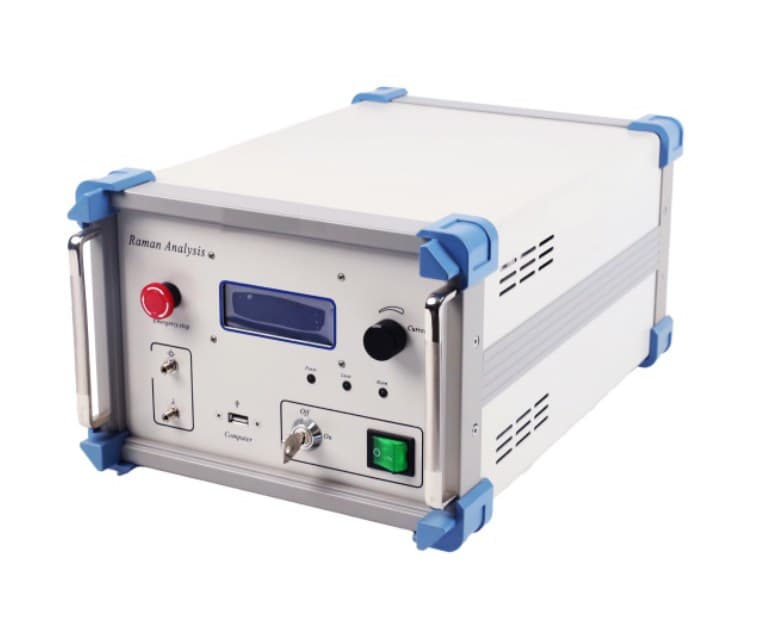
T-RamanSys desktop Raman
A benchtop Raman spectrometer in one 420 × 272 × 160 mm enclosure: a frequency-stabilised fibre-coupled laser, a Sunshine TG-Raman fibre spectrometer and the Raman Analysis software with library matching, with an RPB Raman probe connected externally. Four excitation lines — 405, 532, 785 and 830 nm — each with its own spectrometer range and resolution.
- Four excitation lines
- 405–830 nm
- Resolution at 785 nm
- < 5 cm⁻¹
- Spectrometer S/N
- 1000:1
- Enclosure
- 420 × 272 × 160 mm
Application system, jewellery
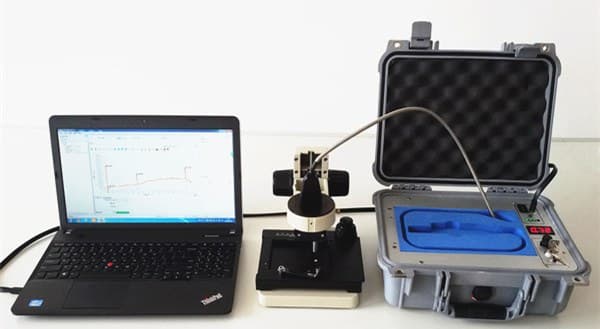
Diamond identification Raman
A complete Raman solution configured for gem laboratories: a narrow-linewidth fibre-coupled laser, a high-sensitivity Sunshine spectrometer, a Raman probe on an adjustable holder, a computer and identification software. Natural diamond shows a single sharp line at 1332 cm⁻¹; synthetic material and imitations show additional bands, so authenticity is settled in a single measurement.
- Diamond Raman line
- 1332 cm⁻¹
- Laser wavelengths available
- 375–980 nm
- Spectrometer quantum efficiency, up to
- 80 %
- Spectrometer range
- 200–1100 nm
Probes
Raman & Fluorescence Probes
Solidified fibre-coupled probes that carry the laser to the sample and the signal back to the spectrometer — 360 to 1064 nm, with dual-wavelength and camera-equipped versions.
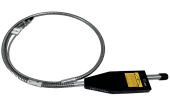
Raman probes
RPB Raman probes
Bench and process Raman with a fibre-coupled laser and a Sunshine, Metal or Raman-range Aurora spectrometer.
- Excitation wavelengths
- 12
- Low-wavenumber limit (-L versions)
- 100 cm⁻¹
- Focal length
- 7.5 mm
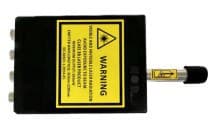
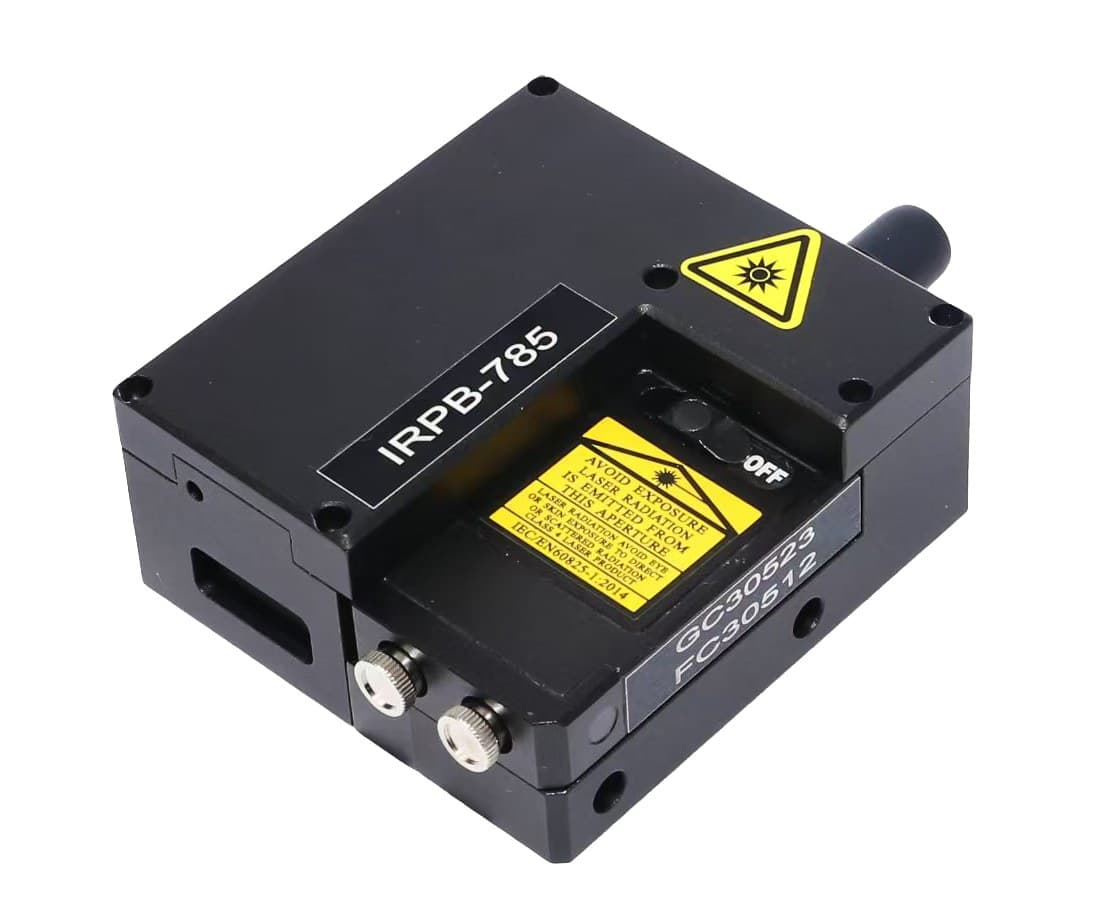
Raman probe, two excitation lines
RPB-532/785 dual probe
Samples that fluoresce at one line but not the other, and any lab that runs both a 532 nm and a 785 nm Raman system.
- Excitation lines
- 532 + 785 nm
- Raman shift, both lines
- 150–4500 cm⁻¹
- Fibres
- 4
Fluorescence probes
FPB fluorescence probes
Fluorescence and photoluminescence of solids, powders and liquids with a fibre-coupled laser and a Sunshine or Aurora spectrometer.
- Excitation wavelengths
- 9
- Excitation range
- 405–980 nm
- Focal length
- 7.5 mm
Raman probe with camera
Imaging Raman probe
Small or heterogeneous samples where the measured spot has to be placed — and documented — precisely.
- Excitation
- 532 / 785 nm
- Camera field of view
- 2 × 1.5 mm
- Camera resolution
- 1280 × 1024
Components & Accessories
Everything Around the Spectrometer
Light source, triggering, fibres and holders, sample holders, filters and replacement gratings.
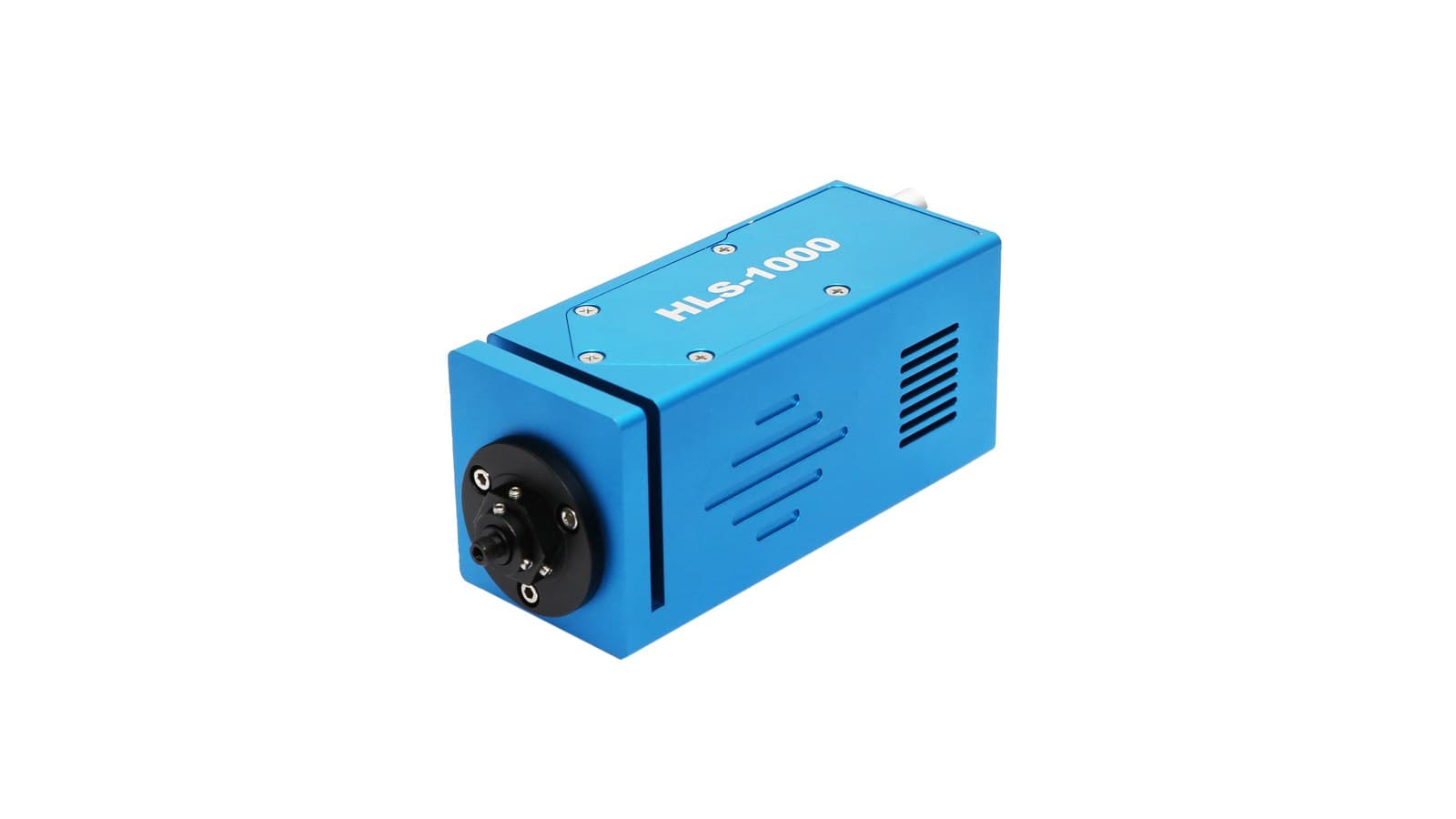
Light source
HLS-1000
Absorbance, transmittance and reflectivity measurements from the visible into the near infrared.
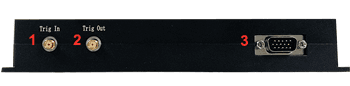
Synchronisation
EX-TA / EX-TB trigger boxes
Pulsed-laser experiments — LIBS, time-gated fluorescence — where the spectrometer has to fire in step with the source.
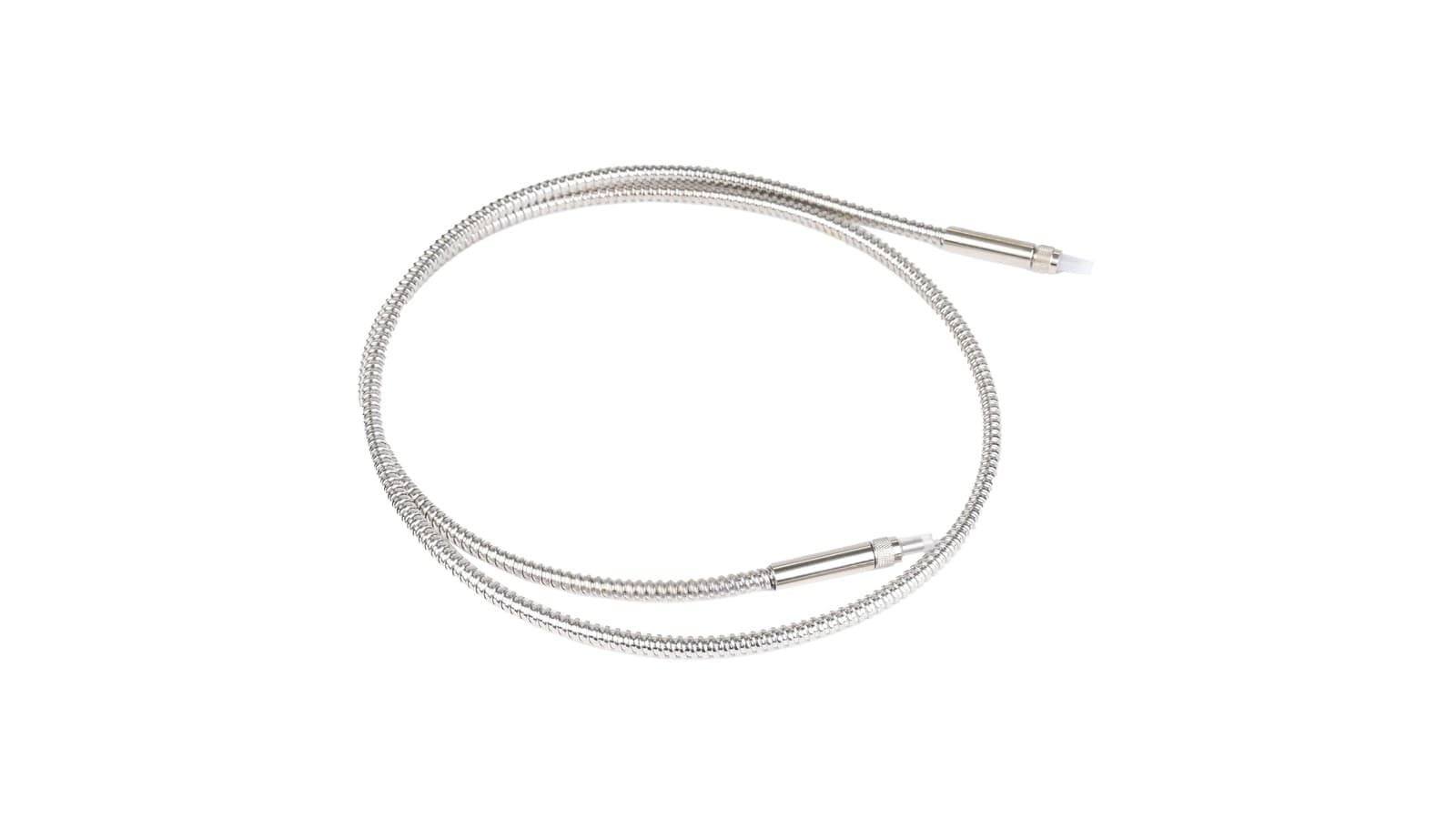
Fibres
Optical fibres
Connecting spectrometers, light sources, cuvette holders and probes.
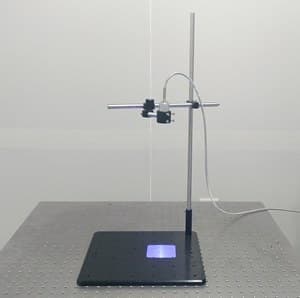
Holders
Fibre holders
Irradiating or collecting from samples on the bench without a full optomechanical build.
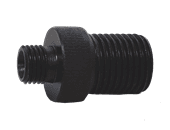
Collection optics
Optical signal collector
Collecting emission from lamps, LEDs, plasmas and fluorescent samples into the fibre.
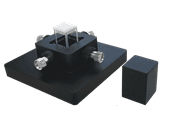
Sample holders
Cuvette holders
Liquid samples in cuvettes: transmittance and fluorescence with the four-way holder, Raman with a probe.
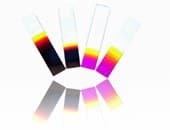
Order-sorting filter
Linear variable long-pass filter
Suppressing second-order diffraction in fibre spectrometers covering more than one octave.
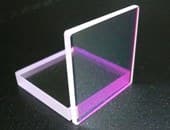
Filters
Raman spectroscopy filters
Building or upgrading a 532 nm or 785 nm Raman probe or bench with the Sunshine, Metal or a Raman-range Aurora.
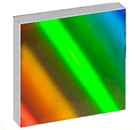
Gratings
Plane ruled gratings
Replacing or specifying the grating in a spectrometer or monochromator around a target wavelength.
Before you specify
Guides for the spectroscopic chain
Focal length, grating and slit as one decision — and two complete system guides built on top of them.
 Spectroscopy
How to choose a spectrograph
Focal length, grating, and slit are one decision: how finely to spread the spectrum and how much light to pay for it. Watch a doublet merge and split through real Omni-λ dispersion numbers.
Open guide Spectroscopy
How to Design a Fluorescence Spectrometer: Source, Filters, Monochromator & Detector
Translate fluorophore bands, Stokes shift, and sample state into a defensible excitation source, optical filters, collection geometry, monochromator, and detector architecture.
Open guide Raman spectroscopy
Choosing a Raman excitation wavelength
Balance the ν⁴ signal law, fluorescence background, silicon detector cutoff, and spatial resolution across 532, 638, and 785 nm.
Open guide