Fibre-Optic Spectrometer · TE-cooled, back-illuminated CCD
Metal
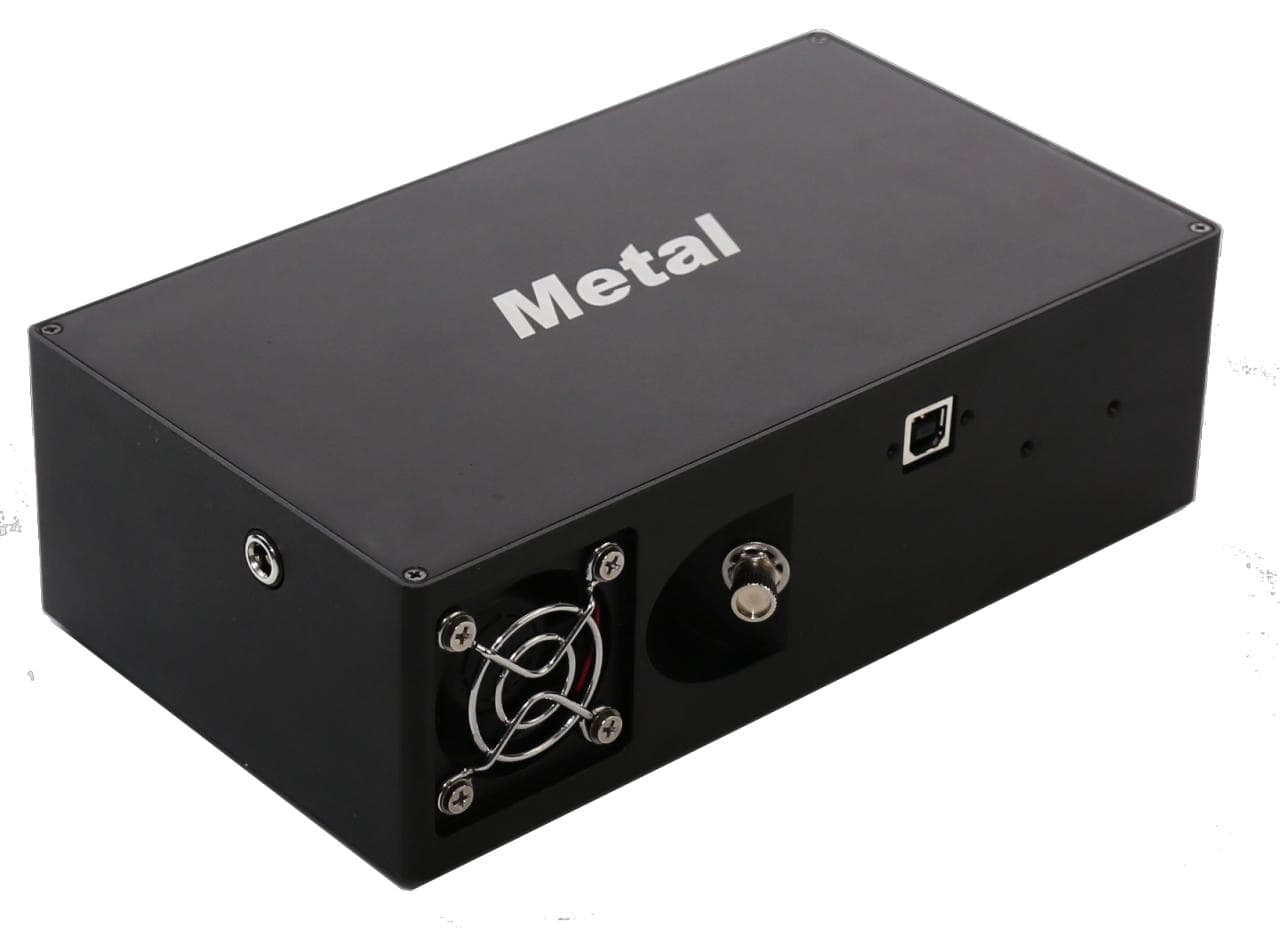
Metal TE-Cooled Fibre-Optic Spectrometer
A thermoelectrically cooled spectrometer with a Hamamatsu back-illuminated area-array CCD. Cooling 20 °C below ambient lowers the dark current enough for 60 s integrations, so weak Raman and fluorescence signals build up without the noise floor rising with them.
−20 °C
Below ambient, TE-cooled
60 s
Maximum integration
16-bit
A/D conversion
200–1100 nm
Detector range
Features
- High signal-to-noise ratio
- Single-stage thermoelectric cooling
- Back-illuminated area-array CCD detector
- High precision and low temperature drift
- High UV response
- Spectral Analysis 5.0 software included
Applications
- Raman and fluorescence spectroscopy
- Life science
- Scientific research
- Material analysis
- Industrial environments
- Instrumentation
Technical Specifications
Metal Specifications
Detector
| Detector | Hamamatsu cooled area-array CCD, back-illuminated |
|---|---|
| Wavelength range | 200–1100 nm |
| Pixels | 2048 |
| Pixel size | 14 µm × 14 µm |
| Cooling | 3 A at 5 V DC; 20 °C below room temperature (typical) |
Spectrometer
| Optical design | f/4, symmetrically crossed Czerny-Turner |
|---|---|
| Optical resolution | Depends on grating groove density and slit size; many options |
| Integration time | 17 ms – 60 s |
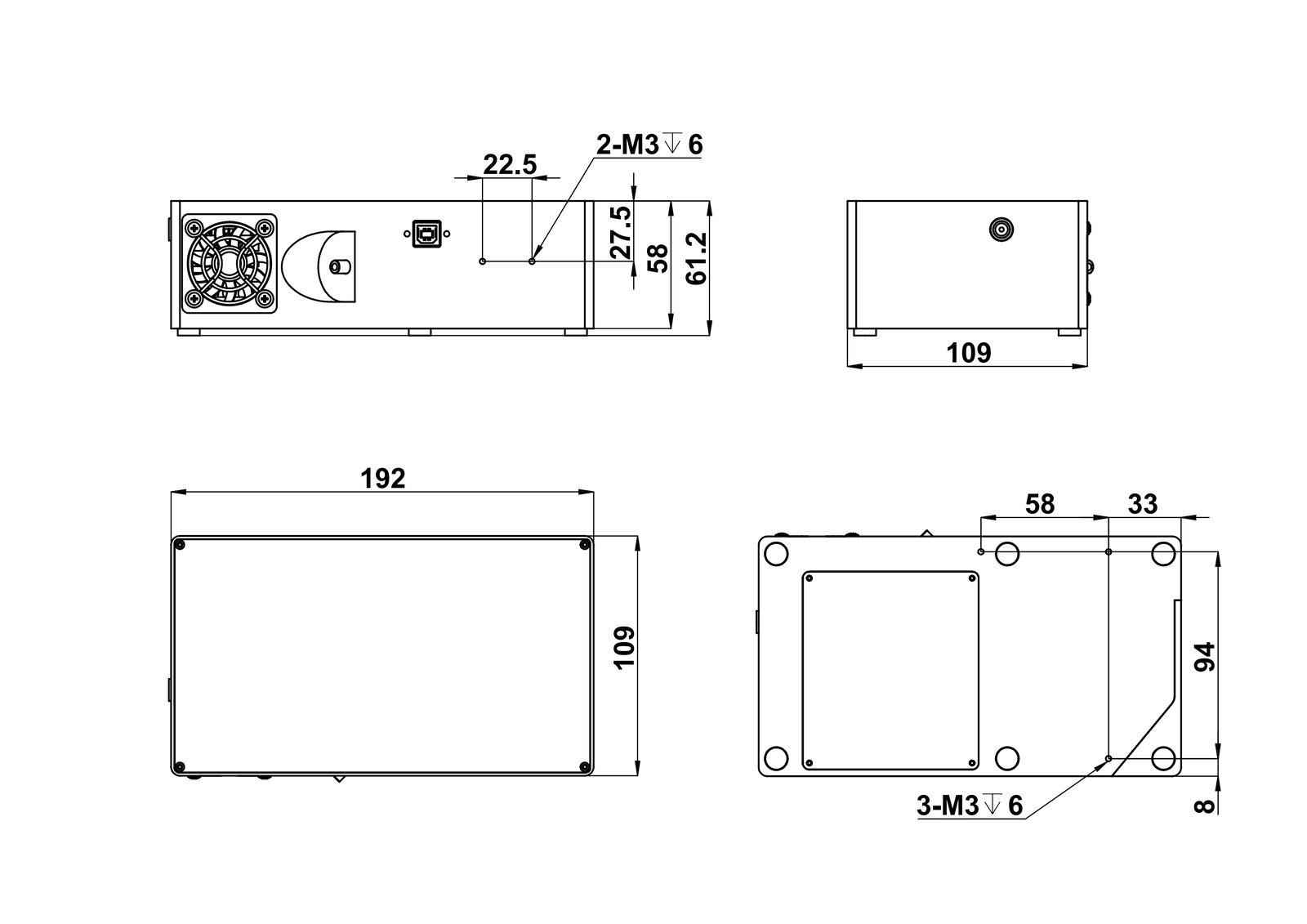
| Dimensions | 192 × 109 × 61.2 mm |
| Weight | 1790 g |
Electronics
| A/D conversion | 16-bit |
|---|---|
| Interface | USB 2.0 |
| Power consumption | 450 mA at 5 V DC (plus cooling) |
| Supported systems | Windows XP / 7 / 10 |
Final specifications depend on the configured wavelength range, entrance aperture and grating. We confirm the configuration before quotation.
Figures
Drawings, Photos and Measured Data
Datasheets
Full specification sheets for the Metal.
Other Spectrometers