Configure for your measurement
Monochromators for detector spectral response & quantum efficiency
A monochromator and broadband source provide wavelength-selectable illumination for testing a photodiode, image sensor or photovoltaic device. Spectral responsivity and quantum efficiency require a known incident optical signal as well as the response of the device under test.
Typical optical path
- Broadband source
- Monochromator
- Order-sorting optics
- Beam conditioning
- Calibrated reference and test device
- Electrical readout
Define the quantity you want to measure
Relative spectral response shows how a device responds as wavelength changes. Absolute responsivity also requires knowledge of the incident optical power. Quantum efficiency relates collected charge to incident photons. State which quantity you need and describe the electrical output, readout gain and reference detector available in your laboratory.
Match illumination to the active area
A small photodiode and a large image sensor can need different beam sizes and uniformity. Specify the illuminated area and whether the measurement concerns the whole device or a local region. Coupling optics and any integrating optics must be assessed with the monochromator output and reference measurement, rather than treating the instrument as a complete calibrated source by itself.
Check spectral purity and reference coverage
The source, grating efficiency, order-sorting filters and reference detector all vary with wavelength. Unwanted light can distort response measurements, especially near a detector cutoff. Give the full scan interval and expected response level so changes of grating, filter or reference detector can be planned and recorded.
Instrument & component options
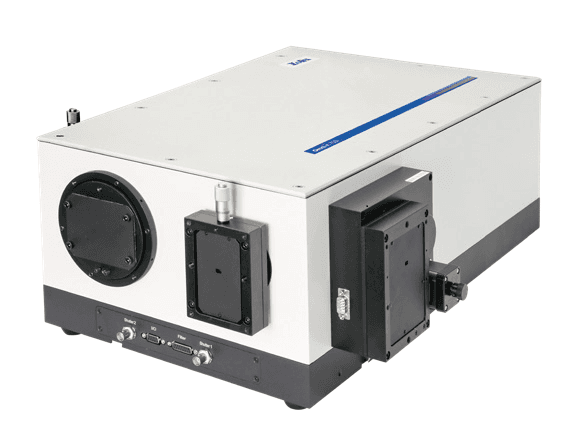
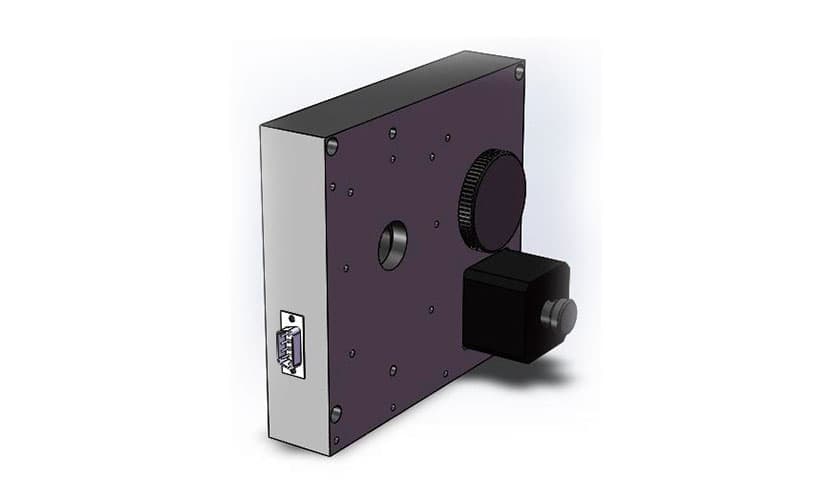
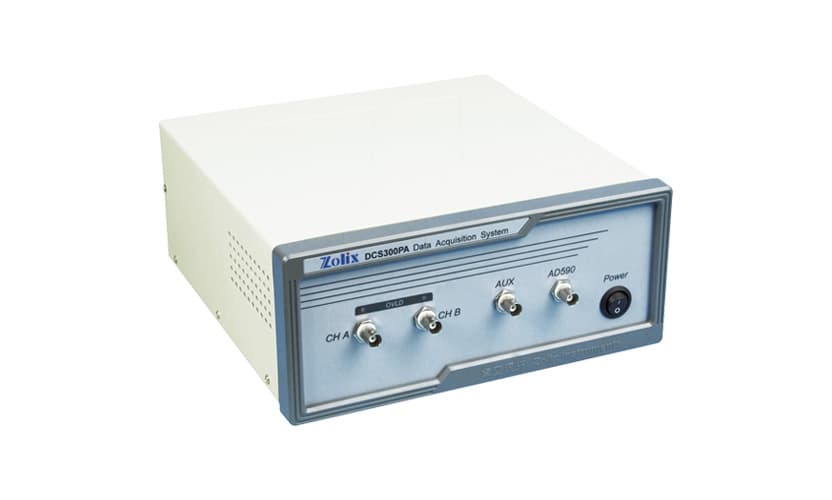
Use these as starting points. Published instrument specifications depend on the stated test conditions; the grating, slits, detector and coupling determine your final configuration.
Questions about this configuration
Does a monochromator alone provide a quantum-efficiency measurement?
No. The complete measurement also needs a source, controlled illumination, a calibrated incident-light reference and a suitable electrical readout. The monochromator provides wavelength selection within that system.
What should I send for a detector-response configuration?
Send the device type, active area, wavelength interval, target bandpass and reference-detector details. If the reference or source has not been selected, describe the intended measurement so those choices can be considered together.