Configure for your measurement
Scanning monochromators for transmission & absorbance
A scanning monochromator selects a narrow wavelength band from a broadband source and steps it across your measurement range. For transmission or absorbance, compare the sample signal with a reference measured through the same optical configuration.
Typical optical path
- Broadband source
- Entrance optics
- Scanning monochromator
- Order-sorting optics
- Sample or reference
- Detector and readout
Match bandpass to the sample feature
The selected band should be narrow enough to distinguish the filter edge, absorption feature or coating response you need to measure. A narrower slit also reduces signal. Specify the smallest feature of interest and the required wavelength range before choosing groove density and focal length. The scan step is a sampling choice and is not the same as optical resolution.
Plan reference, dark and sample measurements
A transmission measurement needs a reference signal and a dark or background measurement under controlled conditions. Source drift, detector changes and coupling changes can affect the ratio. Explain how you plan to exchange samples and references, and whether the experiment needs monitoring of the source during a scan.
Account for stray light and diffraction orders
Unwanted wavelengths can limit measurements of strongly absorbing samples or blocking filters. A grating can also transmit overlapping diffraction orders. Order-sorting filters, baffling and, where appropriate, a double monochromator address different parts of this problem. Tell us the lowest transmission you need to distinguish so spectral purity can be assessed for the complete setup.
Instrument & component options
Use these as starting points. Published instrument specifications depend on the stated test conditions; the grating, slits, detector and coupling determine your final configuration.
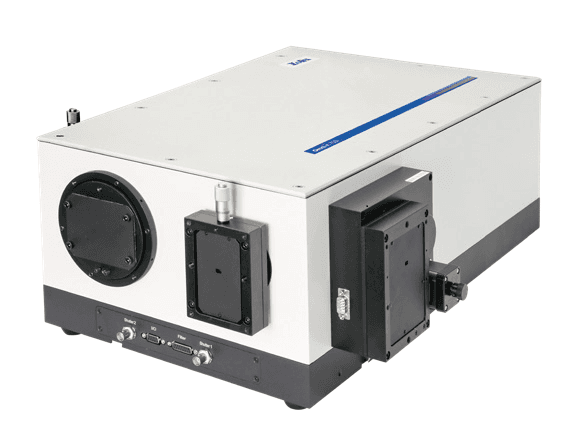
Omni-λ Series
Choose a focal length, slit and grating combination for wavelength scanning with a single-point detector.
View specifications →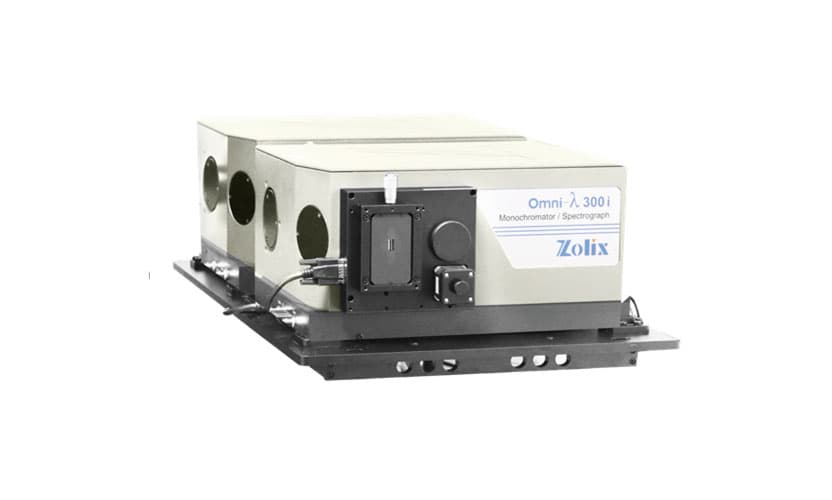
Omni-λ300Di / Omni-λ500Di
Compare double-stage operation when unwanted light limits the measurement.
View specifications →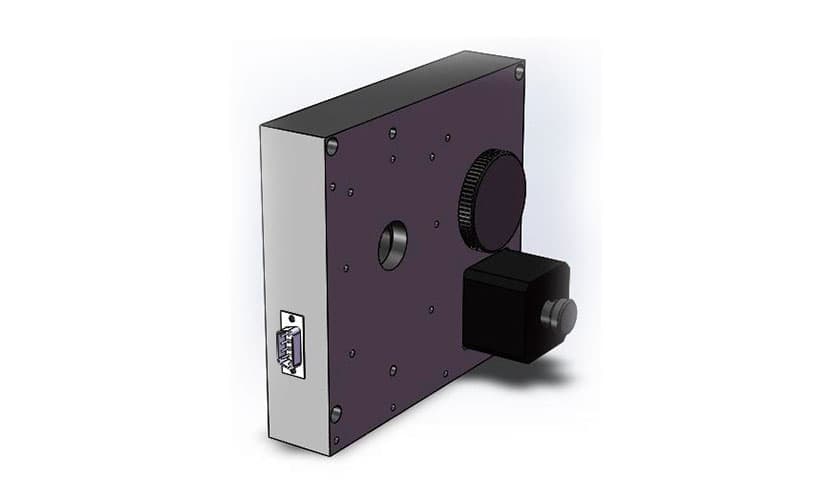
SD25 Series
Review filter switching for order sorting across a wavelength scan.
View specifications →Questions about this configuration
Is scan step size the same as monochromator resolution?
No. Step size determines where you sample the spectrum. Optical bandpass depends on the grating, slit configuration, focal length and imaging performance. Fine steps do not recover features blurred by a wider instrument bandpass.
Can one grating cover the whole UV-visible-NIR range?
The usable range depends on groove density, blaze, diffraction order and the rest of the optical system. A turret with more than one grating can support separate measurement bands. Source, coatings, filters and detector sensitivity must also cover those bands.