Synchronized PIV acquisition
Coordinate exposure and laser emission so each image contains the intended illumination event. The timing sequence must respect the laser repetition rate, pulse-pair capability and camera acquisition modes.
Coordinate laser output and camera acquisition with a PIV timing controller. Six pulse outputs share a frequency and pulse width, with independently adjustable delays. Qualify trigger levels, timing resolution and jitter against the laser and camera before specifying the controller.
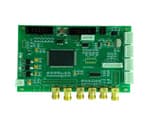
Compare the details
Compare the listed configurations and match the specifications to your setup.
5 specification rows.
| Parameter | Listed capability |
|---|---|
| Purpose | Synchronize laser emission and image acquisition |
| Timing outputs | Six pulses with a common frequency and pulse width |
| Delay control | Independently adjustable delay |
| Jitter | Stability described qualitatively; numeric specification on request |
| Electrical and timing limits | Confirm signal levels, polarity, delay range, resolution and supported frequency |
Build around your experiment
Share these details with your enquiry so we can match the component to your optical setup.
Application context
Coordinate exposure and laser emission so each image contains the intended illumination event. The timing sequence must respect the laser repetition rate, pulse-pair capability and camera acquisition modes.
Technical FAQ
The overview describes stable jitter and adjustable delay but gives no numerical jitter, resolution or delay range. Request these values for the selected controller.
No. A timing controller can coordinate supported events; it does not change the laser cavity, repetition-rate limit or minimum pulse separation. Qualify the laser and camera for the required image-pair timing.
Keep the specifications at hand when planning your setup.
Download datasheet (PDF)Talk through your setup
Add this component to your enquiry and include your requirements. We will help specify the variant, interfaces and mounting.


