6 models · 2 series
261nm CW DUV Laser
5 models| Model | Wavelength | Output / average power | Pulse energy | Repetition rate | Pulse width | Spectral linewidth | Power stability | Optical noise | Transverse mode | Beam diameter at the aperture (1/e2, mm) | Warm-up time (minutes) | Cooled method (Water Cooled) | Operating temperature (℃) | Operating voltage (VDC) | Expected lifetime (hours) | Beam divergence, full angle (mrad) | Polarization ratio | Pointing Stability Over Temperature(μrad/°C) | Operating Temperature (°C) | Modulation option | Cooled method | Power supply (100-240VAC) | Power stability (rms, 4 hours , ±3°C) | M2 | Beam diameter at the aperture 1/e2 (mm) | |
|---|---|---|---|---|---|---|---|---|---|---|---|---|---|---|---|---|---|---|---|---|---|---|---|---|---|---|
| UV-DP-261-LN | 261 nm | 1~800 mW | – | – | – | <0.003 nm | <0.5% | Noise <1% | Near TEM00 | <3.0 | <10 | WCH-580 | 10-35 | 12V/ 25A | >10000 | – | – | – | – | – | – | – | – | – | – | Datasheet |
| UV-FN-261 | 261 nm | 1~10 mW | – | – | – | <0.2 nm | <2% | – | TEM00 | <1.0 | – | – | – | – | >10000 | <1.2 | >100:1, Vertical (Horizontal optional) | <8 | 10-35 | DC-1kHz; TTL and Analog optional | – | – | – | – | – | Datasheet |
| UV-DP-261-A | 261 nm | 10~100 mW | – | – | – | <0.2 nm | <1% | – | Near TEM00 | <3.0 | <10 | – | 10-35 | – | >10000 | – | >100:1, Vertical (Horizontal optional) | – | – | – | Air Cooled | PSU-DP-A | – | – | – | Datasheet |
| UV-DP-261-B | 261 nm | 100~1500 mW | – | – | – | <0.2 nm | <0.5% | – | Near TEM00 | <3.0 | <10 | WCH-580 | 10-35 | 12V/ 25A | >10000 | – | – | – | – | DC-1kHz; TTL and Analog optional | – | – | – | – | – | Datasheet |
| AO-S-261-H | 261 nm | 1~15 mW | 1~15 uJ | 1 Hz-1 kHz | ~9 ns | – | – | – | Near TEM00 | – | <10 | – | 10-35 | – | >10000 | – | – | – | – | – | – | PSU-AOM-DL | <5%, <3%, <2% | <2 | <1.5 | Datasheet |
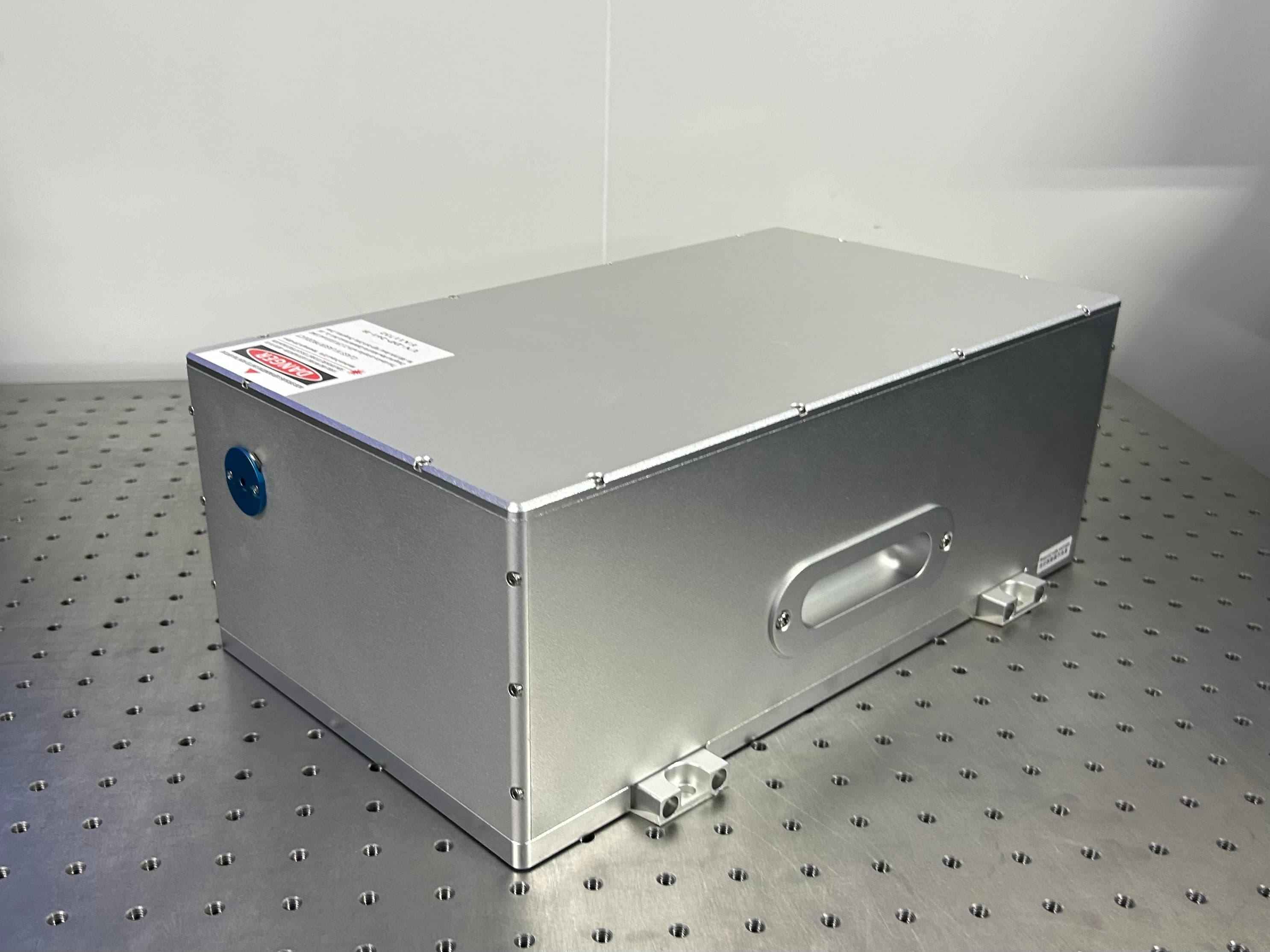
261nm UV CW Ultraviolet Laser.
1 model| Model | Wavelength | Output / average power | |
|---|---|---|---|
| AO-S-261-H/1-15uJ | 261 nm | 1-15 mW |
Not sure which model fits?
Send the physics — wavelength, mode, power or energy, linewidth or pulse width, delivery, control and safety — and we qualify the source.