Pulse energy, repetition rate, pulse width
LPS-T-710-810 710–810 nm infrared Q-switched pulsed laser
710–810 nm- The LPS-T-710-810 is a 710–810 nm nanosecond lamp-pumped solid-state laser.
- Pulse energy: 1–20 mJ at 765–800 nm; 1–8 mJ at 710–810 nm
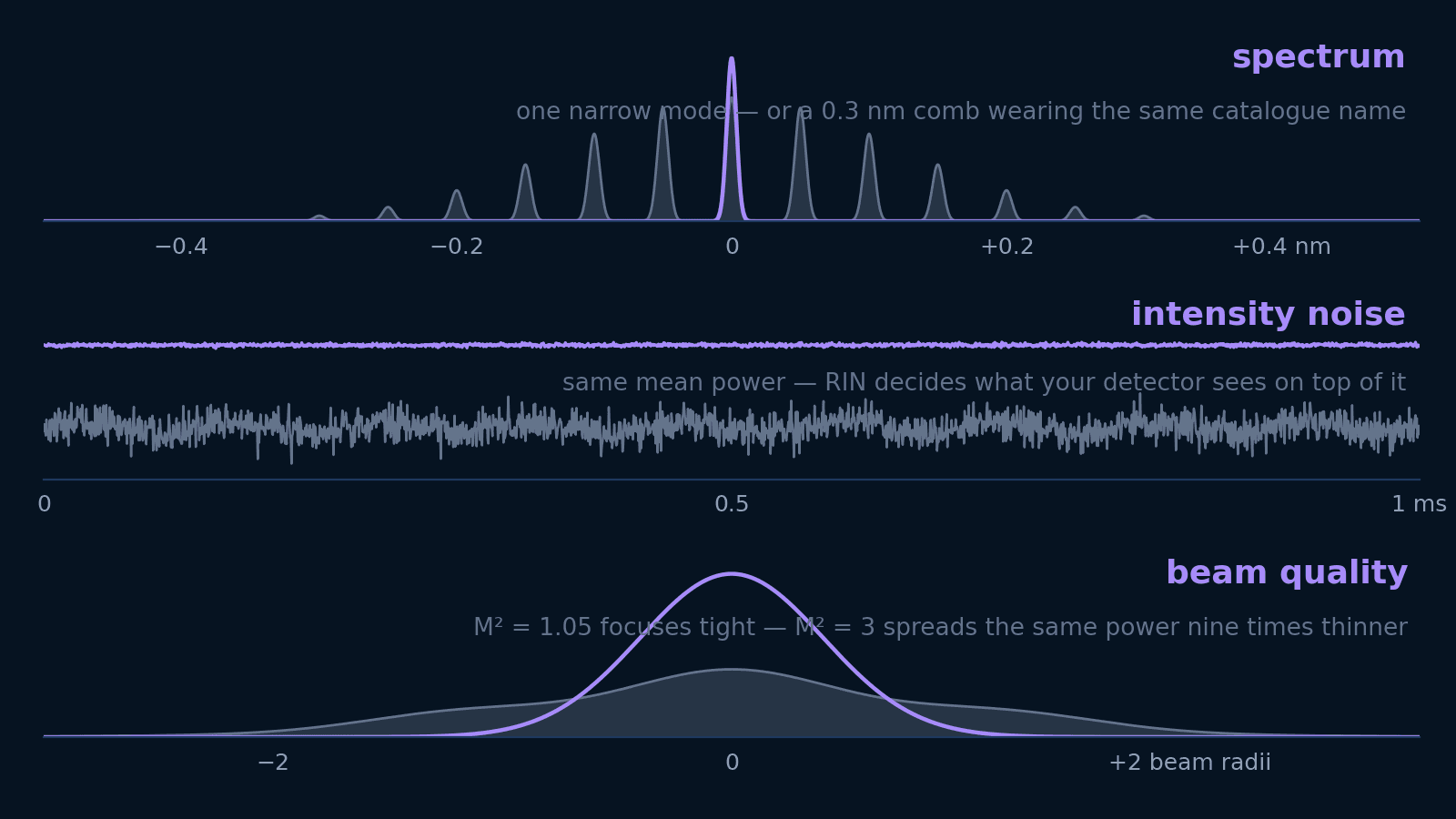
- Spectral linewidth: <3 nm
- Pulse width: ≤15 ns
- Repetition rate: 1–20 Hz (adjustable)
- Operating mode: Actively Q-switched
Specifications
LPS-T-710-810
16 specification rows
| Wavelength (nm) | 710–810 |
|---|---|
| Operating mode | Actively Q-switched |
| Pulse energy | 1–20 mJ at 765–800 nm; 1–8 mJ at 710–810 nm |
| Repetition rate | 1–20 Hz (adjustable) |
| Pulse width | ≤15 ns |
| Cooling | Water cooled |
| Configuration notes | LPS-T-I covers 765–800 nm at 1–20 mJ; LPS-T-II covers 710–810 nm at 1–8 mJ. Choose the tuning band and pulse energy as one configuration. |
| Spectral linewidth | <3 nm |
| Energy stability (std dev/mean) | <10% |
| Beam divergence, full angle (mrad) | ~5 |
| Beam diameter (mm) | ~7 |
| Operating temperature (℃) | 15-35 |
| Power supply(110/220VAC) | PSU-LPS-T |
| Expected lifetime(pulses) | 107-108 |
| Spectral resolution | 1nm |
| Warm-up time (minutes) | <15 |
Select energy and timing together
- Match pulse energy, repetition rate, duration, trigger and cooling for one configuration.
- Maximum energy and maximum repetition rate may describe different variants.
- LPS-T-I covers 765–800 nm at 1–20 mJ; LPS-T-II covers 710–810 nm at 1–8 mJ. Choose the tuning band and pulse energy as one configuration.
What do you need?
- Pulse energy
- Pulse width
- Repetition rate
- Trigger and synchronization
- Cooling
- Beam delivery (free-space or fibre)
Model selection
Nearby series comparison
Compare LPS-T-710-810 with the closest available models in the Pulsed Lasers family.
Related pulsed lasers
Compare the LPS-T-710-810 with nearby pulsed lasers across the wavelength range.