Back to Home

Scientific Camera

MAX251AM-U3

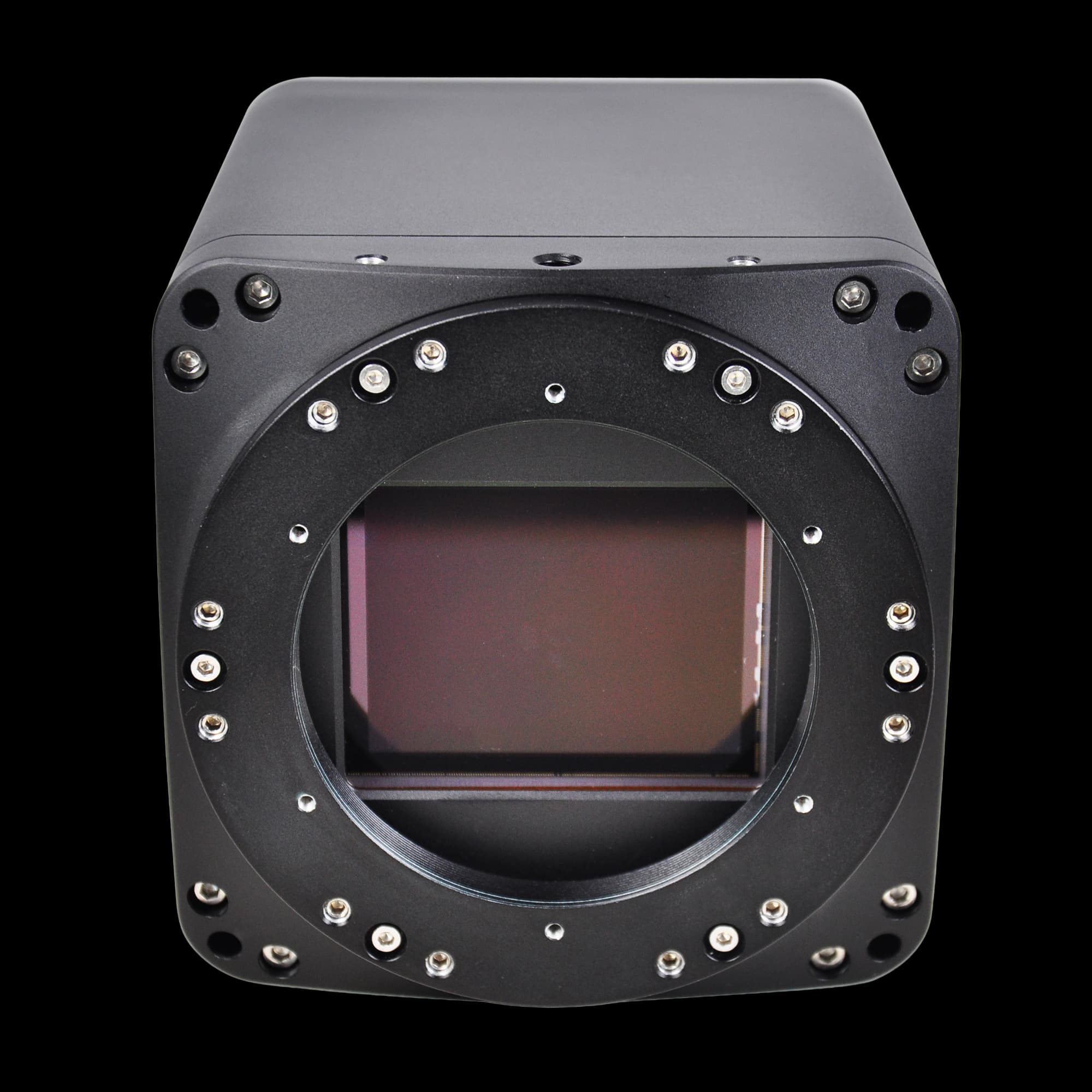
MAX251AM-U3 MAX Sony scientific camera combines Exmor CMOS imaging, TEC cooling, anti-condensation optics and SDK support.

Sensor
IMX811ALR (M, RS)
Resolution
251 MP (19200×12800)
Pixel Size
2.81 µm × 2.81 µm
Frame Rate
1.5 fps @ 19200×12800
Interface
USB3.0
MAX251AM-U3

Application context

Why this design is used

Scientific imaging

MAX251AM-U3: The IMX811ALR (M, RS) sensor, 251 MP (19200×12800) resolution, and 2.81 µm × 2.81 µm pixels defines the sensitivity, sampling and field coverage available for Scientific imaging. The 1.5 fps @ 19200×12800 frame-rate listing also sets the fastest full-frame acquisition regime.

Instrument integration

MAX251AM-U3: The IMX811ALR (M, RS) sensor, 251 MP (19200×12800) resolution, and 2.81 µm × 2.81 µm pixels defines the sensitivity, sampling and field coverage available for Instrument integration. The 1.5 fps @ 19200×12800 frame-rate listing also sets the fastest full-frame acquisition regime.

Specifications

MAX251AM-U3

25 specification rows

The MAX251AM-U3 is a scientific camera in the MAX Sony series, built around a IMX811ALR (M, RS) sensor, 251 MP (19200×12800) resolution, 2.81 µm × 2.81 µm pixels, frame rates up to 1.5 fps @ 19200×12800, a USB3.0 interface. It suits scientific camera where reliable imaging performance and interface compatibility matter.

Specifications

ModelMAX251AM-U3
SensorIMX811ALR (M, RS)
Shutter TypeRolling Shutter
Color TypeMonochrome
Resolution251 MP (19200×12800)
Sensor Size53.95 mm × 35.97 mm
Sensor Diagonal4.1" (64.84 mm)
Pixel Size2.81 µm × 2.81 µm

Performance Parameters

Frame Rate1.5 fps @ 19200×12800
Exposure Time150 µs ~ 3600 s
Bit Depth8/16-bit
Dynamic RangeAvailable on request
SensitivityAvailable on request

Interface Parameters

GPIO1× opto-isolated input, 1× opto-isolated output, 2× direct-connect GPIO
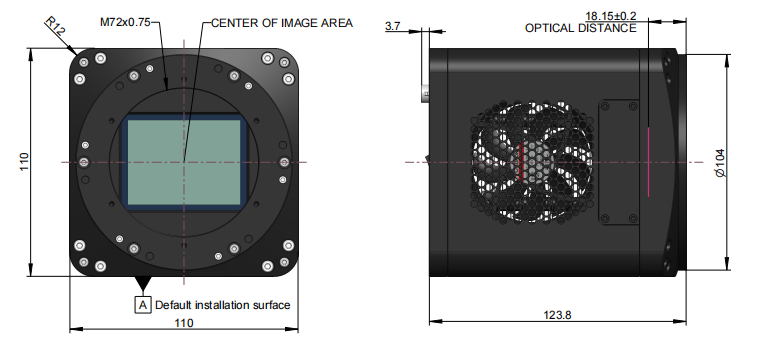
Lens MountM72×0.75 (native)
Data InterfaceUSB3.0
Power SupplyUSB3.0 bus power / DC 19 V

Physical Parameters

Dimensions110 mm × 110 mm × 123.8 mm
Weight1.44 kg

Environmental Parameters

Operating Temperature10 °C to +50 °C
Operating Humidity20%–80% (non-condensing)
Storage Temperature30 °C to +70 °C
Storage Humidity20%–80% (non-condensing)

Other Parameters

OS SupportMulti-platform SDK for Windows/Linux/macOS/Android (native C/C++, C#/VB.NET, Python, Java, DirectShow, TWAIN, etc.)
CertificationCE, FCC

System integration

Integration and compatibility

Use these checks to connect MAX251AM-U3 to the surrounding optical, mechanical and control system. Every value shown is taken from this model's own specification record.

Lens and microscope interface
Lens Mount: M72×0.75 (native)
Use a lens image circle that covers the sensor and check flange distance before adding C/CS, F-mount or M42 adapters.
Sensor and sampling
Sensor: IMX811ALR (M, RS) · Resolution: 251 MP (19200×12800)
Match pixel pitch to the diffraction-limited spot the optics deliver. Sampling finer than the optics resolve multiplies data volume without adding information; sampling coarser discards resolution you have paid for.
Interface and data rate
Frame Rate: 1.5 fps @ 19200×12800 · Interface: USB3.0
Confirm the host can sustain the interface bandwidth continuously, not in burst. A camera that outruns the write path stalls acquisition rather than dropping quietly to a lower rate.
Hardware synchronization
GPIO: 1× opto-isolated input, 1× opto-isolated output, 2× direct-connect GPIO
Confirm edge polarity, pulse-width limits and whether each line is opto-isolated before connecting TTL or GPIO signals. A software exposure command is not equivalent to a hardware trigger.
Cooling and noise floor
Dynamic Range: Available on request
Judge these figures at the exposure time you will actually use. Cooling matters where dark current accumulates over seconds; read noise dominates short exposures where it never does.

Technical FAQ

Integration questions for MAX251AM-U3

What lens mount is required for the MAX251AM-U3?

Lens Mount: M72×0.75 (native). Use a lens image circle that covers the sensor and check flange distance before adding C/CS, F-mount or M42 adapters.

What sensor and pixel pitch does the MAX251AM-U3 use?

Sensor: IMX811ALR (M, RS) · Resolution: 251 MP (19200×12800). Match pixel pitch to the diffraction-limited spot the optics deliver. Sampling finer than the optics resolve multiplies data volume without adding information; sampling coarser discards resolution you have paid for.

How does the MAX251AM-U3 connect to the acquisition computer?

Frame Rate: 1.5 fps @ 19200×12800 · Interface: USB3.0. Confirm the host can sustain the interface bandwidth continuously, not in burst. A camera that outruns the write path stalls acquisition rather than dropping quietly to a lower rate.

Does the MAX251AM-U3 support hardware triggering?

GPIO: 1× opto-isolated input, 1× opto-isolated output, 2× direct-connect GPIO. Confirm edge polarity, pulse-width limits and whether each line is opto-isolated before connecting TTL or GPIO signals. A software exposure command is not equivalent to a hardware trigger.

What is the noise performance of the MAX251AM-U3?

Dynamic Range: Available on request. Judge these figures at the exposure time you will actually use. Cooling matters where dark current accumulates over seconds; read noise dominates short exposures where it never does.

Need help choosing?

Tell us your sensor, resolution, spectral range, frame-rate, interface, and software requirements and we will confirm the matching configuration and lead time.

Open camera finder

Model selection

Nearby series comparison

Compare MAX251AM-U3 with the closest available models in the MAX Sony family. Confirm option-dependent values on the final configuration before ordering.

Selection parameterMAX251AM-U3 (current)MAX251AM-10GMAX62AC
SensorIMX811ALR (M, RS)IMX811ALR (M, RS)IMX455 (C, RS)
Resolution251 MP (19200×12800)251 MP (19200×12800)61 MP (9568×6380)
Sensor size53.95 mm × 35.97 mm53.95 mm × 35.97 mm35.98 mm × 23.99 mm
Pixel size / frame rate2.81 µm × 2.81 µm2.81 µm × 2.81 µm3.76 µm × 3.76 µm

Other cameras on the IMX811 sensor

The IMX811 appears in 4 models across the catalogue, differing in cooling, shutter, interface and colour filter. Compare them side by side before settling on a variant.