Transient photocurrent and photovoltage
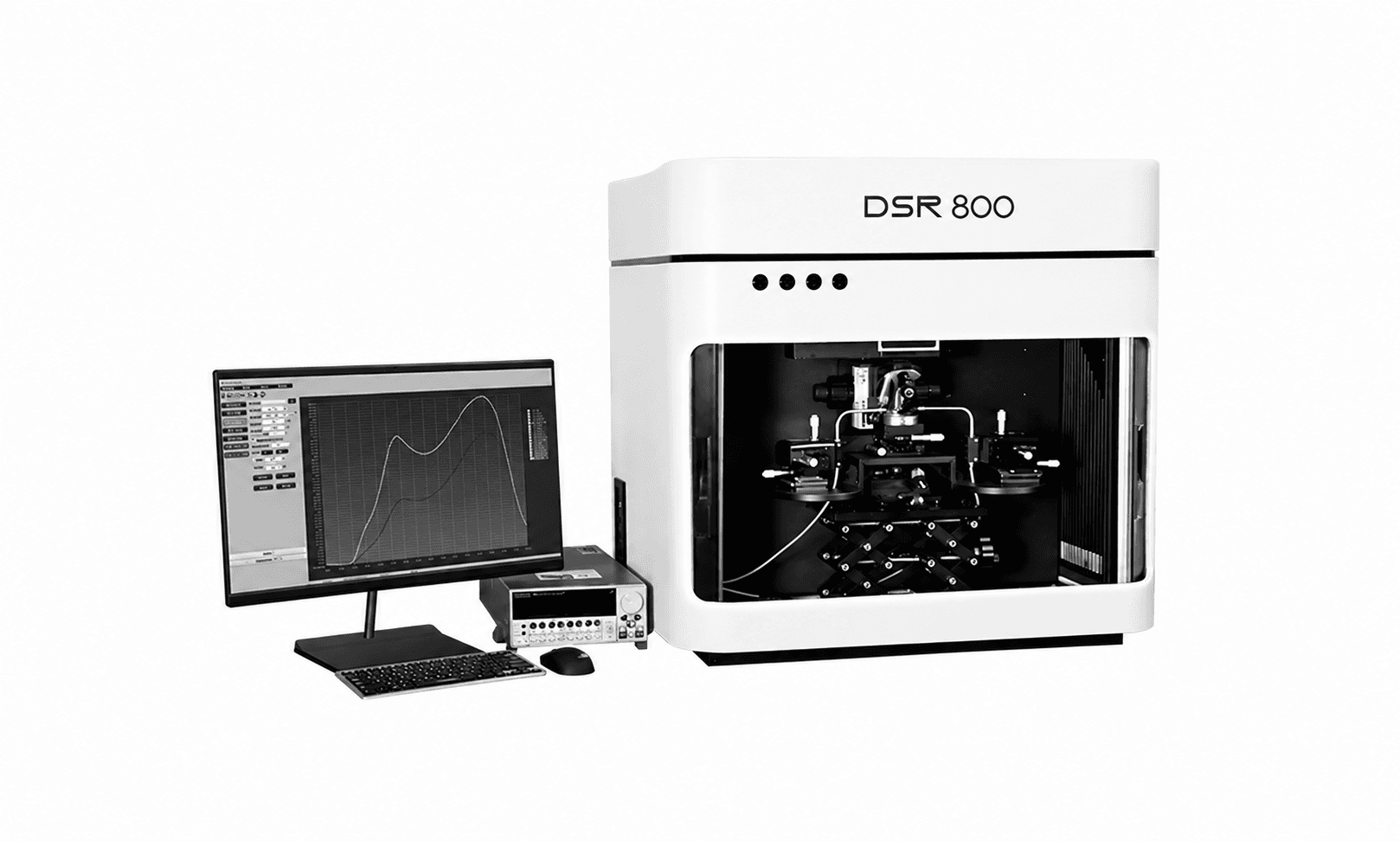
DSR800 Transient Photoelectric Response System
DSR800 uses pulsed optical excitation and configurable acquisition to measure transient photocurrent, photovoltage and response times. Microscope optics, selectable lasers and probe fixtures support detector and photovoltaic dynamics experiments.
- 4 ns–400 ps
- Acquisition options
- 2 or 4
- Channels
- 2.5 GS/s
- Sampling option
- TPC / TPV
- Measurements
Overview
About the DSR800
DSR800 excites a device with periodic monochromatic pulses and records the electrical response. Transient current and voltage traces support analysis of rise and fall behaviour, charge extraction and device kinetics.
The acquisition interval is not a guaranteed overall system response time. Select the excitation pulse, detector bandwidth and acquisition configuration together for the timescale of the sample.
Features
- Steady-state I–V, transient current and transient voltage modes
- Open-circuit voltage decay and time-resolved charge extraction
- Microscope objectives and three-dimensional sample alignment
Applications
- Photodetector rise and fall measurements
- Perovskite, organic and thin-film solar-cell dynamics
- Metal–semiconductor heterojunction devices
Technical data
Specifications & Configuration
| Acquisition time-resolution options | 4 ns, 2 ns, 1.14 ns, 800 ps or 400 ps |
|---|---|
| Channels | 2 or 4, depending on acquisition module |
| Published sampling-rate option | 2.5 GS/s |
| Record length | 10 M points |
| Input impedance | 1 MΩ or 50 Ω |
| Nanosecond laser options | Discrete wavelengths within 375–1310 nm |
| Semiconductor laser options | Discrete wavelengths within 266–2200 nm |
| Microscope objectives | 10×, 20× and 50× options |
| Optional IPCE module | 300–1100 nm; extendable to 1700 nm |
Download the datasheet
Measurements, specifications and configuration options.
Related Photoelectric Systems
Microdevice photoelectric characterisation
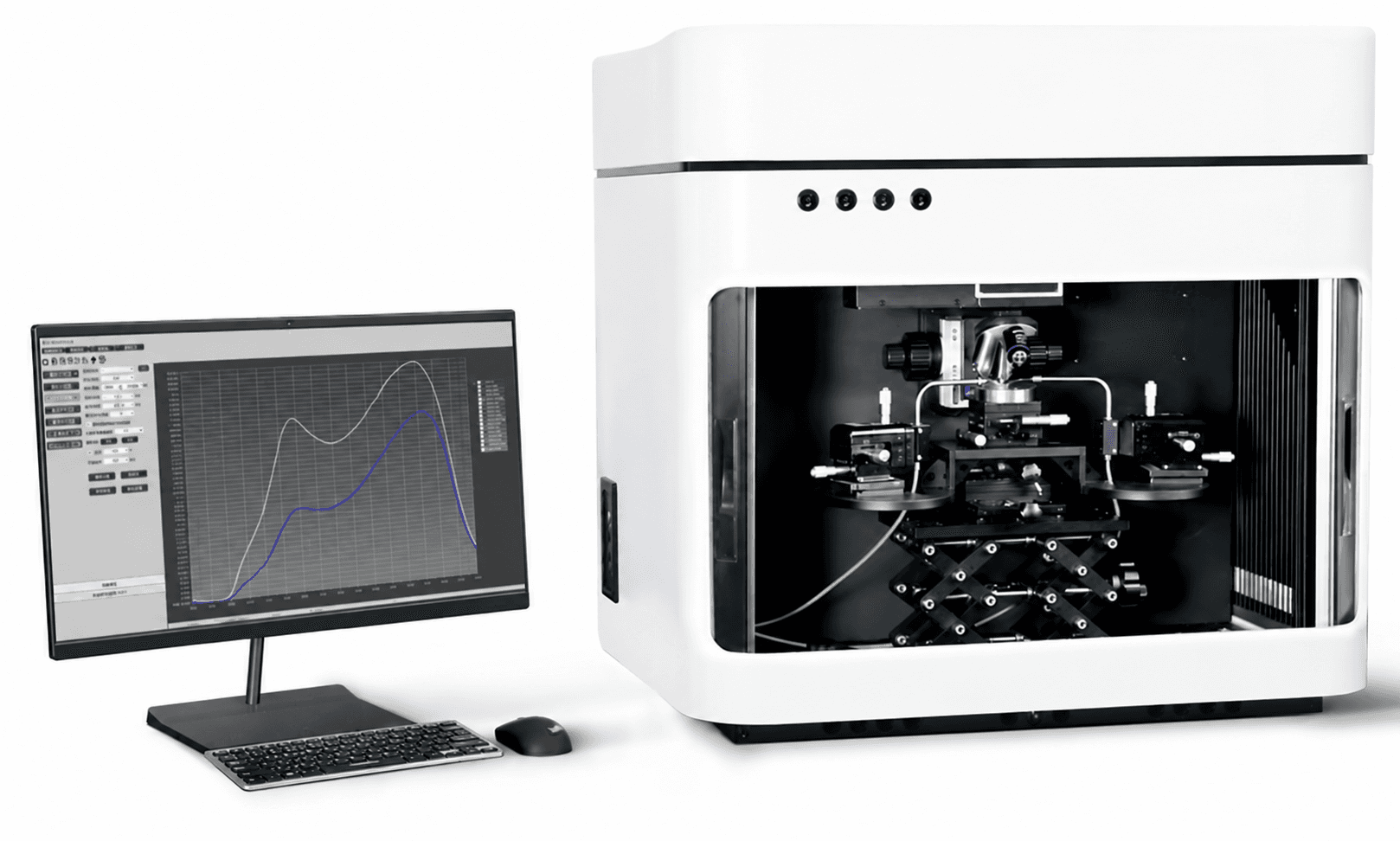
DSR300
DSR300 is a microscope-based platform for spectral responsivity, external quantum efficiency, photocurrent mapping and response-rate measurements. A 40 µm probe spot targets small detector areas and microstructured devices.
- Probe spot
- 40 µm
- Measurements
- SR & EQE
- Spatial testing
- LBIC mapping
Single-photon detector calibration
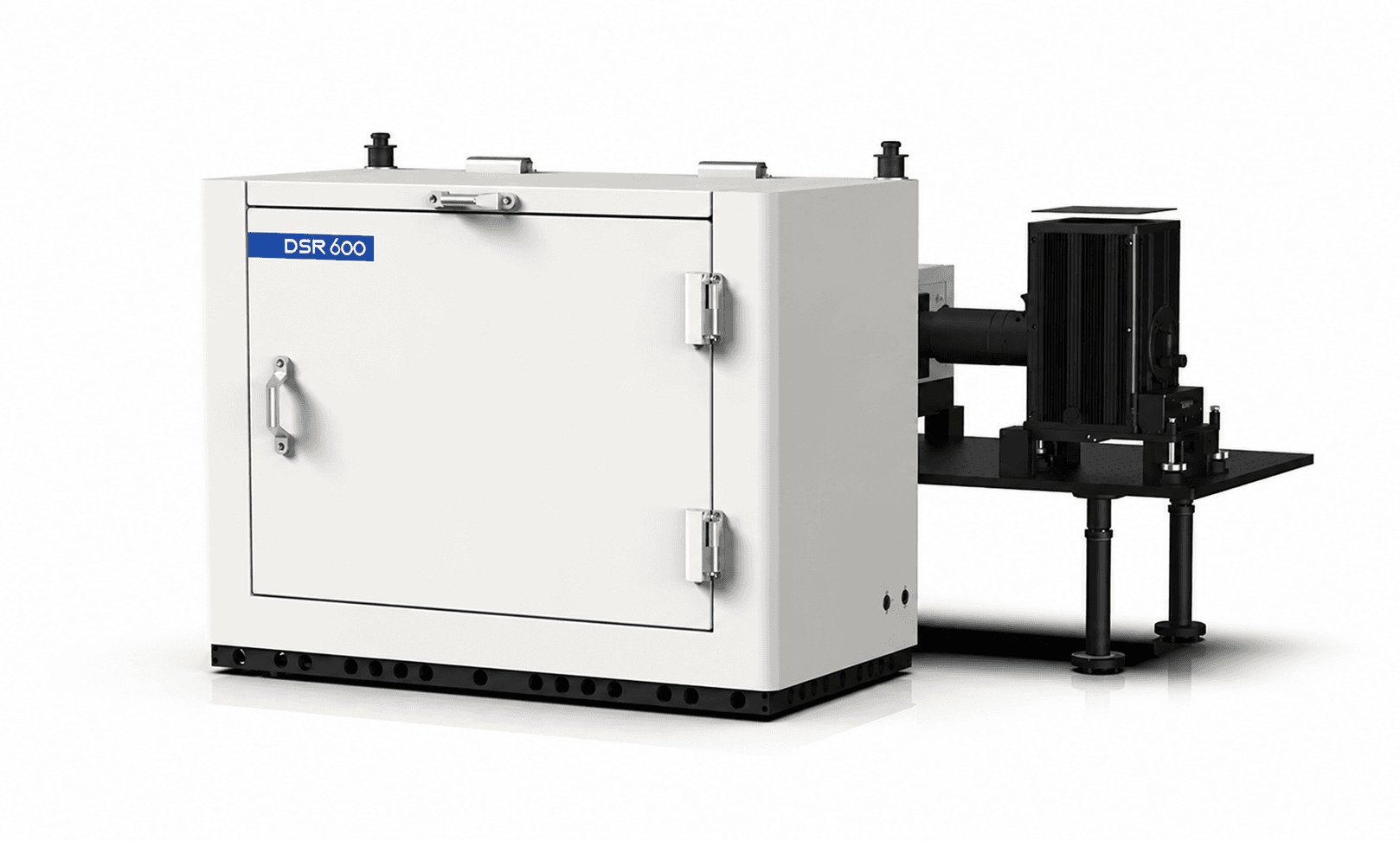
DSR600-PDE
DSR600-PDE measures photon detection efficiency versus wavelength by comparing a photon-counting detector with a calibrated reference through an integrating sphere. Supports SPAD, SiPM, PMT and other single-photon-sensitive detectors.
- Standard wavelength range
- 300–1100 nm
- Extended option
- To 2500 nm
- Measurements
- PDE, SR & EQE
Microscopic LBIC mapping
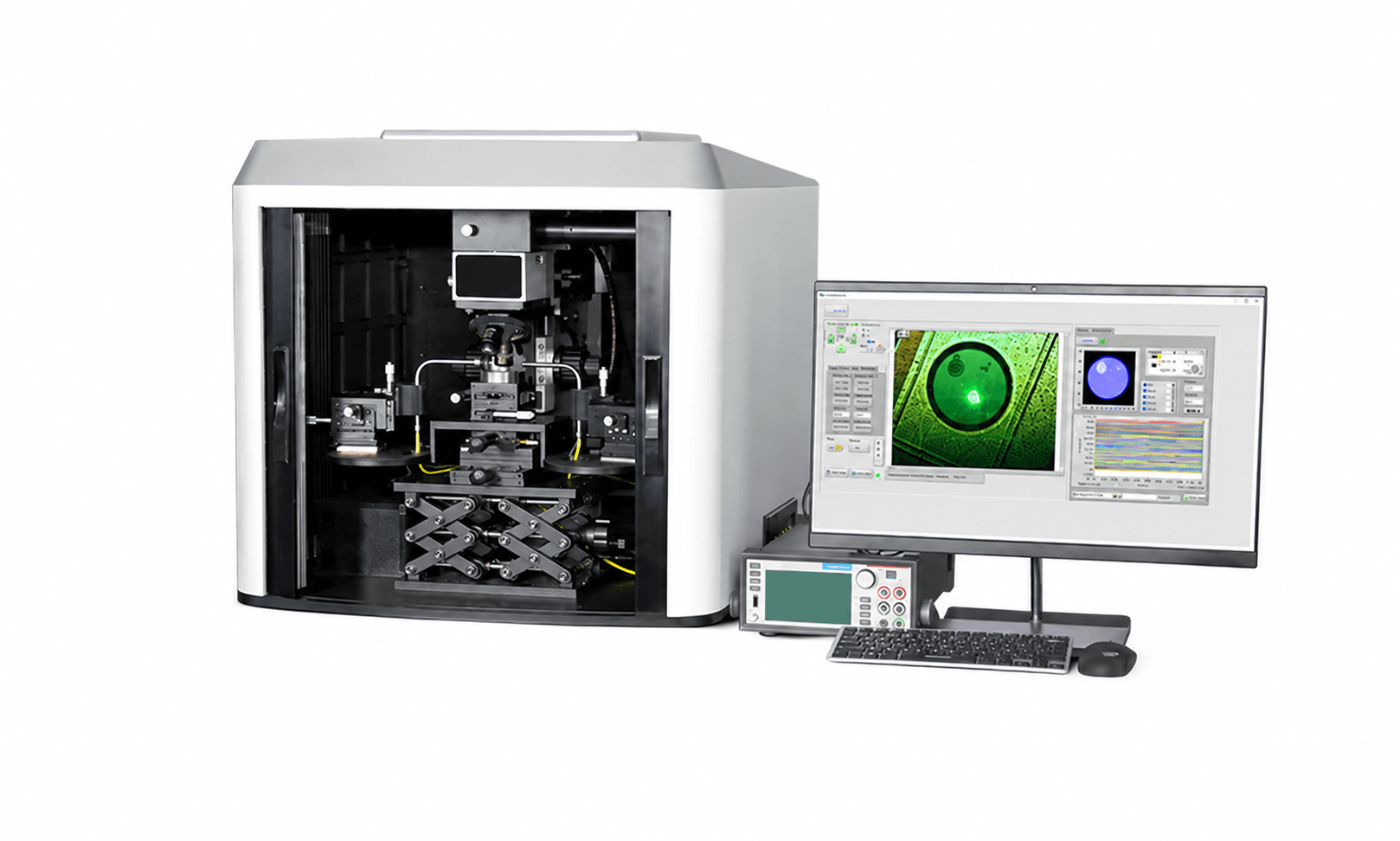
DSR500-LBIC
DSR500-LBIC uses a galvanometer-scanned microscope to record local photocurrent and I–V curves while the sample remains stationary. The standard 20× objective provides a 260 × 200 µm scan field, with selectable scan steps down to 0.2 µm.
- Scan field at 20×
- 260 × 200 µm
- Minimum scan step
- 0.2 µm
- Laser spot
- 2 µm
Configure the DSR800 for your experiment
Tell us your sample size, wavelength range and measurement requirements for a configuration and quotation.
Request a Quote