Microscopic LBIC mapping
DSR500-LBIC Micro-Photocurrent Imaging System
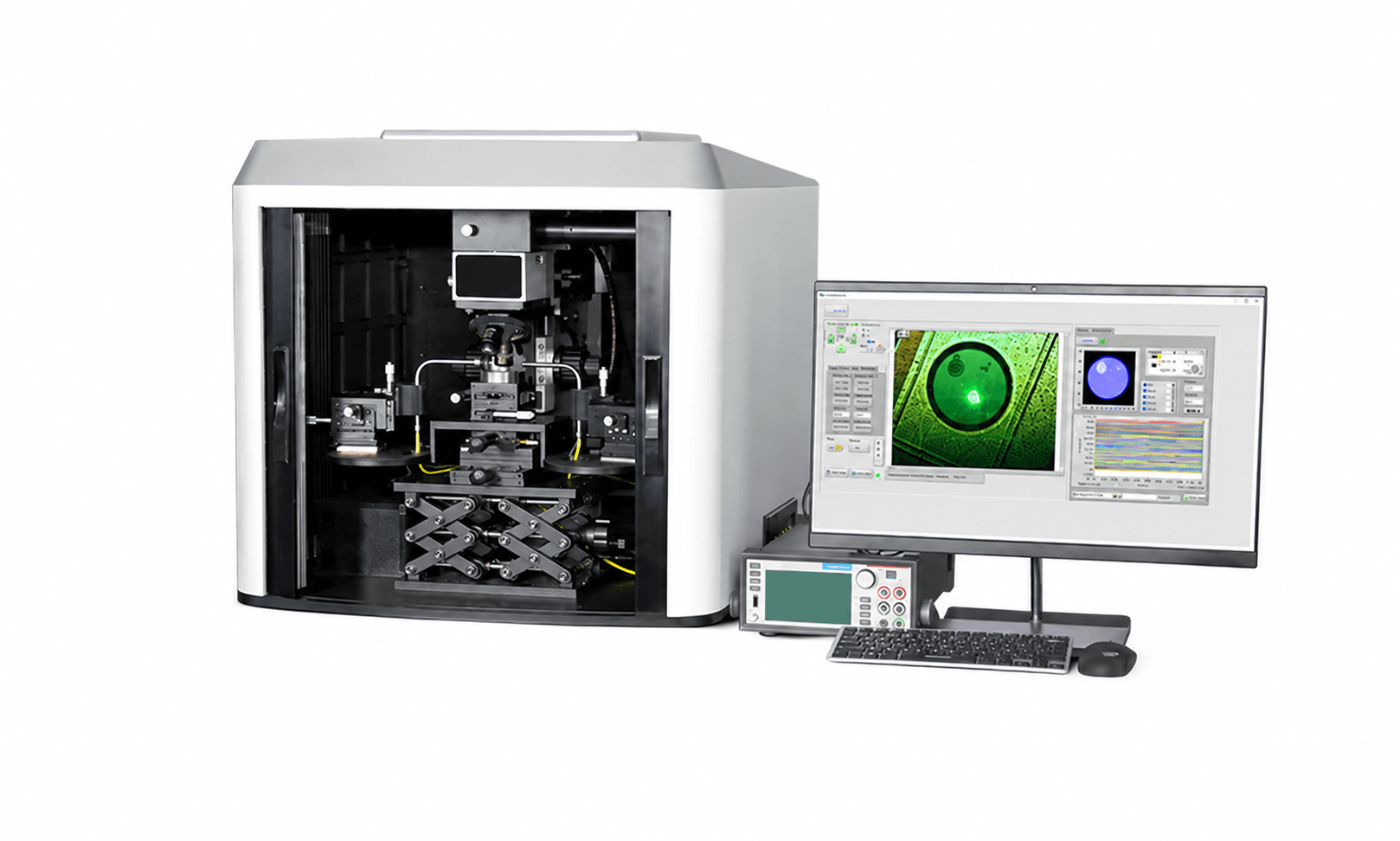
DSR500-LBIC uses a galvanometer-scanned microscope to record local photocurrent and I–V curves while the sample remains stationary. The standard 20× objective provides a 260 × 200 µm scan field, with selectable scan steps down to 0.2 µm.
- 260 × 200 µm
- Scan field at 20×
- 0.2 µm
- Minimum scan step
- 2 µm
- Laser spot
- < 1 µm
- Position repeatability
Overview
About the DSR500-LBIC
DSR500-LBIC scans the focused laser across a stationary sample and associates each position with the measured current. A visible sample image is used to select the region of interest.
Current maps, local I–V curves, contour plots and three-dimensional displays reveal spatial changes in carrier generation and collection. Scan step is a positioning setting; it is distinct from the optical spot size.
Features
- Stationary-sample mapping with galvanometer beam scanning
- Current maps at fixed bias and local I–V sweeps
- Selectable regions, line profiles and TXT / Excel export
Applications
- Two-dimensional materials and nanostructures
- Photodetector pixel and junction analysis
- Local photovoltaic response and interface studies
Technical data
Specifications & Configuration
| Standard excitation | 532 nm laser; 405 nm and 635 nm options |
|---|---|
| Standard objective | 20×; working distance 7.5 mm |
| Scan field | 260 × 200 µm with the 20× objective |
| Scan step | 0.2–30 µm |
| Laser spot | 2 µm |
| Position repeatability | < 1 µm |
| Sample-stage travel | 25 mm; 5 µm positioning resolution |
| Standard source meter | 2450; omitted in DSR500-LBIC-RDB |
|---|---|
| Current range | 1 nA–1 A |
| Dark noise | 50 pA |
| Current resolution | 20 fA |
| Accuracy | 0.03% |
| Optional spectral response | 200–1100 nm; extension to 2500 nm available |
Available configurations
- DSR500-LBIC
- Includes the 2450 source meter.
- DSR500-LBIC-RDB
- Source meter is not included.
Download the datasheet
Measurements, specifications and configuration options.
Related Photoelectric Systems
Large-area photocurrent mapping
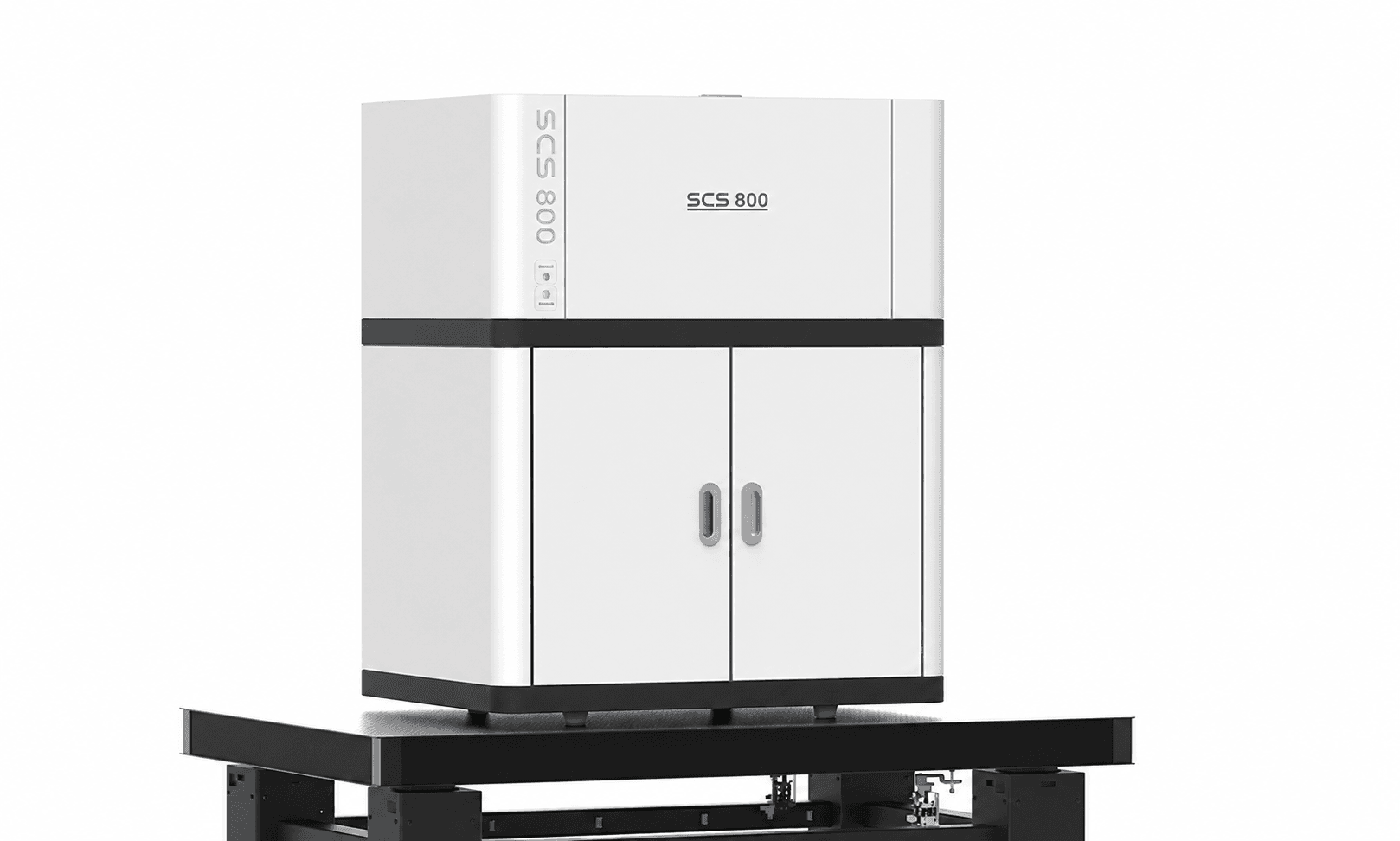
SCS800
SCS800 uses galvanometer-scanned laser excitation to map photocurrent and photovoltage across solar cells and photoelectric materials. Field options up to 300 × 300 mm support spatial uniformity studies and defect localisation.
- Largest scan field
- 300 × 300 mm
- Specified resolution
- < 100 µm
- Standard laser
- 532 nm
Microdevice photoelectric characterisation
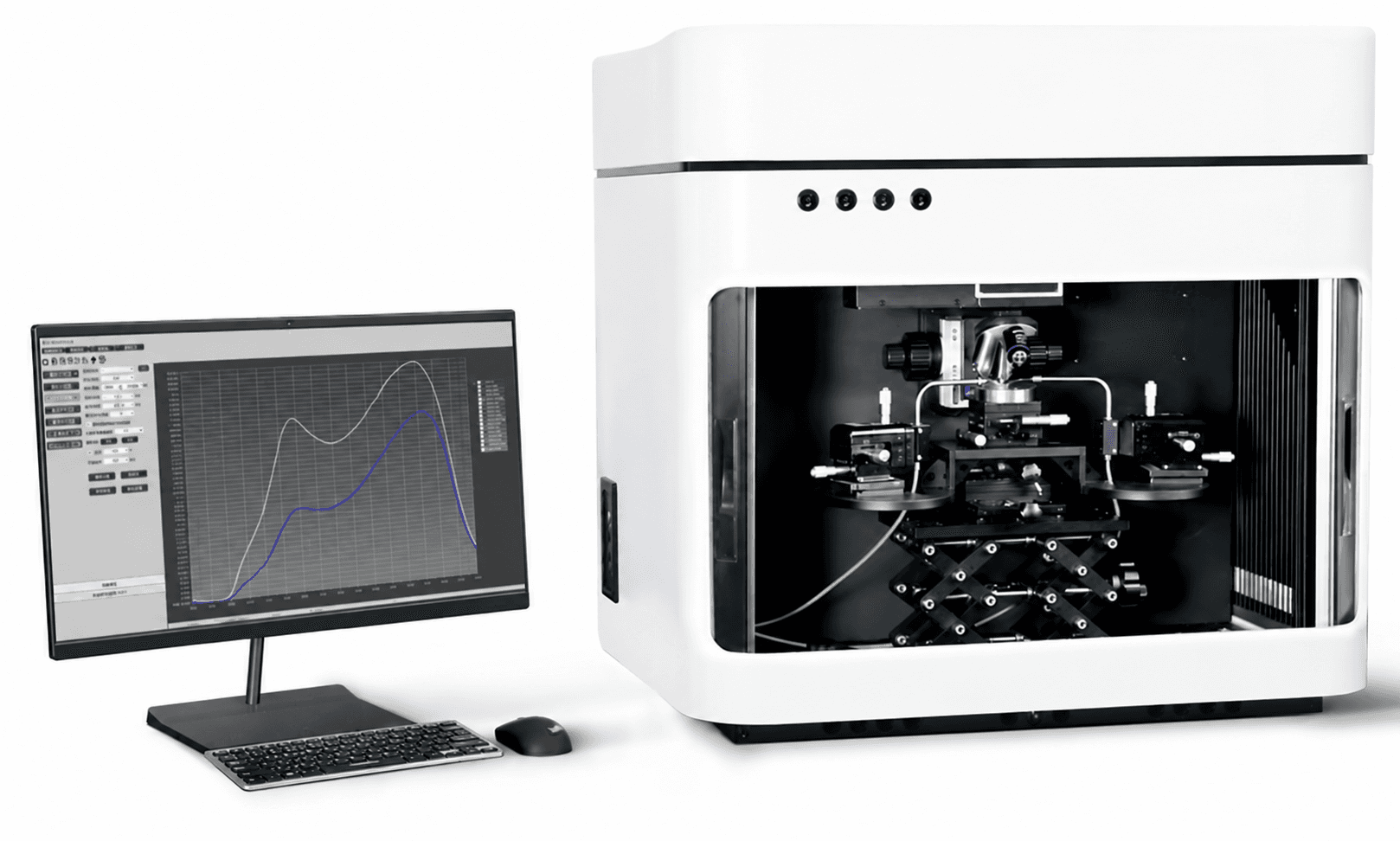
DSR300
DSR300 is a microscope-based platform for spectral responsivity, external quantum efficiency, photocurrent mapping and response-rate measurements. A 40 µm probe spot targets small detector areas and microstructured devices.
- Probe spot
- 40 µm
- Measurements
- SR & EQE
- Spatial testing
- LBIC mapping
Transient photocurrent and photovoltage
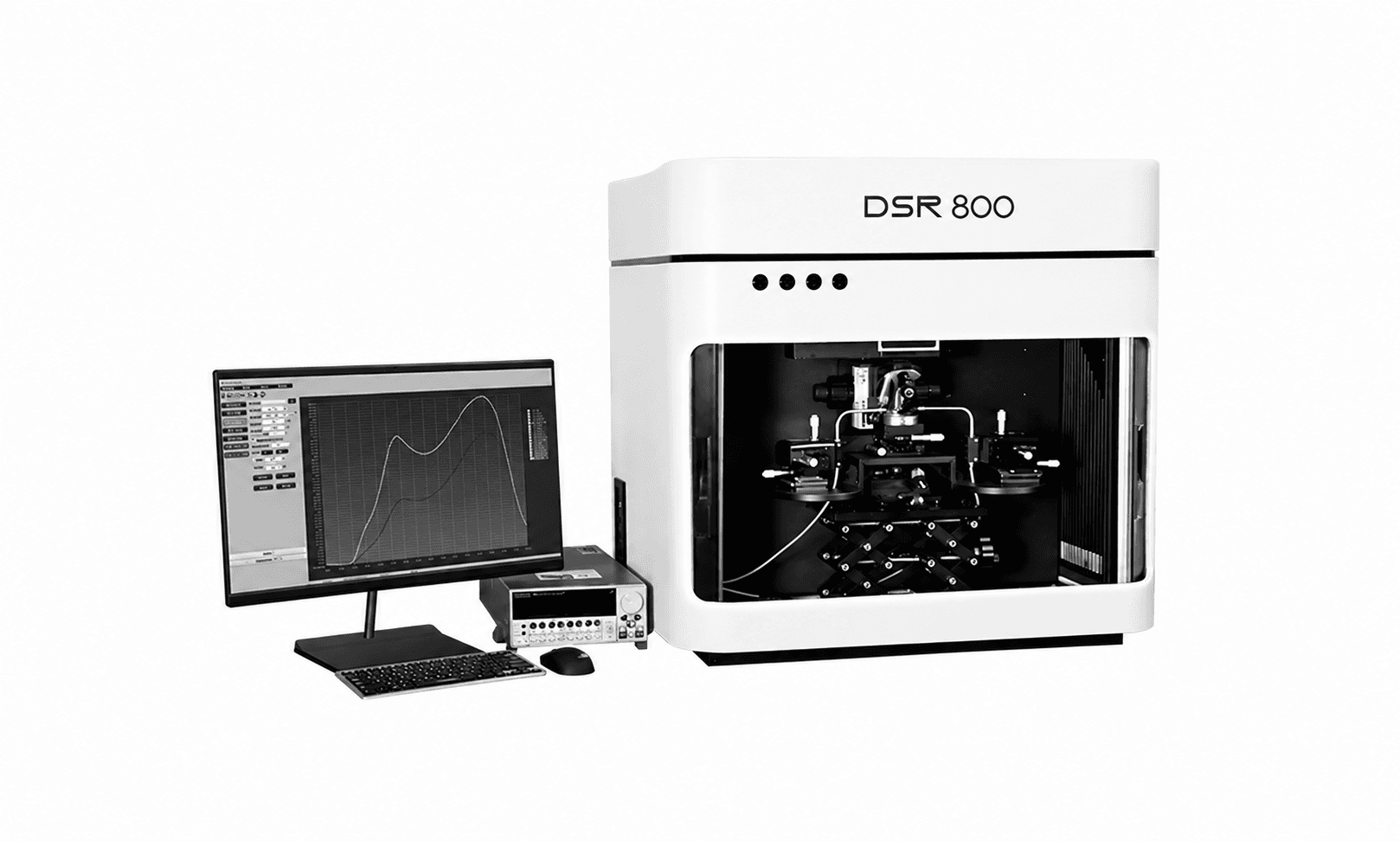
DSR800
DSR800 uses pulsed optical excitation and configurable acquisition to measure transient photocurrent, photovoltage and response times. Microscope optics, selectable lasers and probe fixtures support detector and photovoltaic dynamics experiments.
- Acquisition options
- 4 ns–400 ps
- Channels
- 2 or 4
- Sampling option
- 2.5 GS/s
Configure the DSR500-LBIC for your experiment
Tell us your sample size, wavelength range and measurement requirements for a configuration and quotation.
Request a Quote