Monochrome · Short-Wave Infrared Camera
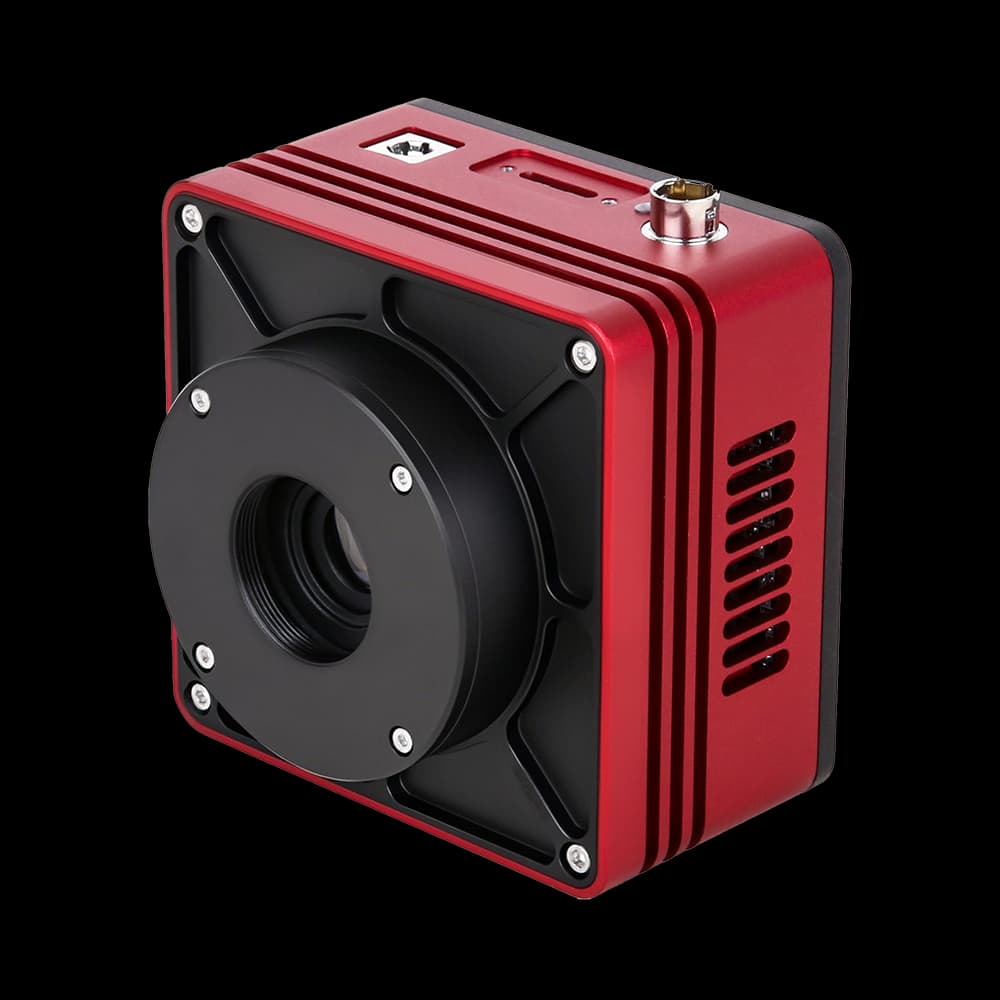
SWIR3000KMA-10G
- Sensor
- Sony IMX993-AABA-C (InGaAs)
- Resolution
- 3.0 MP (2048×1536)
- Pixel Size
- 3.45 µm × 3.45 µm
- Frame Rate
- 8 Bit: 220 fps @ 2048×1536, 415 fps @ 1024×768; 10 Bit: 200 fps @ 2048×1536, 380 fps @ 1024×768; 12 Bit: 118 fps @ 2048×1536, 220 fps @ 1024×768
- Interface
- 10GigE
Complete Specifications
Sensor & Imaging
| Sensor | Sony IMX993-AABA-C (InGaAs) |
|---|---|
| Shutter Type | Global shutter |
| Color Type | Monochrome |
| Resolution | 3.0 MP (2048×1536) |
| Sensor Size | 7.07 mm × 5.3 mm |
| Sensor Diagonal | 1/1.8" (8.84 mm) |
| Pixel Size | 3.45 µm × 3.45 µm |
| Spectral Response Range | 400–1700 nm |
Performance
| Frame Rate | 8 Bit: 220 fps @ 2048×1536, 415 fps @ 1024×768; 10 Bit: 200 fps @ 2048×1536, 380 fps @ 1024×768; 12 Bit: 118 fps @ 2048×1536, 220 fps @ 1024×768 |
|---|---|
| Bit Depth | 8/10/12-bit |
| Dynamic Range | 51.36 dB (HCG); 51.47 dB (LCG) |
| Sensitivity | Available on request |
Interface & Connectivity
| GPIO | 1 opto-isolated input, 1 opto-isolated output, 2 non-isolated I/O |
|---|---|
| Data Interface | 10GigE |
| Interface | 10GigE |
Cooling & Mechanical
| Lens Mount | C-mount |
|---|---|
| Power Supply | 12V power adapter |
| Dimensions | 80 mm × 80 mm × 45.5 mm |
| Weight | <390 g |
| Operating Temperature | 20 °C ~ +60 °C |
| Operating Humidity | 20%~80% (non-condensing) |
| Storage Temperature | 40 °C ~ +85 °C |
| Storage Humidity | 20%~80% (non-condensing) |
Other Published Specifications
| Model | SWIR3000KMA-10G |
|---|---|
| Operating System | Win32/WinRT/Linux/macOS/Android |
| Certifications | CE, FCC |
Technical Files & Images
Related Products
| Selection parameter | SWIR3000KMA-10G (current) | SWIR3000KMASame IMX993 sensor | SWIR3000KMA-CL150Same IMX993 sensor | SWIR3000KMA-CXPSame IMX993 sensor |
|---|---|---|---|---|
| Sensor | Sony IMX993-AABA-C (InGaAs) | Sony IMX993-AABA-C (InGaAs) | Sony IMX993-AABA-C (InGaAs) | Sony IMX993-AABA-C (InGaAs) |
| Image type | Monochrome | Monochrome | Monochrome | Monochrome |
| Resolution | 3.0 MP (2048×1536) | 3.0 MP (2048×1536) | 3.0 MP (2048×1536) | 3.0 MP (2048×1536) |
| Pixel size | 3.45 µm × 3.45 µm | 3.45 µm × 3.45 µm | 3.45 µm × 3.45 µm | 3.45 µm × 3.45 µm |
| Frame / line rate | 8 Bit: 220 fps @ 2048×1536, 415 fps @ 1024×768; 10 Bit: 200 fps @ 2048×1536, 380 fps @ 1024×768; 12 Bit: 118 fps @ 2048×1536, 220 fps @ 1024×768 | 8 Bit: 93 fps @ 2048×1536, 176 fps @ 1024×768; 12 Bit: 57 fps @ 2048×1536, 176 fps @ 1024×768 | 10 Bit: 124 fps @ 2048×1536, 176 fps @ 1024×768; 12 Bit: 100 fps @ 2048×1536, 176 fps @ 1024×768 | 8 Bit: 173 fps @ 2048×1536, 328 fps @ 1024×768; 10 Bit: 158 fps @ 2048×1536, 300 fps @ 1024×768; 12 Bit: 93 fps @ 2048×1536, 176 fps @ 1024×768 |
| Interface | 10GigE | USB3 | CameraLink | CoaXPress 2.0 (CXP-10 x 1) |
| Cooling / shutter | Global shutter | Global shutter | Global shutter | Global shutter |