Beam steering
Two-axis angular adjustment for directing a beam between components on the table.
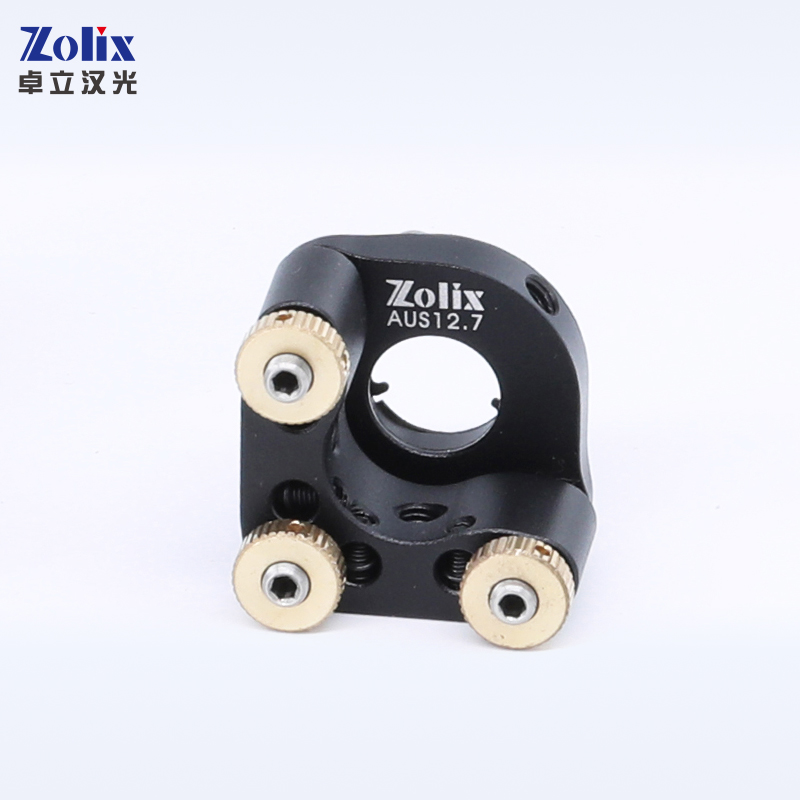
Kinematic Mirror Mount · AUS series Kinematic Mirror Mounts
AUS series Kinematic Mirror Mounts
Premium aluminium alloy, with black anodic oxidation; By adopting a superior line-line-line structure to replace the traditional point-line-surface structure, this mount offers significantly higher adjustment accuracy; Thicker mounting plate provides better ri
Datasheet (PDF) ↗CAD Model (RAR) ↗Catalog context
AUS12.7 is listed as AUS series Kinematic Mirror Mounts in the AUS series Kinematic Mirror Mounts family. The local catalog record provides these first selection fields: Optic Size(mm): φ12.5/ φ12.7; Optics Thickness(mm): 3~5; Adjustment Angle Range(°): ±3.
| Optic Size(mm) | φ12.5/ φ12.7 |
|---|---|
| Optics Thickness(mm) | 3~5 |
| Adjustment Angle Range(°) | ±3 |
| Front Plate Translation(mm) | MAX6 |
| Clear Aperture (mm) | φ11.5 |
| Optic Center Height (mm) | 15 |
| Resolution: angular adjustment per revolution(°) | ≈0.57 |
| Main Body Material and Treatment | Aluminium alloy, surface treated by black anodic oxidation. |
| Thickness of The Fixed Plate(mm) | 12 |
| Number of Pulling Spring | 4 |
| Locking Mechanics | Yes |
| Mounting Hole | M4 |
| Net Weight(g) | 42 |
Application context
Application guidance is derived from the product family and tied to the model-specific selection fields above.
Two-axis angular adjustment for directing a beam between components on the table.
Hold pointing where a few microradians of drift is visible directly in the measurement.
Kinematic seating returns an optic to the same orientation after it has been removed.
System integration
Use these checks to connect AUS12.7 to the surrounding optical, mechanical and control system. Every value shown is taken from this model's own specification record.
Technical FAQ
Optic Size(mm): φ12.5/ φ12.7 · Optics Thickness(mm): 3~5. Check diameter and thickness together. A holder that accepts the diameter can still fail to retain an optic that is thinner than its minimum, and clear aperture is normally smaller than the optic the mount holds.
Mounting Hole: M4. Match the thread standard and hole pitch before ordering. Metric and imperial hardware interchange only through an adapter, and a thread that is nominally similar is not necessarily the same pitch.
Adjustment Angle Range(°): ±3 · Resolution: angular adjustment per revolution(°): ≈0.57. Adjuster pitch sets the sensitivity you can actually work at. Confirm whether the stated figure is a total range or a per-revolution increment, and whether the mechanism is locked after adjustment.
Main Body Material and Treatment: Aluminium alloy, surface treated by black anodic oxidation.. Aluminium moves about 23 ppm per kelvin and stainless about 16. In a path where thermal drift is already budgeted, the material of the mount belongs in that budget rather than in the appearance of the part.
Net Weight(g): 42. Use the stated geometry and mass to fix beam height, clearance and the load carried by whatever this part is bolted to. These are the numbers that decide whether adjacent components physically collide.
Model selection
Compare AUS12.7 with the closest available models in the AUS series Kinematic Mirror Mounts family. Confirm option-dependent values on the final configuration before ordering.
| Selection parameter | AUS12.7 (current) | AUS20 | AUS25.4 |
|---|---|---|---|
| Optic accepted | φ12.5/ φ12.7 | φ20 | φ25/ φ25.4 |
| Adjustment | ±3 | ±3 | ±3 |
| Mounting interface | M4 | M4 M6,φ8 sink hole | M4 M6,φ8 sink hole |
| Material | Aluminium alloy, surface treated by black anodic oxidation. | Aluminium alloy, surface treated by black anodic oxidation. | Aluminium alloy, surface treated by black anodic oxidation. |
Before you specify
Engineering context for choosing this class of component, with the tradeoffs worked through on real specifications.
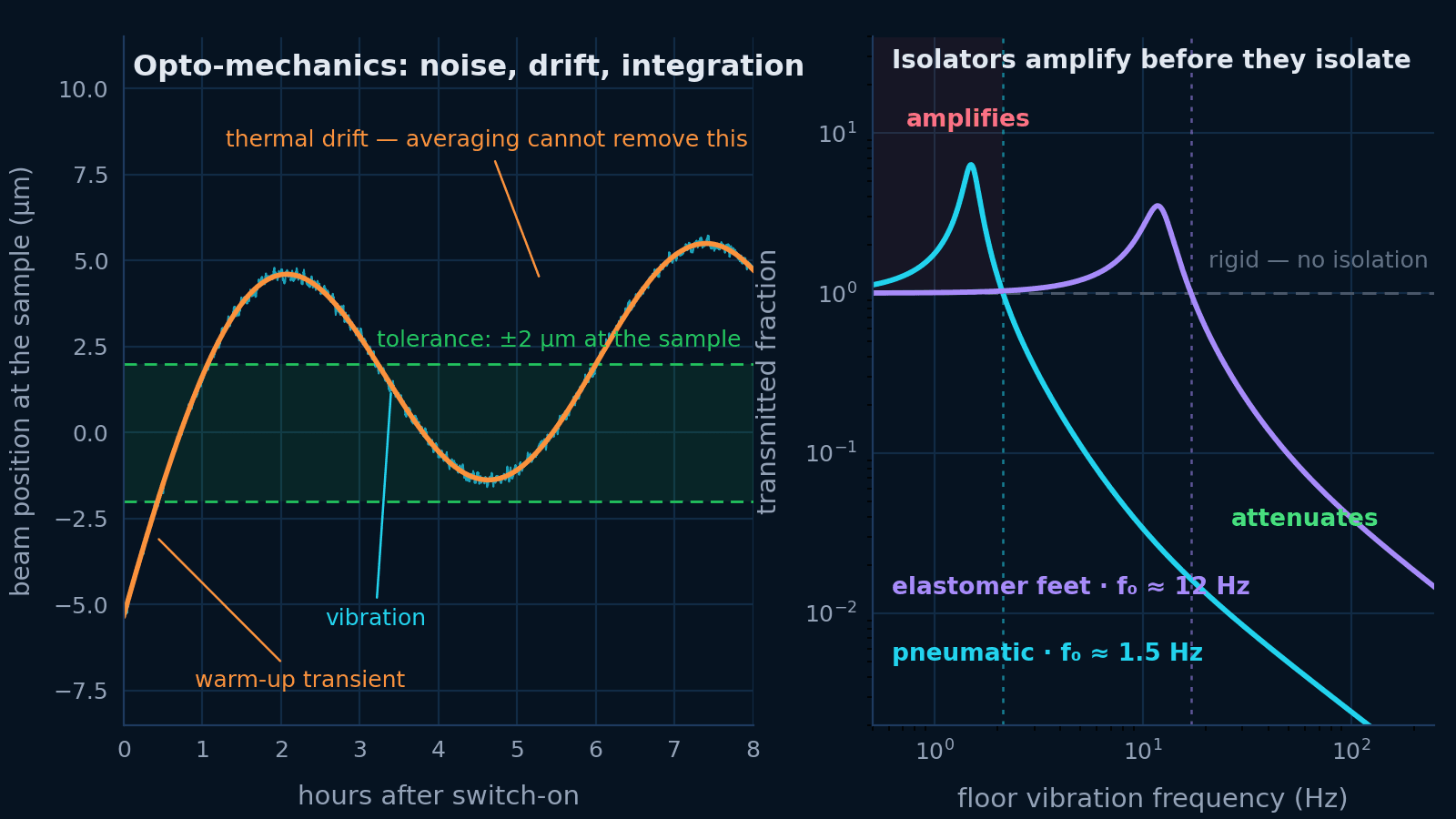 Opto-mechanics
Vibration, thermal drift and mechanical integration are one problem. Budget the motion at the sample, then specify the table, the isolation, the mounts and the beam height that budget asks for.
Open guide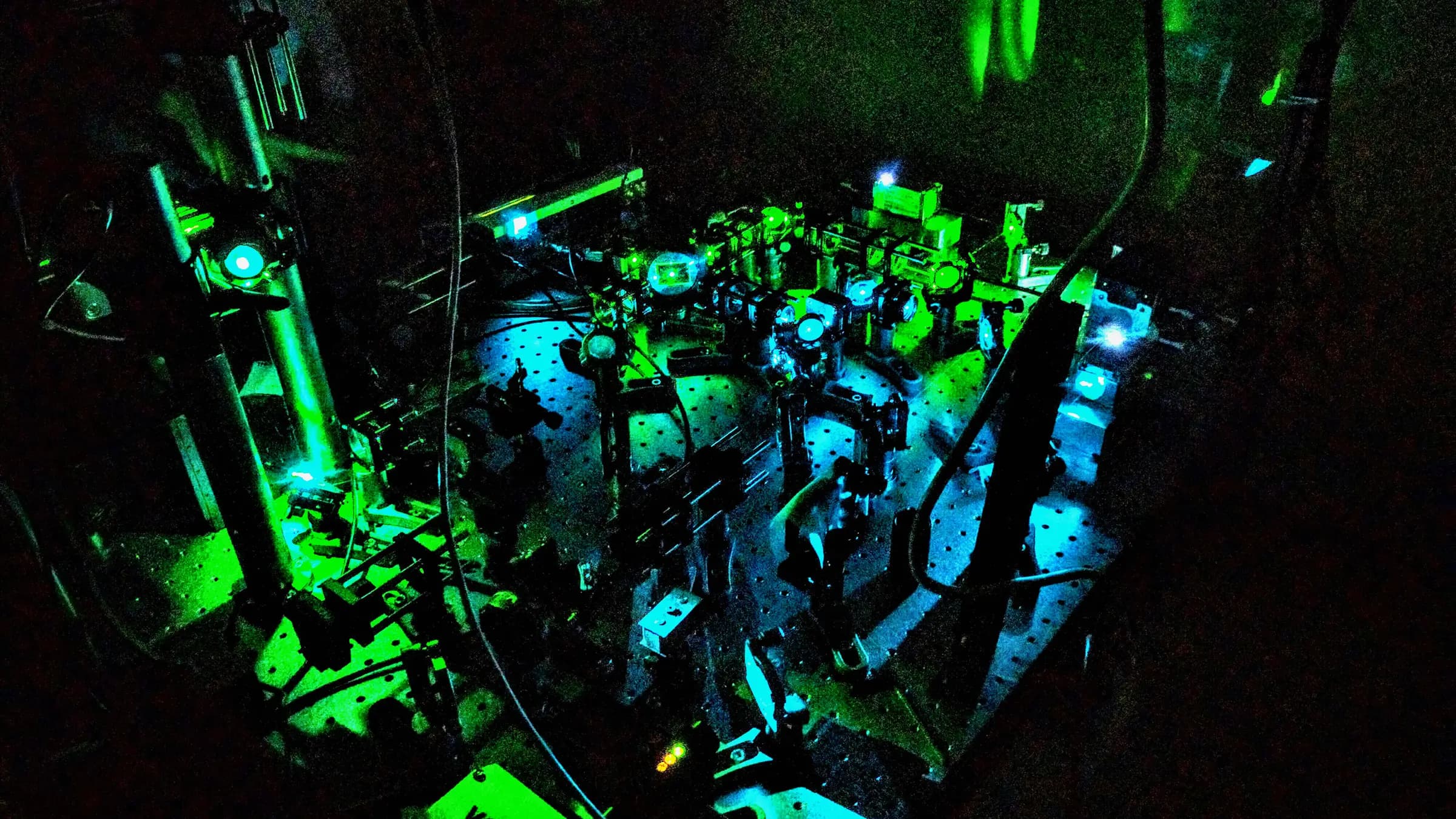 Optical microscopy
Design the trapping beam, objective, mechanics, imaging, QPD detection, calibration, and safety workflow as one instrument.
Open guide