Compare the details
Technical specifications
Compare the listed configurations and match the specifications to your setup.
Jump to a specification table (2)
6 specification rows.
Standard fiber collimators
1 entryScroll horizontally to compare all columns
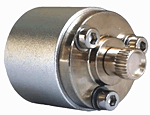
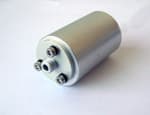
| Model | FOC-01-A (Spherical lens) | FOC-01-B (Spherical lens) | FOC-02 (Aspherical lens) |
|---|---|---|---|
| Features | Adjustable focus optional Customization available | Adjustable focus optional Customization available | Good spot uniformity Ultra compact size Customization available |
Additional collimator configurations
5 entries| Configuration | Optical design or delivery |
|---|---|
| Aspheric lens collimator | Aspheric optics |
| Multimode achromatic collimator | Achromatic optics for multimode fiber |
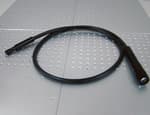
| Aspheric collimator with fiber | Integrated fiber delivery |
| Large-beam collimator | Expanded output beam |
| Long-distance collimator | Long-distance beam delivery |
Build around your experiment
What to specify
Share these details with your enquiry so we can match the component to your optical setup.
- 01Wavelength, optical power and required output beam or spot.
- 02Fiber mode, core diameter, numerical aperture and connector, where applicable.
- 03Delivery length, mounting geometry and source compatibility.
Technical FAQ
Configuration questions for Fiber Optic Collimator
Which fiber and connector does the Fiber Optic Collimator use?
Aspheric collimator with fiber: Integrated fiber delivery. Specify connector polish and fiber architecture together. FC/PC, FC/APC and SMA interfaces, and single-mode, multimode and polarization-maintaining fibers, impose different return-loss, mode-field and alignment requirements.
Technical documents
Keep the specifications at hand when planning your setup.
Download datasheet (PDF)Talk through your setup
Find the right configuration
Add this component to your enquiry and include your requirements. We will help specify the variant, interfaces and mounting.