Automated scanning and mapping
Step-and-acquire across areas far wider than a single field of view.
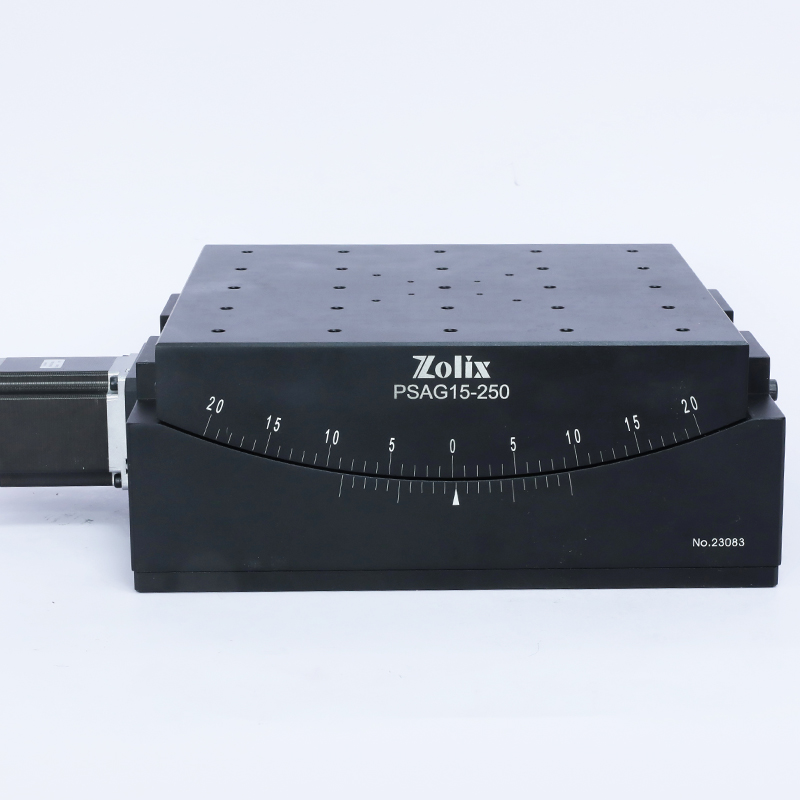
Opto-Mechanics · PSAG Series Motorized Goniometers
PSAG goniometer plus rotation orienting platform; +/-15 deg dual-axis tilt; 250 mm platform/radius class; 360 deg motorized rotation; 0.001 deg resolution.
Datasheet (PDF) ↗CAD Model (RAR) ↗Catalog context
PSAG15-250 is listed in the PSAG Series Motorized Goniometers family. The local catalog record provides these first selection fields: Stage surface size(mm): 250×250; Swing angle range:(°): ±15; Overall height(mm): 110±0.1.
| Stage surface size(mm) | 250×250 |
|---|---|
| Swing angle range:(°) | ±15 |
| Overall height(mm) | 110±0.1 |
| Worm gear/worm transmission ratio | 610:1 |
| Guide mechanism | Arc V-shaped ball guide |
| Worm gear material | Brass |
| Material and process technology of worm | Steel, high-frequency quench |
| Main body material and surface treatment | Black anodized aluminum alloy |
| Weight(Kg) | 14.8 |
| Shaft coupling (OD - OD1- OD2)(mm) | 30-6.35-10 |
| Step resolution(”) | 10.62 |
| 8-fine-subdivision resolution (") | ≈1.32 |
| Max speed(/s)* | ≈5.9 |
| Motor and its stepping angle (°) | 2-phase 57 stepping motor, 1.8 |
| Model of motor | 57BYG250CIl |
| Working current(A) | 2.4 |
| Torque of motor(N-m) | 1.72 |
| Brand and model number of stepping driver (optional) | Moons, SR4 |
| Type of plug for stage | DB9 ( pin ) |
| Position-limit sensors (built-in) | 2*KX-SS-5GL2 |
| Voltage of power supply for sensors (V) | DC5~24V±10% |
| Current consumption(mA) | <60 (total) |
| Control output | Position-limit sensors (built-in):dry-contact output |
| Status of output ports | Position-limit sensors (built-in):output ON when sensor is triggered |
| Horizontal direction(Kg) | 30 |
Application context
Application guidance is derived from the product family and tied to the model-specific selection fields above.
Step-and-acquire across areas far wider than a single field of view.
Move parts between fixed stations with closed-loop encoders holding position over long shifts.
Coordinate several axes from software for processing, inspection and test sequences.
System integration
Use these checks to connect PSAG15-250 to the surrounding optical, mechanical and control system. Every value shown is taken from this model's own specification record.
Technical FAQ
Step resolution(”): 10.62 · 8-fine-subdivision resolution ("): ≈1.32. Separate travel from resolution and both from repeatability. Repeatability is what an automated sequence actually depends on, and it is the figure most often absent from a headline specification.
Motor and its stepping angle (°): 2-phase 57 stepping motor, 1.8 · Model of motor: 57BYG250CIl. Pair open-loop mechanics with the specified high-voltage or inertial driver, and closed-loop variants with the controller their capacitive, strain-gauge or encoder feedback requires. Matching connectors do not guarantee electrical compatibility.
Model selection
Compare PSAG15-250 with the closest available models in the PSAG Series Motorized Goniometers family. Confirm option-dependent values on the final configuration before ordering.
| Selection parameter | PSAG15-250 (current) | PSAG15-195 | PSAG15-370 |
|---|---|---|---|
| Travel / adjustment | Confirm for this model | Confirm for this model | Confirm for this model |
| Resolution / sensitivity | 10.62 | 14.4 | 7.45 |
| Load / optic size | Confirm for this model | Confirm for this model | Confirm for this model |
| Mounting interface | Confirm for this model | Confirm for this model | Confirm for this model |
PSAG15-130
PSAG goniometer plus rotation orienting platform; +/-15 deg dual-axis tilt; 130 mm platform/radius class; 360 deg motorized rotation; 0.001 deg resolution.
PSAG15-195
PSAG goniometer plus rotation orienting platform; +/-15 deg dual-axis tilt; 195 mm platform/radius class; 360 deg motorized rotation; 0.001 deg resolution.
PSAG15-370
PSAG goniometer plus rotation orienting platform; +/-15 deg dual-axis tilt; 370 mm platform/radius class; 360 deg motorized rotation; 0.001 deg resolution.
Before you specify
Engineering context for choosing this class of component, with the tradeoffs worked through on real specifications.
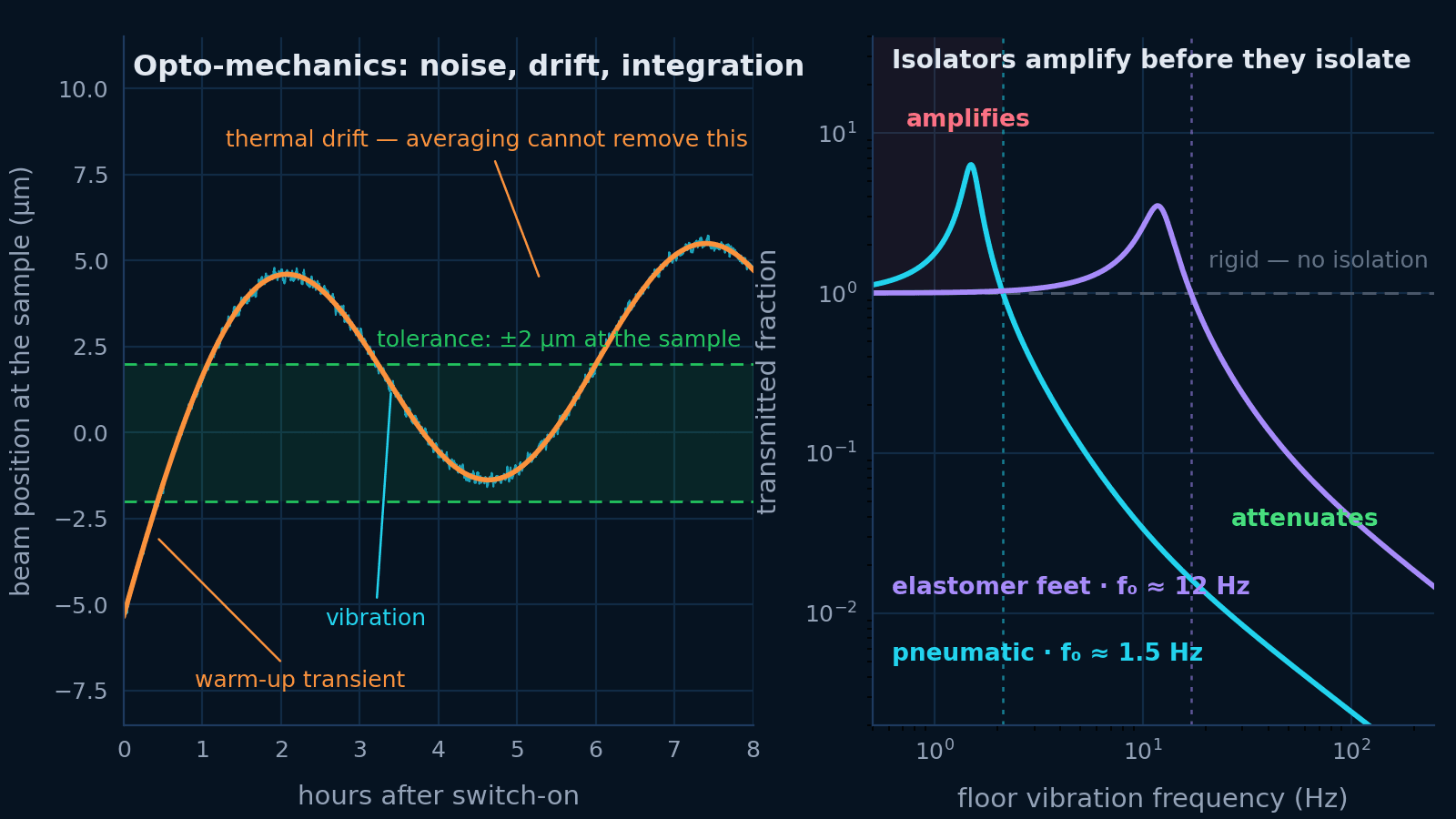 Opto-mechanics
Vibration, thermal drift and mechanical integration are one problem. Budget the motion at the sample, then specify the table, the isolation, the mounts and the beam height that budget asks for.
Open guide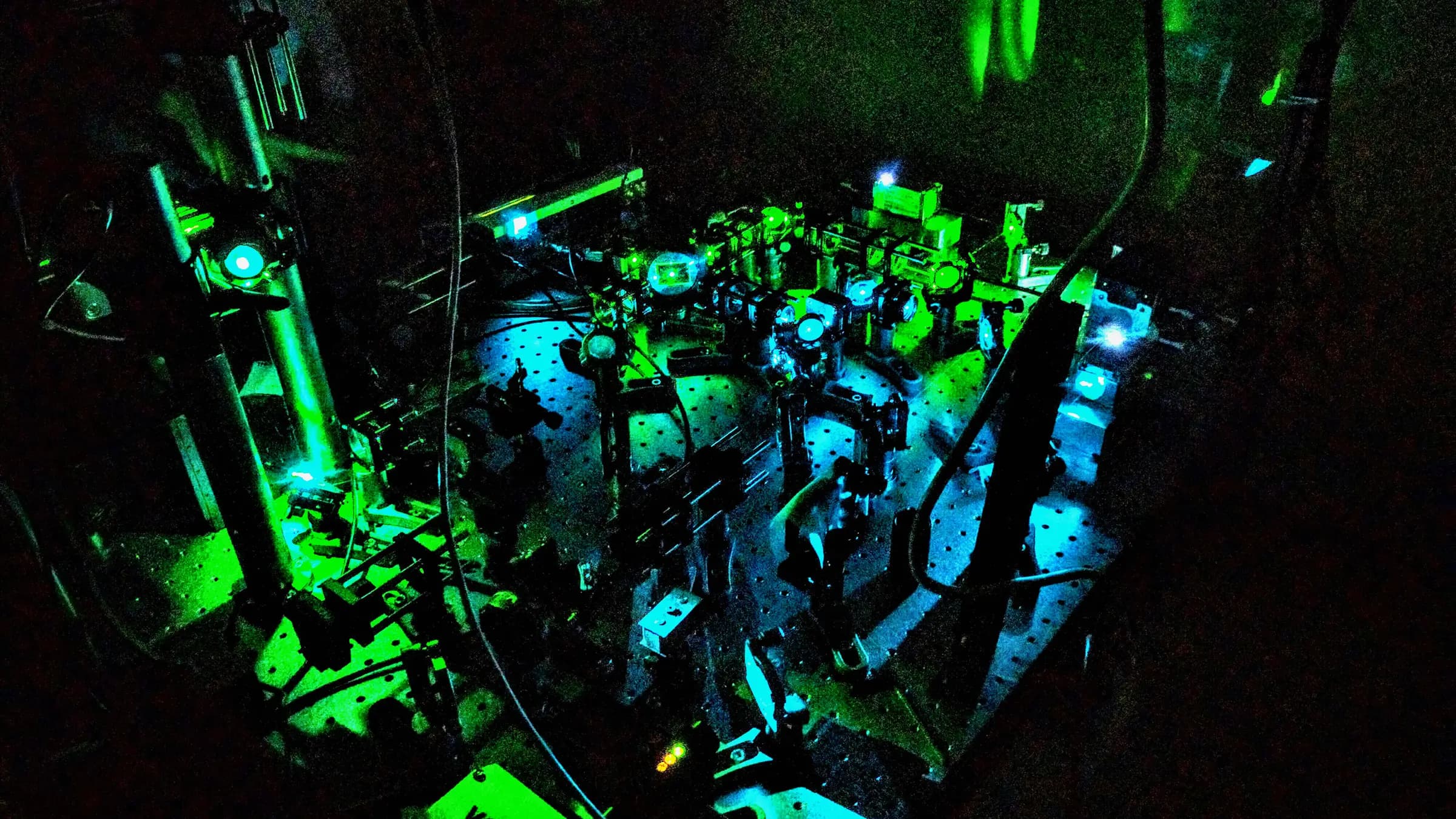 Optical microscopy
Design the trapping beam, objective, mechanics, imaging, QPD detection, calibration, and safety workflow as one instrument.
Open guide