Pulse energy, repetition rate, pulse width
TUN-TiL-780-850780 nm near-infrared tunable Q-switched pulsed laser
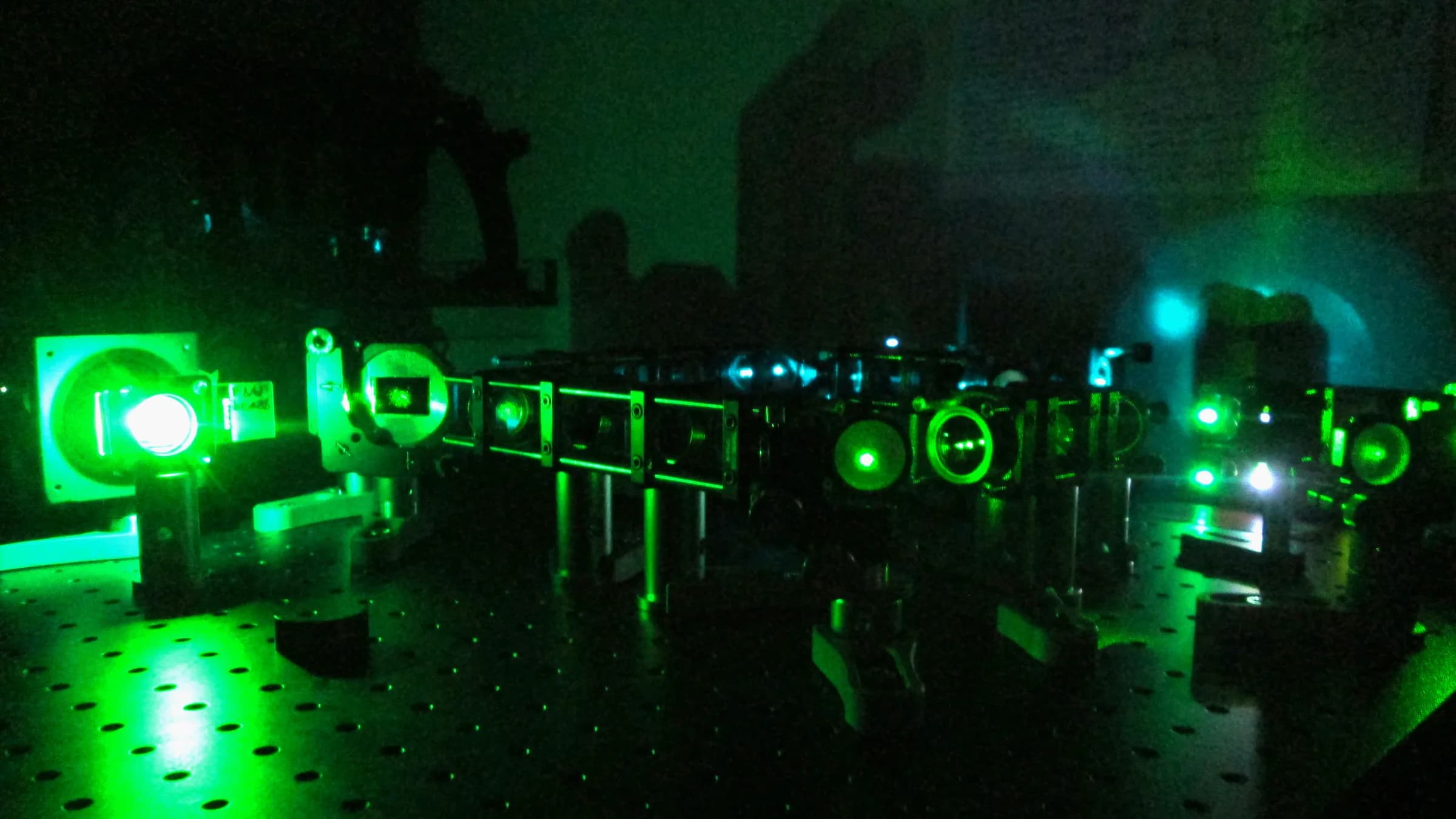
780 nmThe TUN-TiL-780-850 is a 780 nm nanosecond Ti:sapphire laser. An optical pump excites titanium ions in a sapphire crystal. Their broad gain spectrum allows the resonator to select and tune the output wavelength within the specified range. Q-switching stores energy in the gain medium while resonator losses are high, then lowers those losses to release a pulse. Pulse energy and repetition rate must be considered together, because changing the pulse spacing changes the average power for a fixed pulse energy. Pulses lasting approximately 10 ns deliver the energy in a brief interval; pulse energy and focused spot size determine the intensity at the sample. The quoted power range represents factory-set configurations; specify the required output rating when ordering.
Specifications
TUN-TiL-780-850
17 specification rows
| Output / average power | 1~500 mW |
|---|---|
| Beam / notes | Wavelength Tunable Infrared Laser |
| Pulse duration (ns) | ~10 |
| Rep. rate (kHz) | 1-5 |
| Ave power stability (rms, 4 hours±3℃) | <5%, <3% |
| Beam divergence, full angle (mrad) | <3 |
| Cooled method | Water Cooled |
| Operating temperature (℃) | 15-35 |
| Power supply (220VAC) | PSU-HPL |
| Expected lifetime (hours) | >10000 |
| Wavelength (nm) | 780-850 |
| Operating mode | Actively Q-switched |
| Single pulse energy (uJ) | 1-100@ 5kHz |
| Peak power (kW) | 0.1-1@ 5kHz |
| Beam diameter at the aperture (1/e2,mm) | ~2 |
| Warm-up time (minutes) | <10 |
| Beam height from base plate (mm) | 64 |
What do you need?
Tell us the pulse energy, pulse width, repetition rate and beam delivery you need, and we'll reply with the matching configuration and lead time.
Model selection
Nearby series comparison
Compare TUN-TiL-780-850 with the closest available models in the Pulsed Lasers family.
| Selection parameter | TUN-TiL-780-850 (current) | MDL-780(FC) | FC-780 |
|---|---|---|---|
| Wavelength | 780 nm | 780 nm | 780 nm |
| Optical power / pulse energy | 1~500 mW | 1~2000 mW | 1~3 W |
| Operating mode / pulse width | Actively Q-switched | CW | CW |
| Beam quality | <3 | Multimode | — |
Related pulsed lasers
Compare the TUN-TiL-780-850 with nearby pulsed lasers across the wavelength range.