Fluorophore set
Choose lines around the assay panel and detector channels.
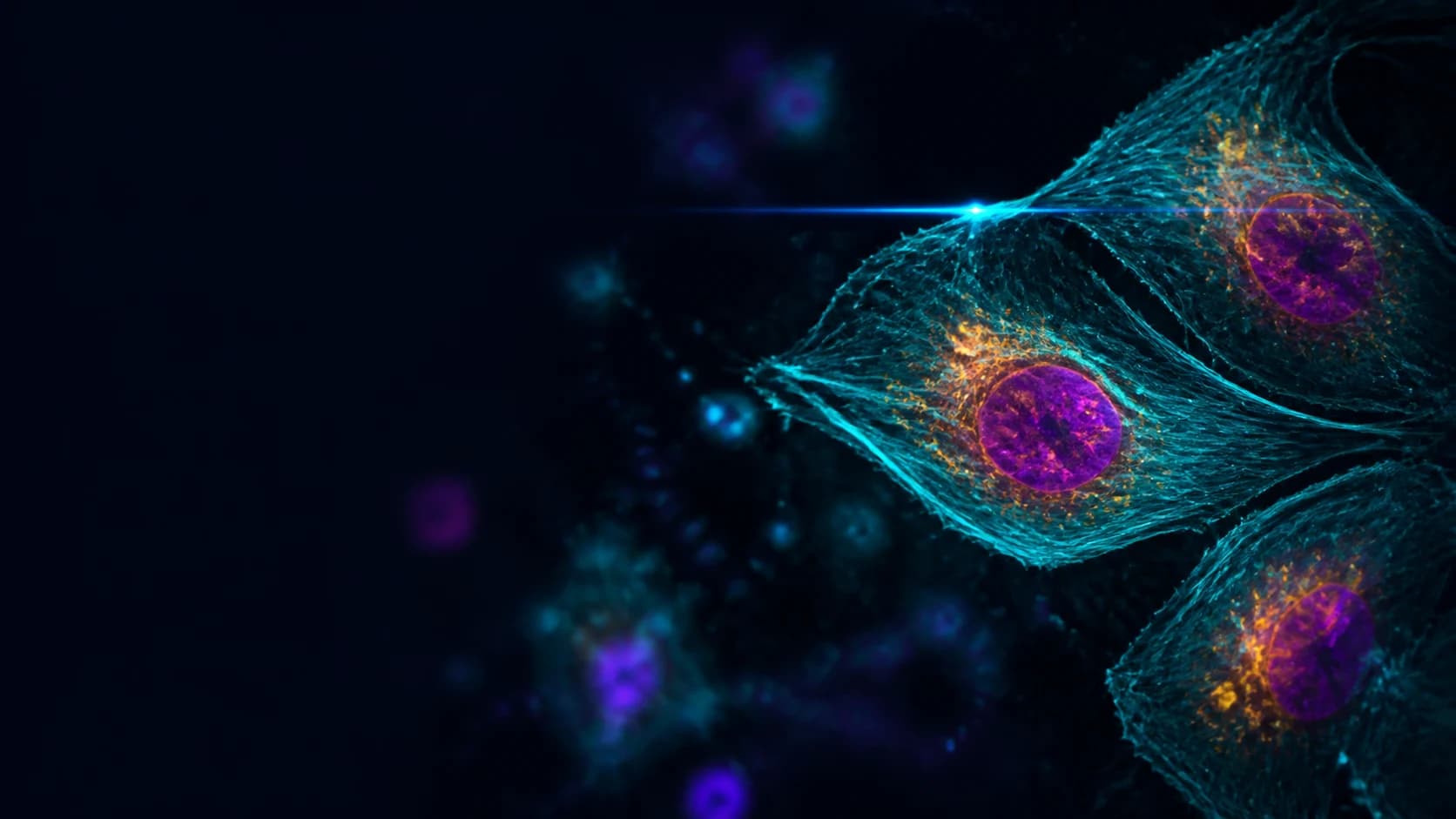
See living systems · Bioscience & imaging
Keep every excitation channel steady while cells move at instrument speed.
Choose lines around the assay panel and detector channels.
Reduce intensity variation across high-throughput runs.
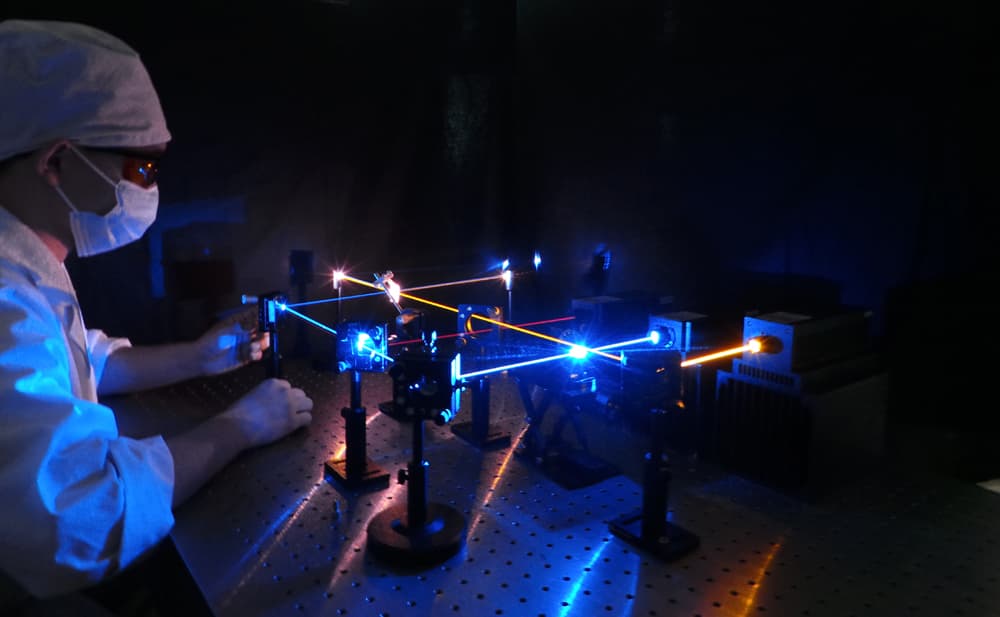
Align channels, fibers, modulation, and control as one subsystem.
Why the source matters
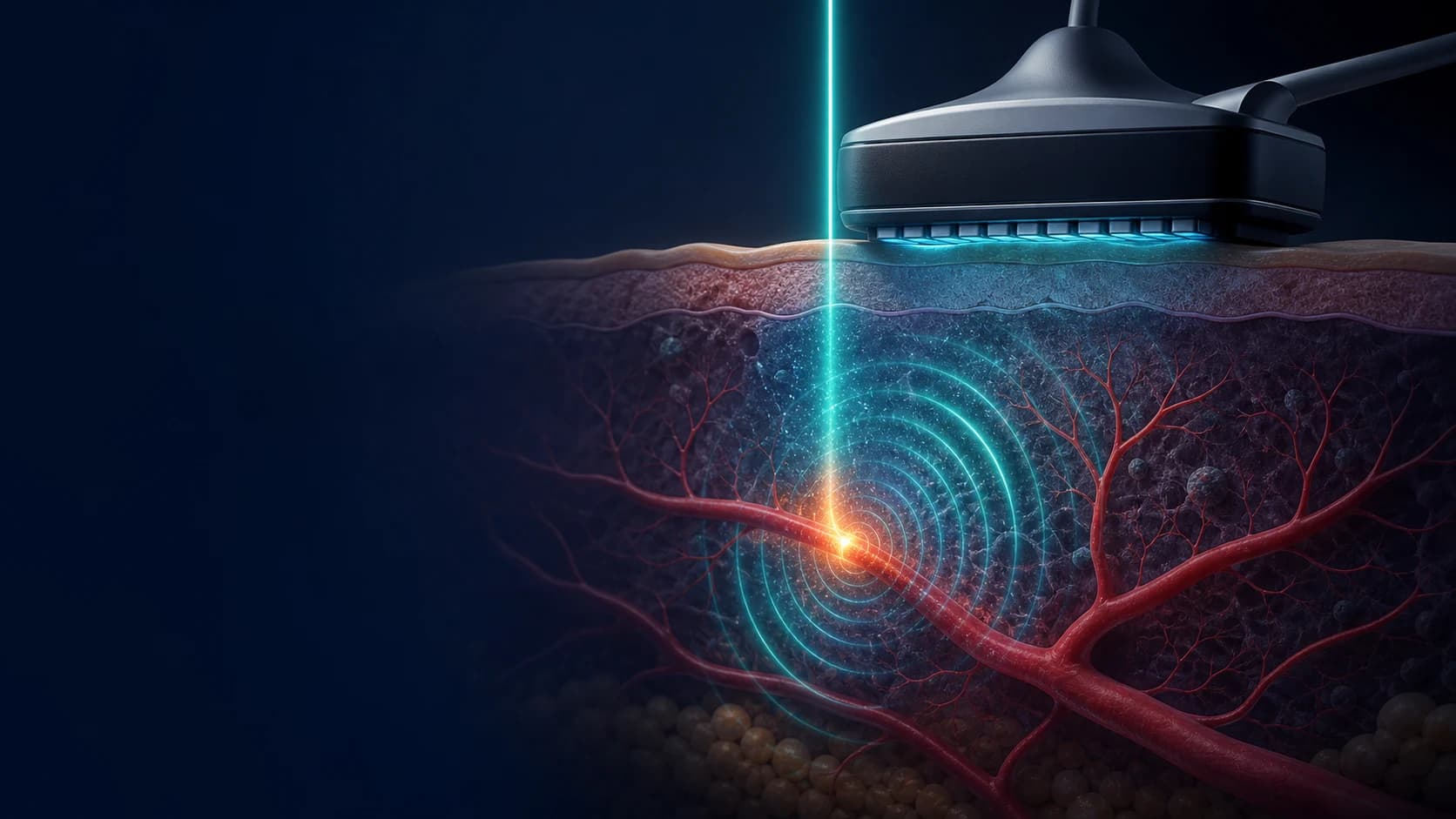
The correct source is defined at the sample or process—not at the laser aperture. Wavelength and operating mode set the interaction; stability, delivery, timing, and control determine whether it stays useful in the complete system.
Application workflow
Three decisions turn the application into a practical source specification.
List fluorophores, excitation peaks, emission filters, and required power per interrogation point.
Set beam diameter, ellipticity, pointing, polarization, and power after the final optic or fiber.
Confirm warm-up, modulation, individual line control, monitoring, and instrument communication.
Selection guide
These are starting architectures. Precisometer qualifies the final wavelength, output, delivery, control, and integration package against your setup.
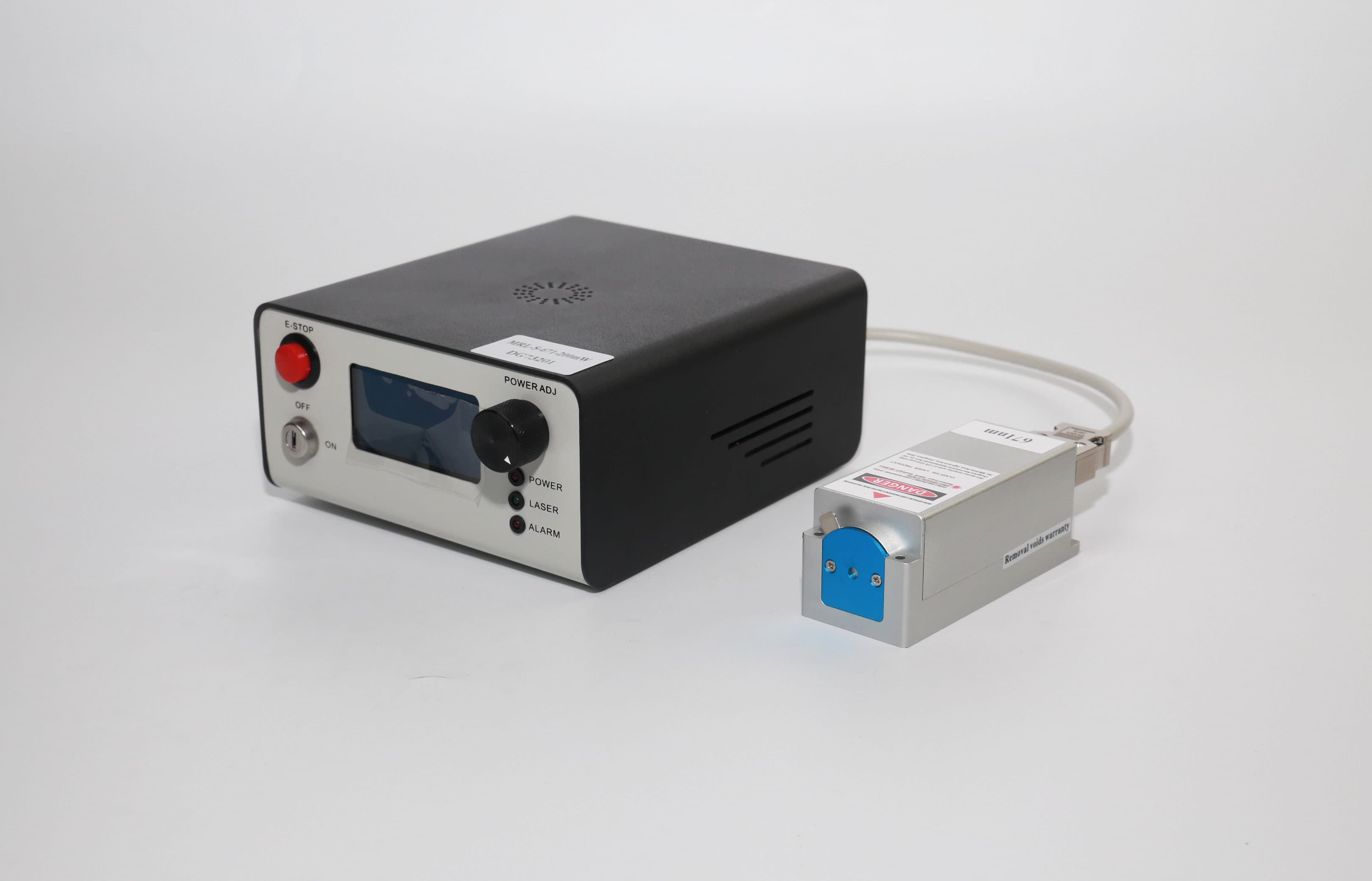
A compact low-noise CW source supports a focused assay and simple optical path.
A multi-wavelength combiner reduces alignment work and supports line-by-line control.
Specify mechanics, thermal behavior, control protocol, and service access early.
Source architecture
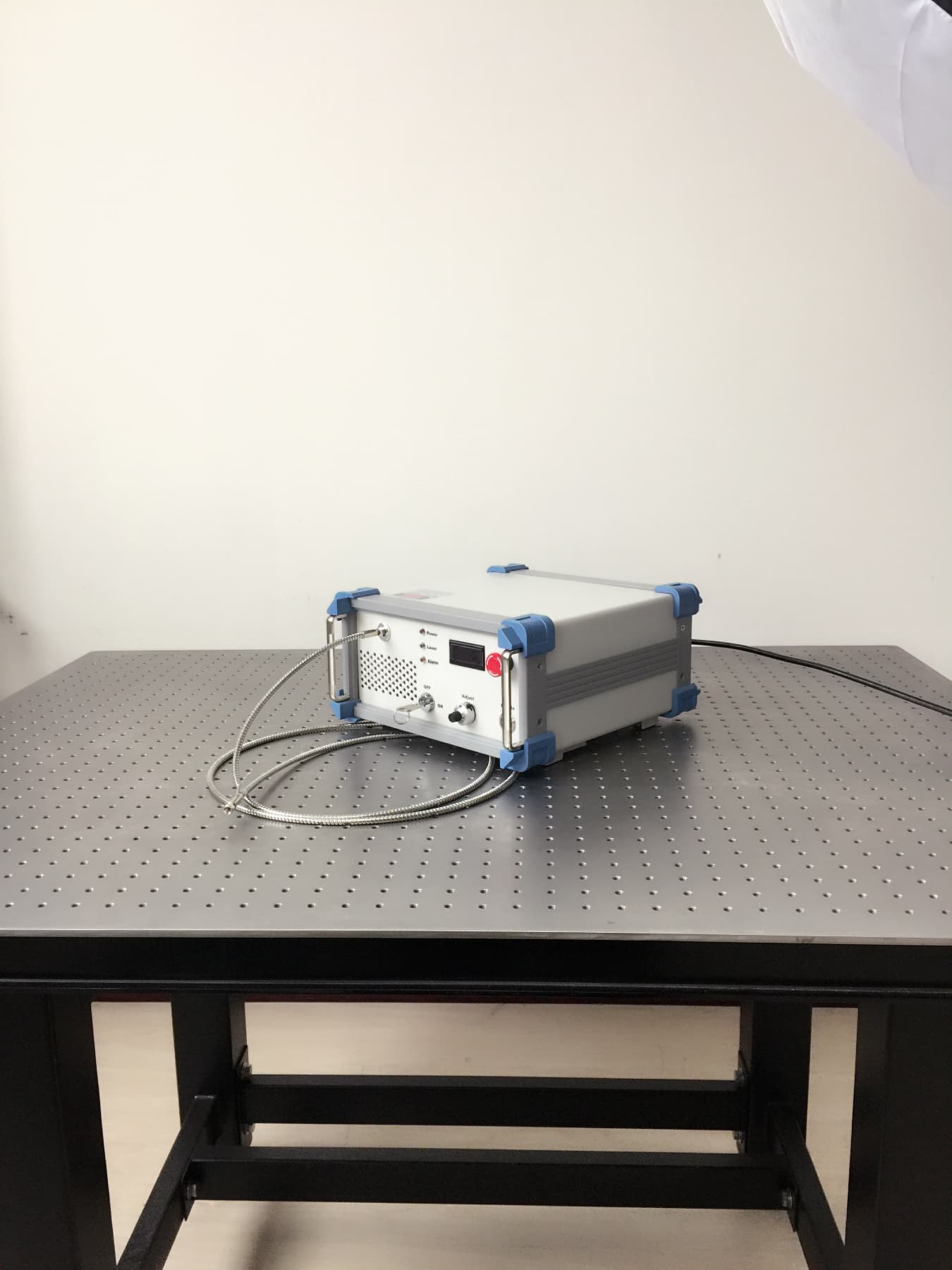
For instrument subsystems where the source, optics, control, and delivery path should be configured as one package.
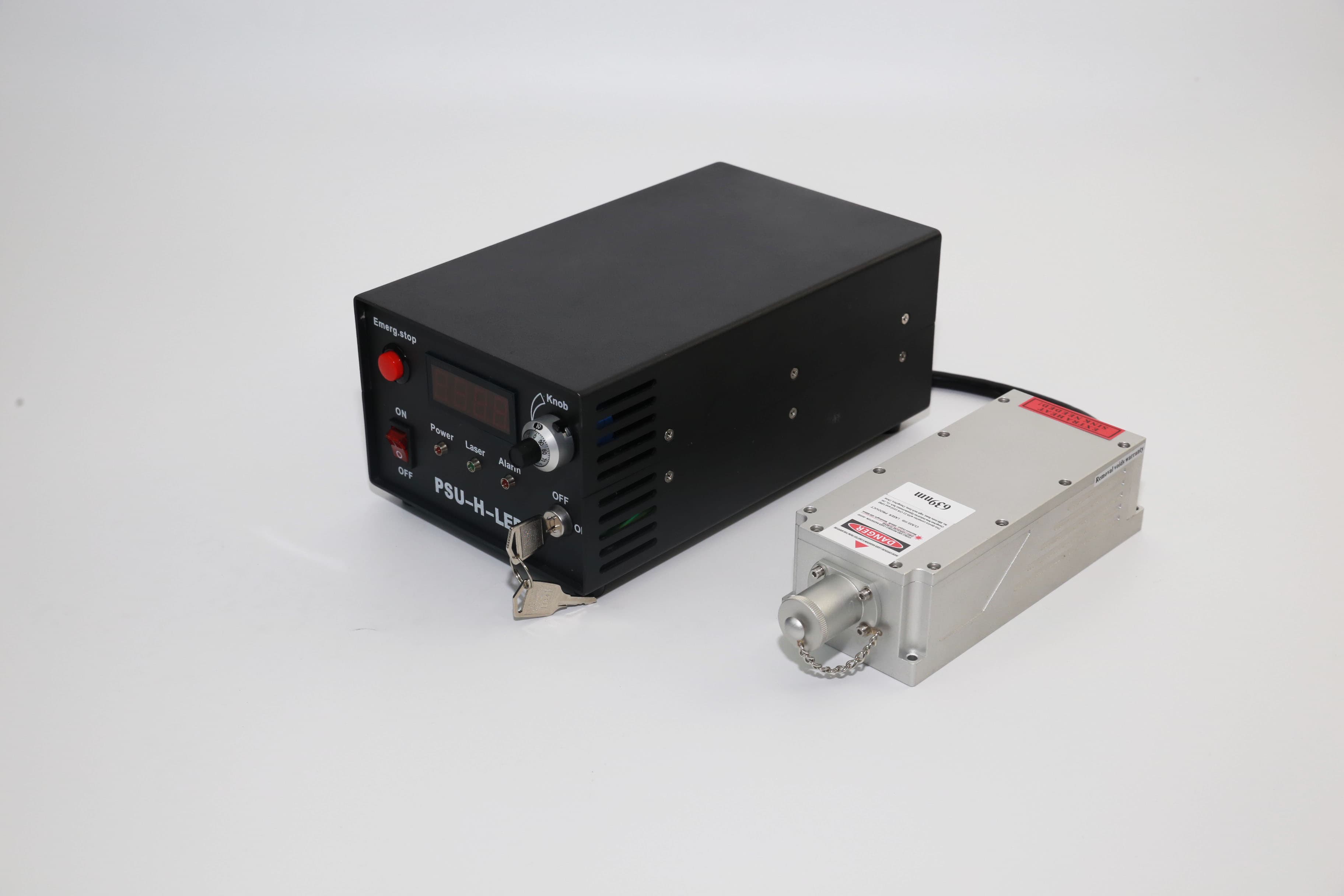
For stable continuous sources where clean beam quality, power stability, and practical instrument integration matter.
Ready to specify
Ask for fluorophore set, number of lines, power per line, beam size, fiber interface, modulation, and control protocol.
Continue exploring