Compare the details
Technical specifications
Compare the listed configurations and match the specifications to your setup.
Jump to a specification table (2)
15 specification rows.
Common optical specifications
9 entries| Parameter | Specification |
|---|---|
| Material | BK7 Grade A Optical Glass |
| Dimension Tolerance | ± 0.2 mm |
| Thickness Tolerance | ± 0.2 mm |
| Flatness | l/4 @ 632.8 nm per 25 mm |
| Surface Quality | 60/40 scratch and dig |
| Extinction Ratio | >100:1 |
| Beam Deviation | <3 arc minutes |
| Principal Reflectance | Rs>99% and Rp<5% |
| Principal Transmittance | Tp >95% and Ts<1% |
Polarization beam-splitter plates
6 entriesScroll horizontally to compare all columns
| Part No. | Size (mm) | Application |
|---|---|---|
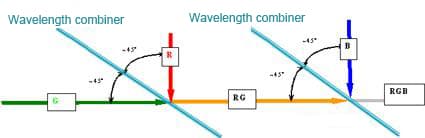
| PBS-RS | 15x30x2 | For red laser combining |
| PBS-RR | ¢15x2 | For red laser combining |
| PBS-BS | 15x15x2 | For blue laser combining |
| PBS-BR | ¢15x2 | For blue laser combining |
| PBS-GS | 15x15x2 | For green laser combining |
| PBS-GR | ¢15x2 | For green laser combining |
Build around your experiment
What to specify
Share these details with your enquiry so we can match the component to your optical setup.
- 01Operating wavelength, beam diameter and continuous or pulsed power.
- 02Required beam geometry, aperture, coating and polarization.
- 03Working distance, mechanical envelope and mounting interface.
Technical FAQ
Configuration questions for Polarization Beam Splitter / Combiner
What wavelengths does the Polarization Beam Splitter / Combiner cover?
Principal Reflectance: Rs>99% and Rp<5%. Check the specification at your angle of incidence. Coating bands and grating efficiency curves are quoted at a reference angle, and both shift as that angle changes.
What size is the Polarization Beam Splitter / Combiner?
Dimension Tolerance: ± 0.2 mm · Thickness Tolerance: ± 0.2 mm. Clear aperture is smaller than the physical part, and the mount that holds it takes more again. Size the optic from the beam diameter at that plane, including the margin the mount consumes.
What is the Polarization Beam Splitter / Combiner made from?
Material: BK7 Grade A Optical Glass · Flatness: l/4 @ 632.8 nm per 25 mm. Substrate and coating decide thermal behaviour and cleaning method as much as optical performance. Confirm both before the optic enters a high-average-power or vacuum path.
Technical documents
Keep the specifications at hand when planning your setup.
Download datasheet (PDF)Talk through your setup
Find the right configuration
Add this component to your enquiry and include your requirements. We will help specify the variant, interfaces and mounting.