Compare the details
Technical specifications
Compare the listed configurations and match the specifications to your setup.
Jump to a specification table (2)
25 specification rows.
Common grating specifications
6 entries| Parameter | Specification |
|---|---|
| Substrate | Float glass |
| Surface quality | 60/40 |
| Dimensional tolerance | ±0.5 mm |
| Diffraction efficiency | 60–80% at the blaze wavelength |
| Pulsed damage threshold | 350 mJ/cm² at 200 ns |
| CW damage threshold | 40 W/cm² |
Reflective diffraction gratings
19 entriesScroll horizontally to compare all columns · scroll down for more rows
| Model | Groove density (lines/mm) | Blaze wavelength (nm) | Blaze angle | Dimensions (mm) |
|---|---|---|---|---|
| G-600-250-12.7 | 600 | 250 | 4°18′ | 12.7 × 12.7 × 6 |
| G-600-500-12.7 | 600 | 500 | 8°37′ | 25 × 25 × 10 |
| G-600-500-25 | 600 | 500 | 8°37′ | 25 × 25 × 10 |
| G-600-640-25 | 600 | 640 | 11°4′ | 12.7 × 12.7 × 6 |
| G-600-750-12.7 | 600 | 750 | 13°0′ | 12.7 × 12.7 × 6 |
| G-600-750-25 | 600 | 750 | 13°0′ | 25 × 25 × 10 |
| G-600-1000-25 | 600 | 1000 | 17°27′ | 25 × 25 × 10 |
| G-1200-250-25 | 1200 | 250 | 8°37′ | 25 × 25 × 10 |
| G-1200-300-12.7 | 1200 | 300 | 10°22′ | 12.7 × 12.7 × 6 |
| G-1200-500-25 | 1200 | 500 | 17°27′ | 25 × 25 × 10 |
| G-1200-640-25 | 1200 | 640 | 22°35′ | 25 × 25 × 10 |
| G-1200-750-25 | 1200 | 750 | 26°44′ | 25 × 25 × 10 |
| G-1200-1000-25 | 1200 | 1000 | 36°52′ | 25 × 25 × 10 |
| G-1800-250-12.7 | 1800 | 250 | 13°0′ | 12.7 × 12.7 × 6 |
| G-1800-300-25 | 1800 | 300 | 15°40′ | 25 × 25 × 10 |
| G-1800-500-25 | 1800 | 500 | 26°44′ | 25 × 25 × 10 |
| G-2400-250-12.7 | 2400 | 250 | 17°27′ | 12.7 × 12.7 × 6 |
| G-2400-250-25 | 2400 | 250 | 17°27′ | 25 × 25 × 10 |
| G-3600-200-25 | 3600 | 200 | 21°6′ | 25 × 25 × 10 |
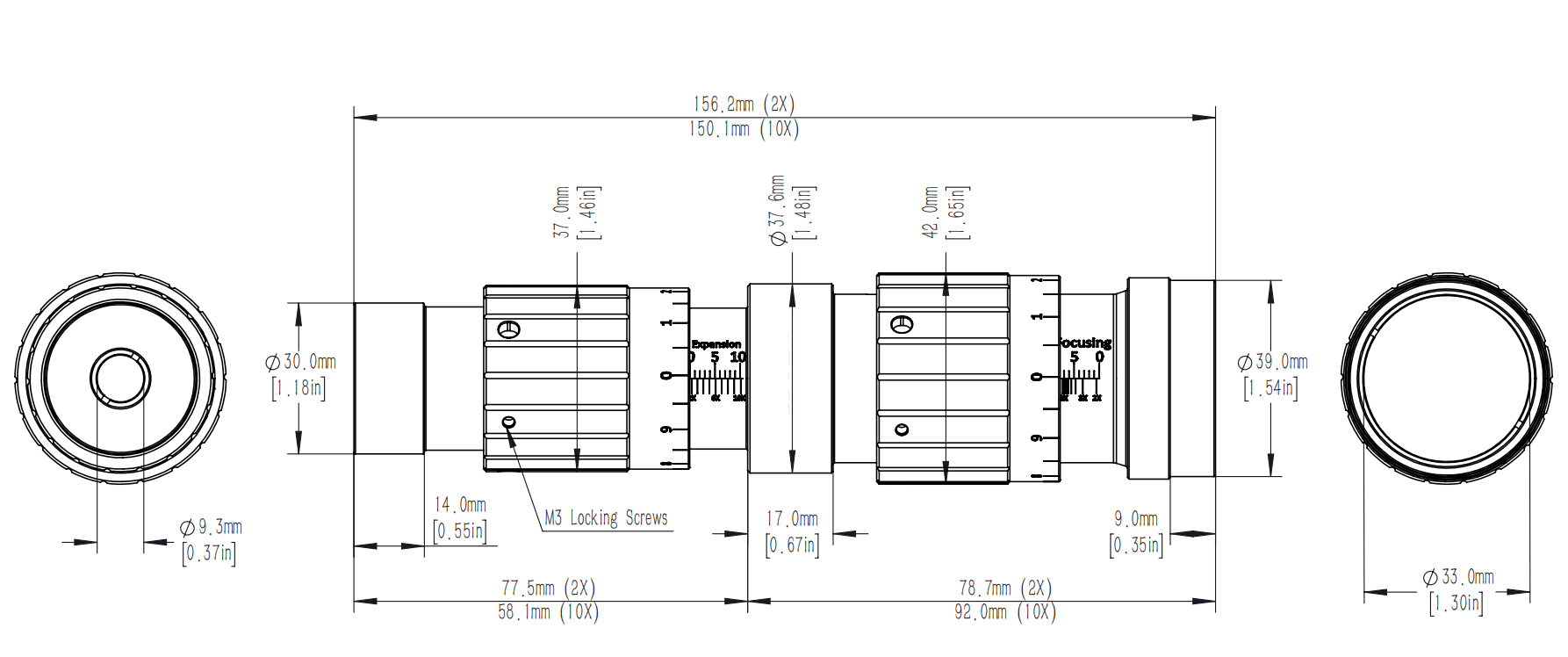
Confirm the mechanical drawing for the selected model before specifying the mount.
Scroll within the table to view every row.
Build around your experiment
What to specify
Share these details with your enquiry so we can match the component to your optical setup.
- 01Operating wavelength, beam diameter and continuous or pulsed power.
- 02Required beam geometry, aperture, coating and polarization.
- 03Working distance, mechanical envelope and mounting interface.
Technical FAQ
Configuration questions for Grating
What size is the Grating?
Dimensional tolerance: ±0.5 mm. Clear aperture is smaller than the physical part, and the mount that holds it takes more again. Size the optic from the beam diameter at that plane, including the margin the mount consumes.
How much optical power can the Grating take?
Diffraction efficiency: 60–80% at the blaze wavelength · Pulsed damage threshold: 350 mJ/cm² at 200 ns. Damage thresholds are quoted for a pulse duration, wavelength and beam diameter. Scale them to your own conditions rather than reading the headline figure as a rating.
What is the Grating made from?
Substrate: Float glass · Surface quality: 60/40. Substrate and coating decide thermal behaviour and cleaning method as much as optical performance. Confirm both before the optic enters a high-average-power or vacuum path.
Technical documents
Keep the specifications at hand when planning your setup.
Download datasheet (PDF)Talk through your setup
Find the right configuration
Add this component to your enquiry and include your requirements. We will help specify the variant, interfaces and mounting.