The central idea
Select for the operating point, not the room-temperature datasheet.
A stage that moves freely on a benchtop can lose travel, force, speed, or encoder accuracy at cryogenic temperature. Differential contraction shifts alignment, wiring adds stiffness and heat leak, and unsuitable materials become contamination sources in UHV.
Begin with the required motion at base temperature: coarse approach, long translation, fine scanning, endless rotation, or fixed-pivot tilt. Then apply the environment, payload, travel, resolution, and integration constraints in that order.
Coarse + fine
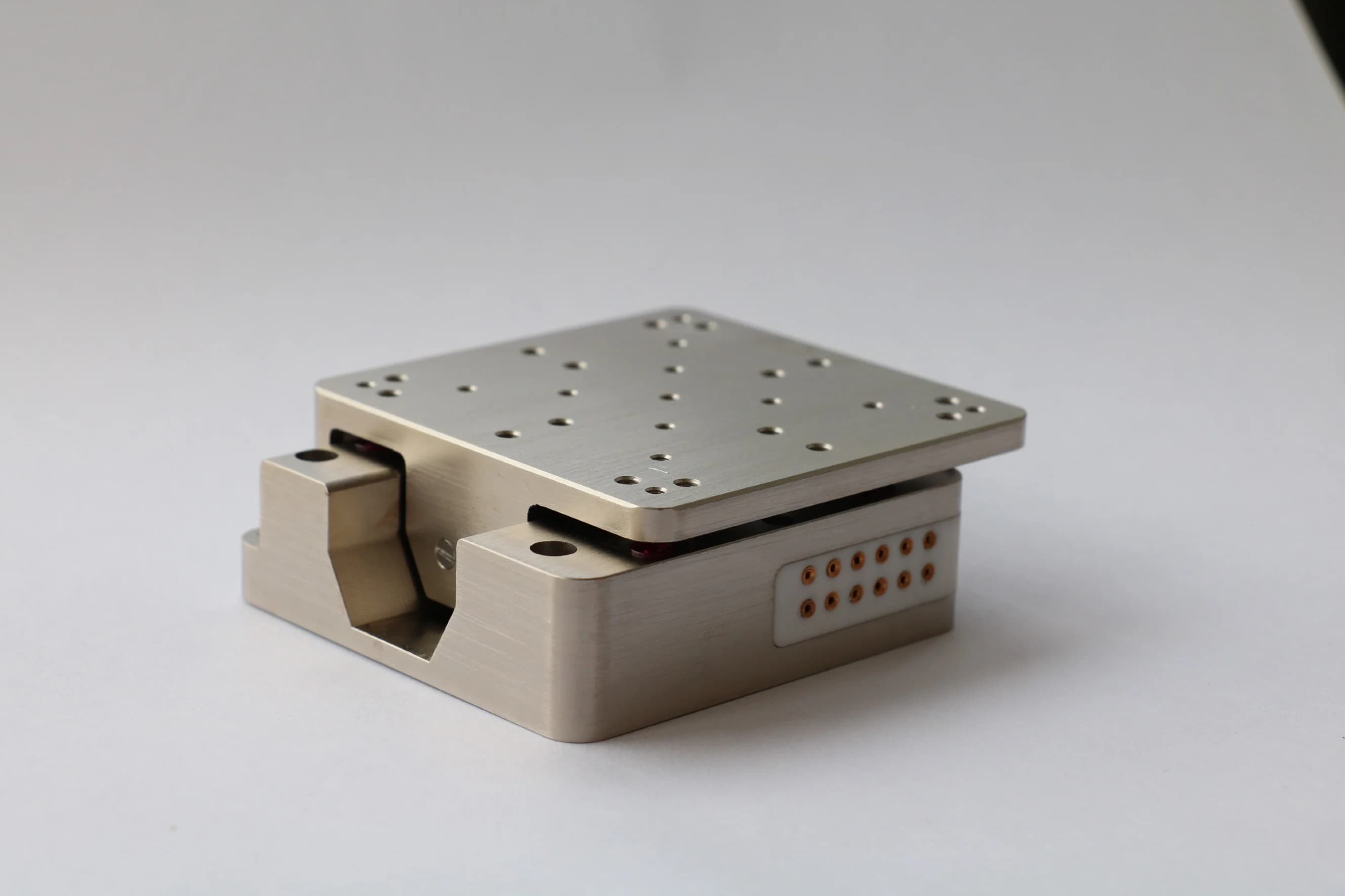
Use a stick-slip stage for millimetre approach and a flexure scanner for nanometre work.
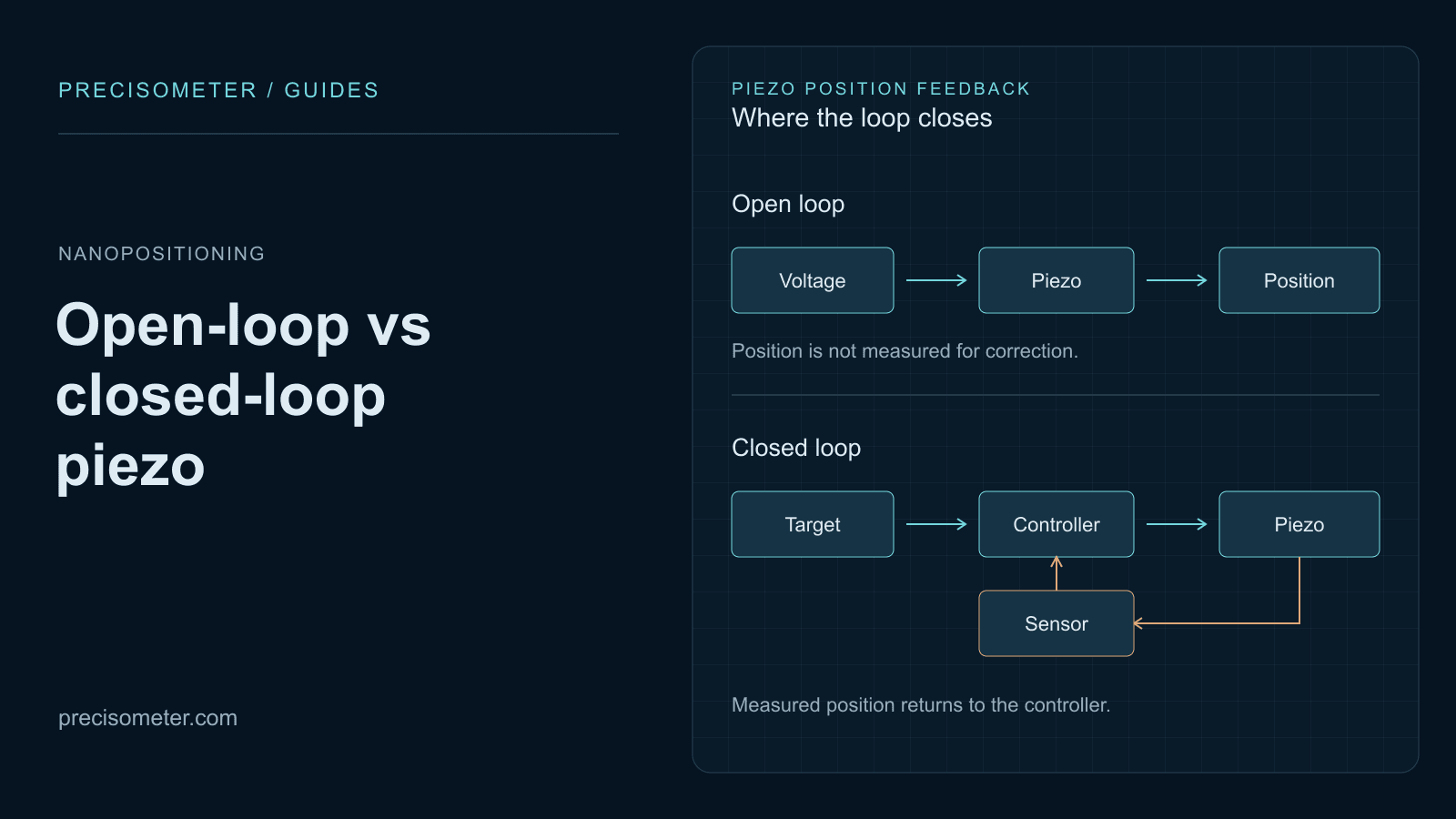
Open + closed loop
Open loop minimizes complexity; closed loop controls drift, hysteresis, and repeatability.
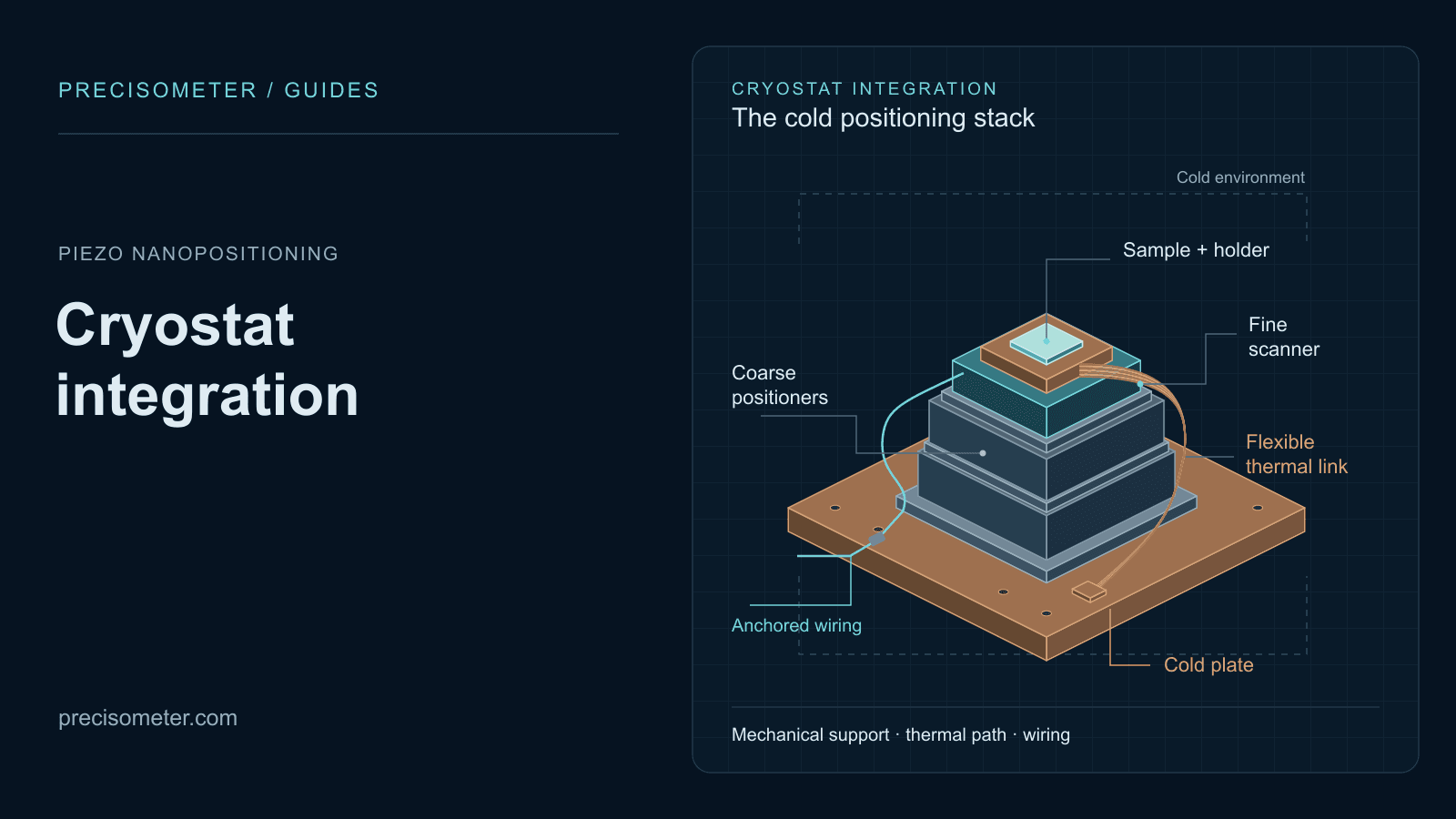
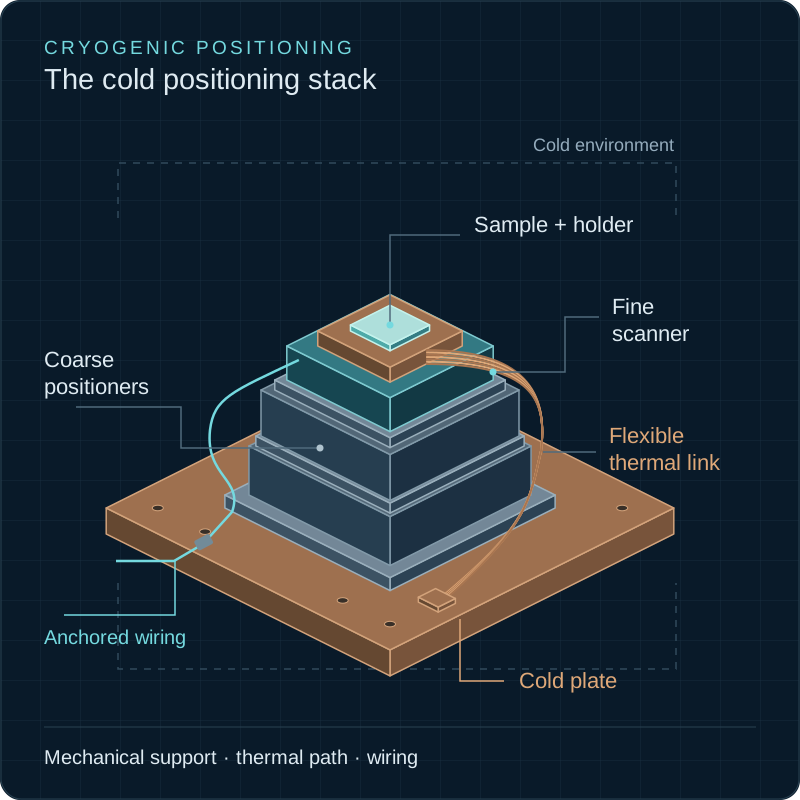
Stage + thermal path
A positioner is only as cold and stable as its mounting and thermalization strategy.
Six selection gates
What must be fixed before choosing a model
Base temperature
Specify 300 K, 77 K, 4 K, 1 K, or millikelvin operation. Use an explicit ULT grade for dilution temperatures.
Pressure regime
Distinguish ambient cryogenic operation, HV, and UHV. Select the exact UHV or UHV.ULT suffix where available.
Motion architecture
Coarse stick-slip, flexure scan, rotation, and goniometric tilt solve different mechanical problems.
Travel and payload
Include the sample, holder, adapters, cables, and any upper stages in the payload and moment budget.
Feedback
Resistive encoders support coarse closed loop; capacitive sensors enable high-linearity fine scanning.
Magnetic and thermal load
Confirm non-magnetic construction, field orientation, cable dissipation, and conductive heat paths.
Interactive positioner selector
Translate the experiment into a stage shortlist
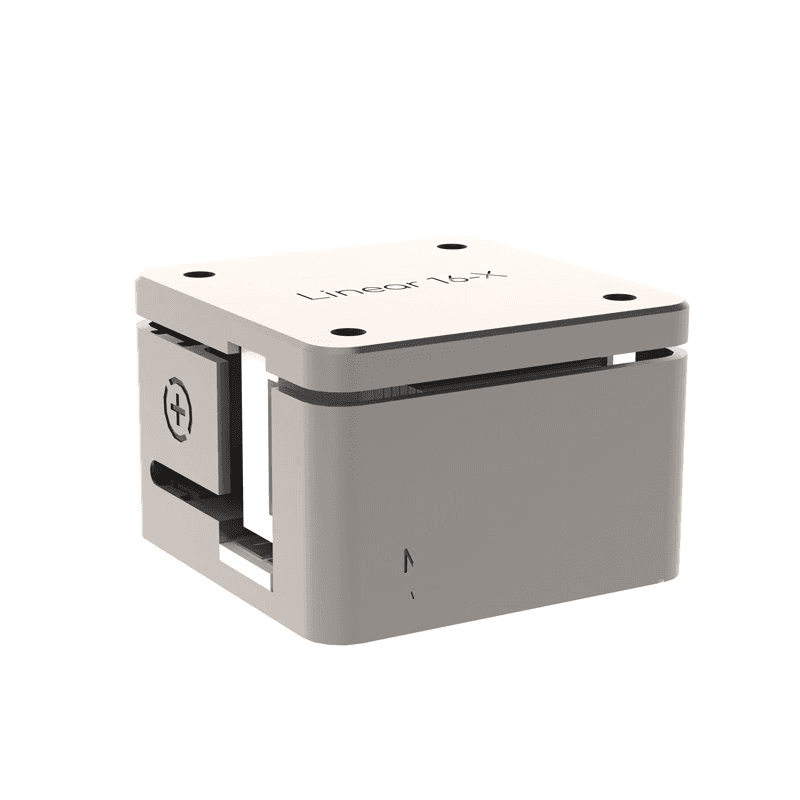 Best fit
Linear
Linear25-x
General-purpose balance of travel, footprint, and payload.
- Range
- 6 mm
- Payload
- 500 g
- Feedback
- ~150 nm encoder
Linear
Linear35-x
High-load coarse positioning for larger samples and stacks.
- Range
- 20 mm
- Payload
- 2500 g
- Feedback
- Resistive or optical encoder
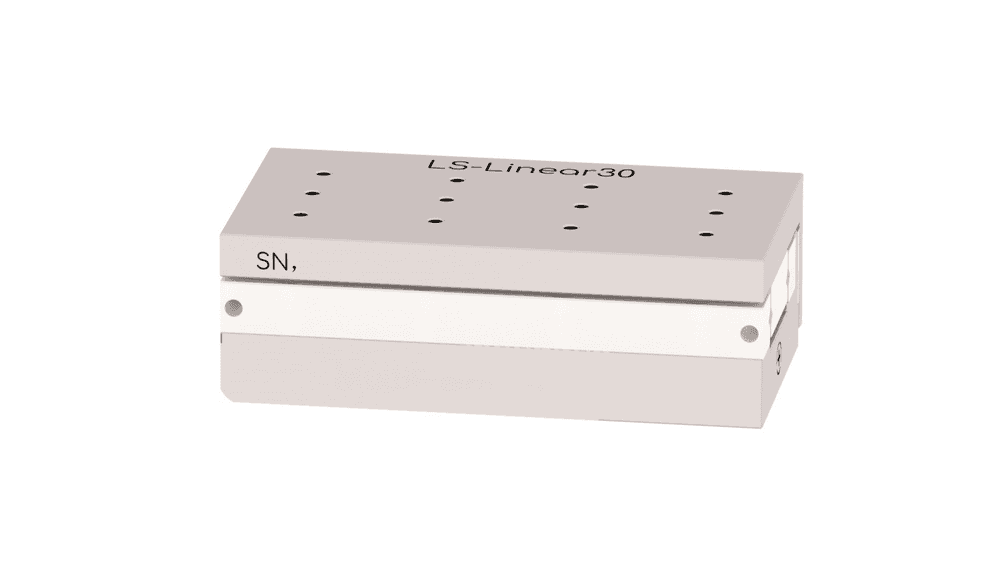
LS-Linear
LS-Linear30
Long-stroke closed-loop travel in a compact rail format.
- Range
- 30 mm
- Payload
- 750 g
- Feedback
- 150 nm sensor
This selector narrows the catalog using published headline values. Final selection must verify derated travel at temperature, heat load, cabling, mounting orientation, controller, feedback, magnetic field, and the exact HV/UHV/ULT suffix.
Architecture map
Match the motion family to the job
| Requirement | Recommended family | Published range | Why |
|---|---|---|---|
| Coarse sample approach | Linear16 / 25 / 35 | 3–20 mm | Compact stick-slip travel; select footprint by payload and available envelope. |
| Long translation | LS-Linear30–200 | 30–200 mm | Full-travel resistive feedback for probe, sample, or optical-path positioning. |
| Fine raster scan | Scanner16 / 25 / 35 | 30–100 µm @ 300 K | Friction-free open-loop flexure scanning; range reduces at cryogenic temperature, so confirm the cold figure per model. |
| Closed-loop UHV scan | Scanner Ultra UHV.ULT | 30–60 µm @ 4 K | Capacitive feedback (0.5 nm, <5 nm repeatability) and explicit UHV plus 30 mK configuration. |
| Endless rotation | Rotator16 / 25 / 35 | 360° | Sample orientation and polarization-dependent measurements. |
| Fixed-pivot tilt | Goniometer25 / 35 | 6–12° | Theta/phi pairs create two-axis angular alignment around a shared pivot. |
Integration checklist
The stage is only one part of the cold motion chain
- Verify the payload and overturning moment for the entire stacked assembly.
- Route cables with service loops that do not dominate fine-stage stiffness.
- Thermalize wiring and the stage body at appropriate cryostat plates.
- Use vacuum-compatible connectors, insulation, fasteners, and cleaning procedures.
- Separate coarse-motion dissipation from the measurement window.
- Confirm controller channels, sensor interface, triggering, and software integration.
Each of these has its own section in the companion guide, How to integrate piezo nanopositioners into a cryostat: stack order and interfaces, the thermal path, the wiring chain to the controller, vacuum and field checks, a commissioning sequence and three worked configurations.
Engineering review
Configure the complete cold-positioning stack
Share the cryostat envelope, base temperature, pressure, field, motion axes, payload, travel, resolution, and heat-load limits. We will help map them to stages, adapters, thermal links, cabling, and controllers.