Optical Switches
High Speed Fiber Optical Polarization Switch
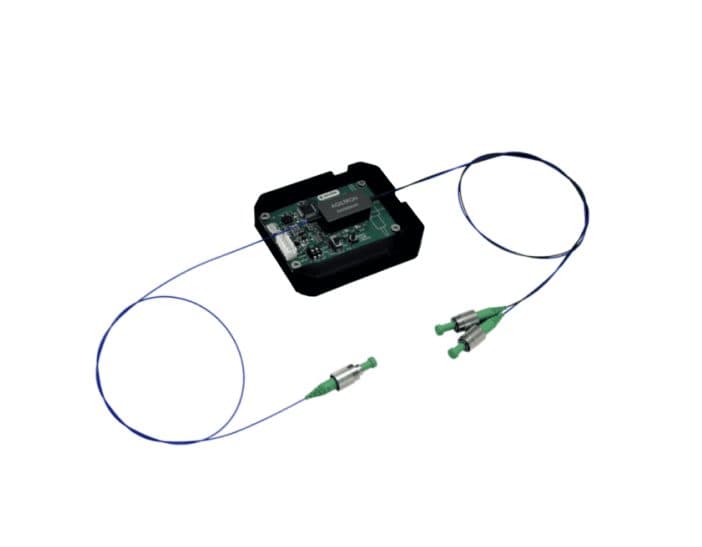
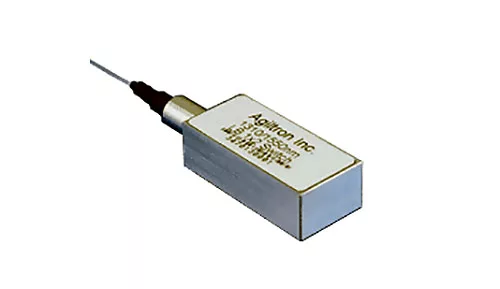
The NanoSpeed™ Series polarization switch can quickly switch the incoming SOP between two orthogonal polarization states (SOPs). This is achieved using our patented non-mechanical configurations with solid-state all-crystal designs, which eliminate the need for mechanical movement and organic materials and are activated via an electrical control signal. The NS fiber optic switch is a fast switch device featuring very low loss, fast response, ultra-high reliability, and high optical power handling. The input is PM fiber. The output could be either PM or SM fiber. For PM fiber, the polarization is aligned with the slow axis. The switch is intrinsically bidirectional and selectable for polarization-independent or polarization-maintaining by the fiber type.
Configuration options
Build & quote
Configure the options below and add your exact build to the enquiry — we confirm the part number and availability.
We confirm the exact part number for your configuration on enquiry.
Speed: <100ns · Wavelength: 1060 · Power: Standard · Input Fiber: PM1550 · Output Fiber: PM1550 · Fiber Cover: Bare fiber · Fiber Length: 0.25m · Connector: None · Bandwidth: Regular · Benchtop: None
Downloads
Datasheets & documents
System integration
Integration and compatibility
Use these checks to connect High Speed Fiber Optical Polarization Switch to the surrounding optical, mechanical and control system. Every value shown is taken from this model's own specification record.
- Optical interface and fiber
- Input Fiber: PM1550, PM980, PM850, SMF28, HI1060, HI780, 50/125, MM50/125, Special · Output Fiber: PM1550, PM1310, PM980, PM850, SMF28, HI1060, HI780, MM50/125, Special
- Specify connector polish and fiber architecture together. FC/PC, FC/APC and SMA interfaces, and single-mode, multimode and polarization-maintaining fibers, impose different return-loss, mode-field and alignment requirements.
- Wavelength and loss budget
- Wavelength: 1060, 2000, 1310, 1550, 1625, 1750, 780, 850, 980, 650, 450
- Check the Optical Switches passband, insertion loss, return loss and power handling at the actual source wavelength; a nominal telecom-band label is not a substitute for the configured range.
Technical FAQ
Integration questions for High Speed Fiber Optical Polarization Switch
Which fiber and connector does the High Speed Fiber Optical Polarization Switch use?
Input Fiber: PM1550, PM980, PM850, SMF28, HI1060, HI780, 50/125, MM50/125, Special · Output Fiber: PM1550, PM1310, PM980, PM850, SMF28, HI1060, HI780, MM50/125, Special. Specify connector polish and fiber architecture together. FC/PC, FC/APC and SMA interfaces, and single-mode, multimode and polarization-maintaining fibers, impose different return-loss, mode-field and alignment requirements.
How should the High Speed Fiber Optical Polarization Switch be included in an optical power budget?
Wavelength: 1060, 2000, 1310, 1550, 1625, 1750, 780, 850, 980, 650, 450. Check the Optical Switches passband, insertion loss, return loss and power handling at the actual source wavelength; a nominal telecom-band label is not a substitute for the configured range.
Need this configured?
Share your wavelength, fiber type, connector, power handling and control requirements and we will qualify the matching configuration and part number.
Model selection
Nearby series comparison
Compare High Speed Fiber Optical Polarization Switch with the closest available models in the Optical Switches family.
| Selection parameter | High Speed Fiber Optical Polarization Switch (current) | High Speed 2×2 Fiber Optical Switch Single-Stage: 100ns, 300kHz, 18dB On/Off | High Speed Fiber Optical Resonant Switch: 10-100 MHz Fixed Rate |
|---|---|---|---|
| Wavelength range | 1060, 2000, 1310, 1550, 1625, 1750, 780, 850, 980, 650, 450 | 1060nm, 1310nm, 1410nm, 1550nm, 1750nm, 2000nm | 1060, 1310, 1550, 1625, 1750 |
| Connector / control | None, FC/APC, Special | None, FC/PC, FC/APC, SC/PC, SC/APC, ST/PC, LC/PC, Duplex LC/PC, LC/APC, E2000 APC, Special | None, FC/PC, FC/APC, SC/PC, SC/APC, ST/PC, LC/PC, LC/APC, E2000 APC, Special |