Fast position detection
QPD Board 250 kHz
A low-noise quadrant-photodiode amplifier for converting optical spot motion into fast sum and difference signals for tracking, stabilization, and optical-tweezers detection.
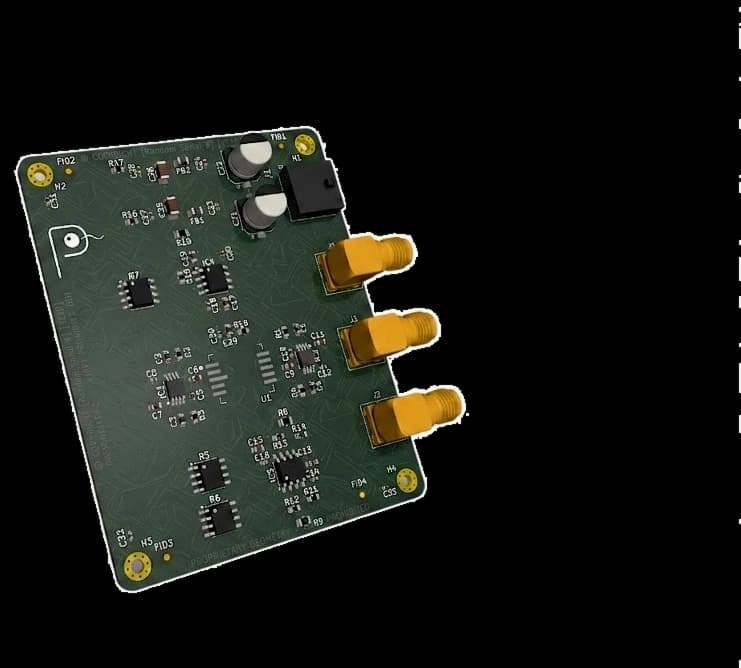
250 kHz
Detection bandwidth
Low noise
Transimpedance amplification
X, Y & sum
Position and optical-power signals
Feedback ready
Fast control-chain integration
How it works
Turn a moving light spot into position signals
A quadrant photodiode divides the detector into four active regions. The amplifier measures each photocurrent, then combines the channels into total optical power and normalized horizontal and vertical displacement signals.
In optical tweezers, forward-scattered trapping light is projected onto the QPD. Bead motion changes the optical intensity distribution, enabling position measurements at bandwidths well beyond normal camera acquisition.
Key features
- 250 kHz analog detection bandwidth
- Low-noise transimpedance amplification
- Sum and difference signal outputs
- Optimized for optical feedback and tracking
- Suitable for optical tweezers and beam stabilization
- Interfaces naturally with precision ADC and control electronics
Interactive signal demo
Move the spot across the quadrant detector
X difference / sum
0.180
Y difference / sum
-0.120
23.0%
33.0%
18.0%
26.0%
Normalized difference signals reject common optical-power changes and encode beam displacement around the detector centre. The real volts-to-position response must be calibrated for the optical geometry.
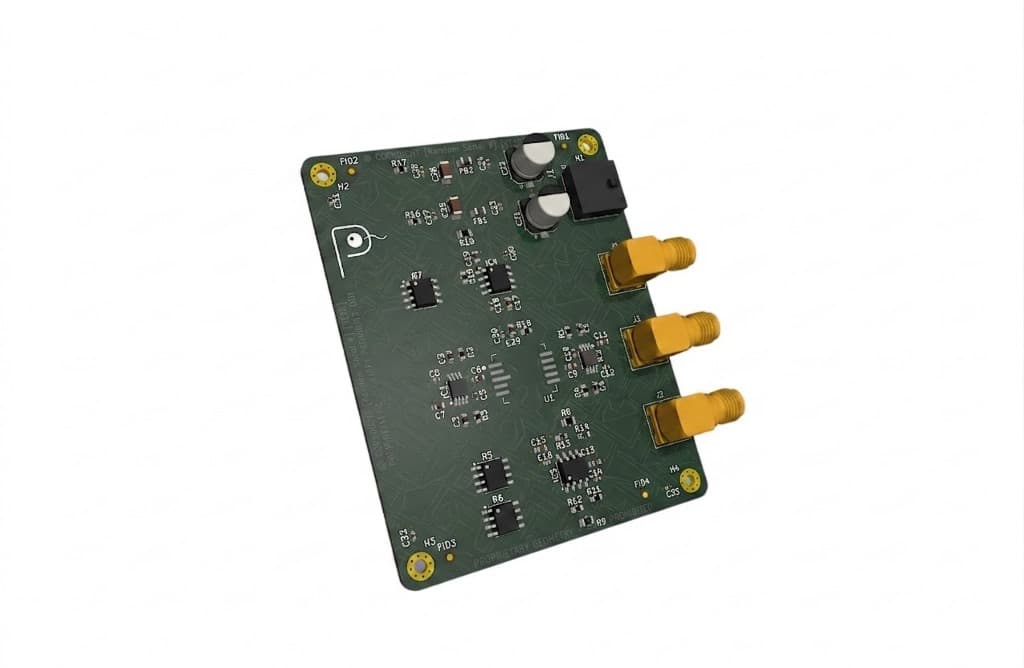
Signal-chain integration
From detector to calibrated motion
Pair the QPD amplifier with the 20-bit ADC for digitization, the low-noise supply for clean analog rails, and a piezo controller when the measured error signal must drive active stabilization or scanning.