Back to Home

Laser components & accessories

Laser Diode Component

Configurable free-space, pigtailed and fiber-coupled laser diodes covering 375–1610 nm, from low-power single-mode and narrow-linewidth DFB devices to high-power pump modules up to 500 W. Select wavelength, output power, fiber mode, connector, thermal control and mounting as one integrated build.

Available wavelength span
375–1610 nm
Architecture-dependent power
1 mW–500 W
Fiber-mode options
SM · PM · MM
Optional terminations
FC/PC · FC/APC

Choose the diode architecture

ArchitectureWavelength rangeOutput powerOptical interface and defining feature
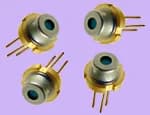
Free-space Fabry–Perot405–1550 nm20 mW–10 WSingle-mode or multimode output; low capacitance
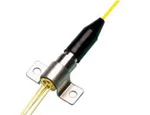
Pigtailed Fabry–Perot380–1550 nm1 mW–10 WSM, PM or MM fiber; FC/PC or FC/APC optional
DFB laser diode1290–1610 nm10–20 mW3 MHz linewidth; SM or PM fiber
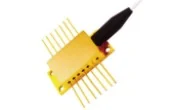
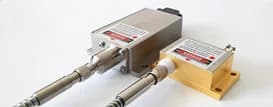
High-power fiber-coupled module375–1550 nmUp to 500 WFiber-delivered pump or process source

Specify the complete electro-optical stack

SubsystemSelection inputIntegration consequence
Optical outputFree-space or fiber-coupledSets the launch optics, alignment method and enclosure layout
Fiber deliverySM, PM or MM; FC/PC or FC/APCDetermines mode matching, polarization behavior and back-reflection
Current controlDiode current and modulation requirementThe driver must match maximum current, compliance voltage and modulation bandwidth
Temperature controlTEC requirement and wavelength stability targetTemperature regulation controls wavelength drift, efficiency and operating life
Thermal hardwareHeat sink or cooled moduleWaste heat must be removed at the selected optical power and duty cycle
Mechanical mountingPackage drawing and mount kitThe package must be clamped without stress and adapted to the optical table

Application context

Why this design is used

Application fit depends on the ordered configuration; catalog values are separated from fields that still require confirmation.

Fiber-laser and solid-state-laser pumping

Laser Diode Component: high-power fiber-coupled modules concentrate pump power into a controlled fiber core, allowing the delivery numerical aperture and wavelength to be matched to the gain medium while keeping the heat-producing diode package away from the resonator.
Spectroscopy and optical sensing

Laser Diode Component: a 3 MHz DFB option is used when spectral selectivity and wavelength repeatability matter more than broadband optical power. The selected emission band must also match the sample transition, coatings and detector response.

Direct-diode materials processing

Laser Diode Component: fiber-coupled power delivery simplifies routing into a process head, but wavelength, core diameter, numerical aperture and continuous or modulated power determine the achievable spot size and absorbed power density.

Biomedical and surgical instrumentation

Laser Diode Component: compact fiber delivery can place optical energy at a remote treatment or diagnostic site. Wavelength is selected for the intended tissue or chromophore interaction, while connector, fiber, thermal control and interlocks are specified as part of the complete instrument.

System integration

Integration and compatibility

Use these checks to connect Laser Diode Component to the surrounding optical, mechanical and control system. Every value shown is taken from this model's own specification record.

Fiber delivery interface
Fiber type: Single-mode (SM), polarization-maintaining (PM), or multimode (MM) · Fiber connector: FC/PC or FC/APC optional on pigtailed variants
Match the listed connector and fiber mode exactly; SMA905, FC/PC and FC/APC are not interchangeable, and a single-mode launch requires mode-field as well as numerical-aperture matching.
Thermal management
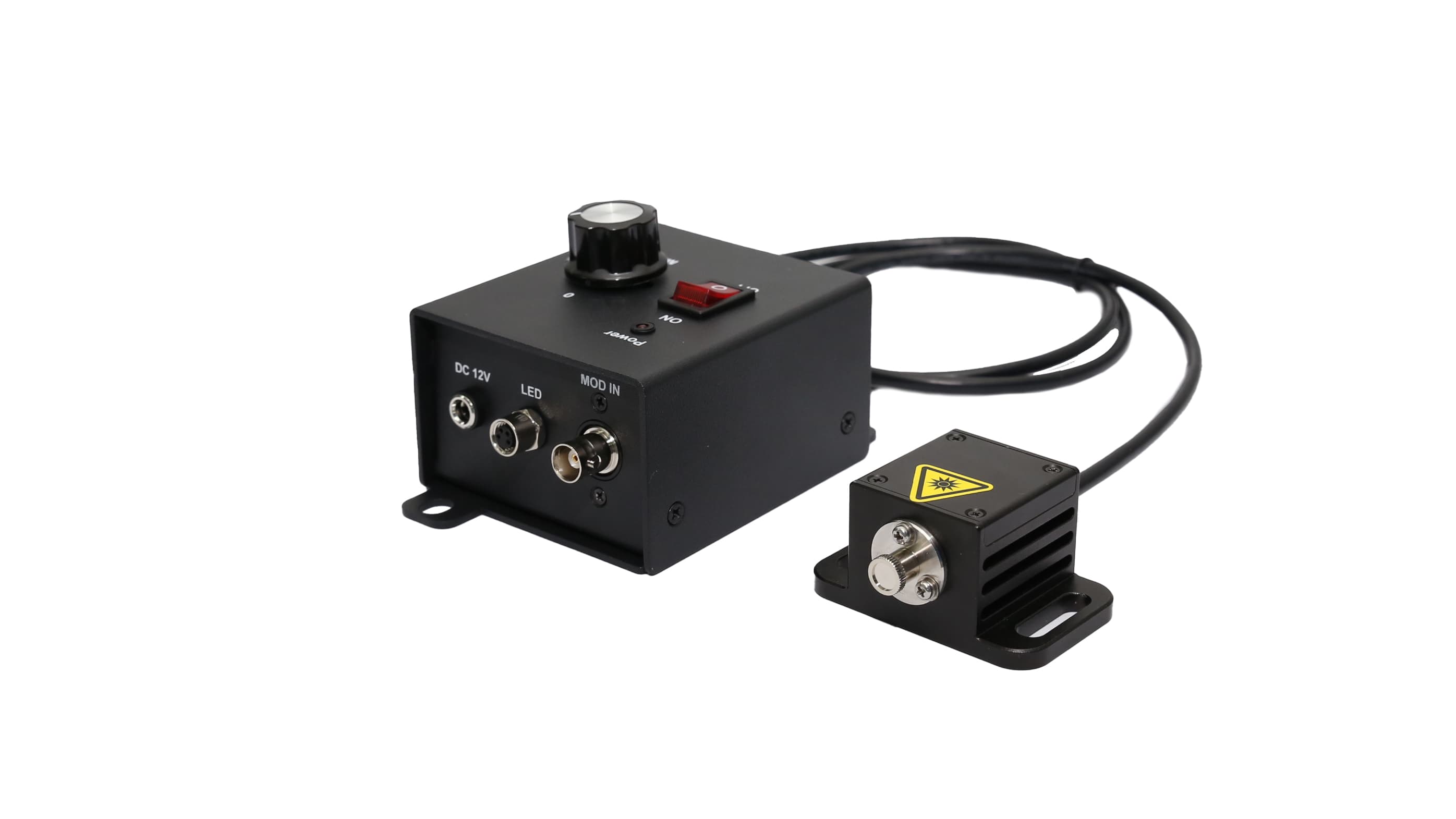
Thermal management: Temperature controller and heat sink selected for the diode package and power
Provide the stated cooling method and keep the laser-head base thermally coupled; temperature drift moves wavelength, output power and beam pointing.

Technical FAQ

Integration questions for Laser Diode Component

Which laser-diode architecture should I choose?

Choose a free-space Fabry–Perot diode for direct beam access, a pigtailed diode for compact fiber delivery, a DFB diode when narrow linewidth near 1290–1610 nm is central to the measurement, or a high-power fiber-coupled module for pumping and direct-diode processing. Final selection also depends on wavelength, power, spectral width, beam or fiber parameters and modulation requirements.

What must be specified for a pigtailed laser diode?

Specify the wavelength and power first, then choose single-mode, polarization-maintaining or multimode fiber and the required termination. FC/PC and FC/APC are optional interfaces on the pigtailed family; they are not interchangeable because their end-face geometry and return-reflection behavior differ.

Which driver and thermal hardware are required?

The current controller must match the diode maximum current, compliance voltage and any analog or digital modulation. Pair the package with its specified temperature controller, heat sink or cooled module so junction temperature remains within limits; do not choose a driver or mount from optical power alone.

Can the diode module mount on an M6 optical breadboard?

Yes, with the package-specific mount kit or an adapter plate. Confirm the mechanical drawing, clamping method and bolt length before installation rather than assuming the diode package itself contains M6 threads.