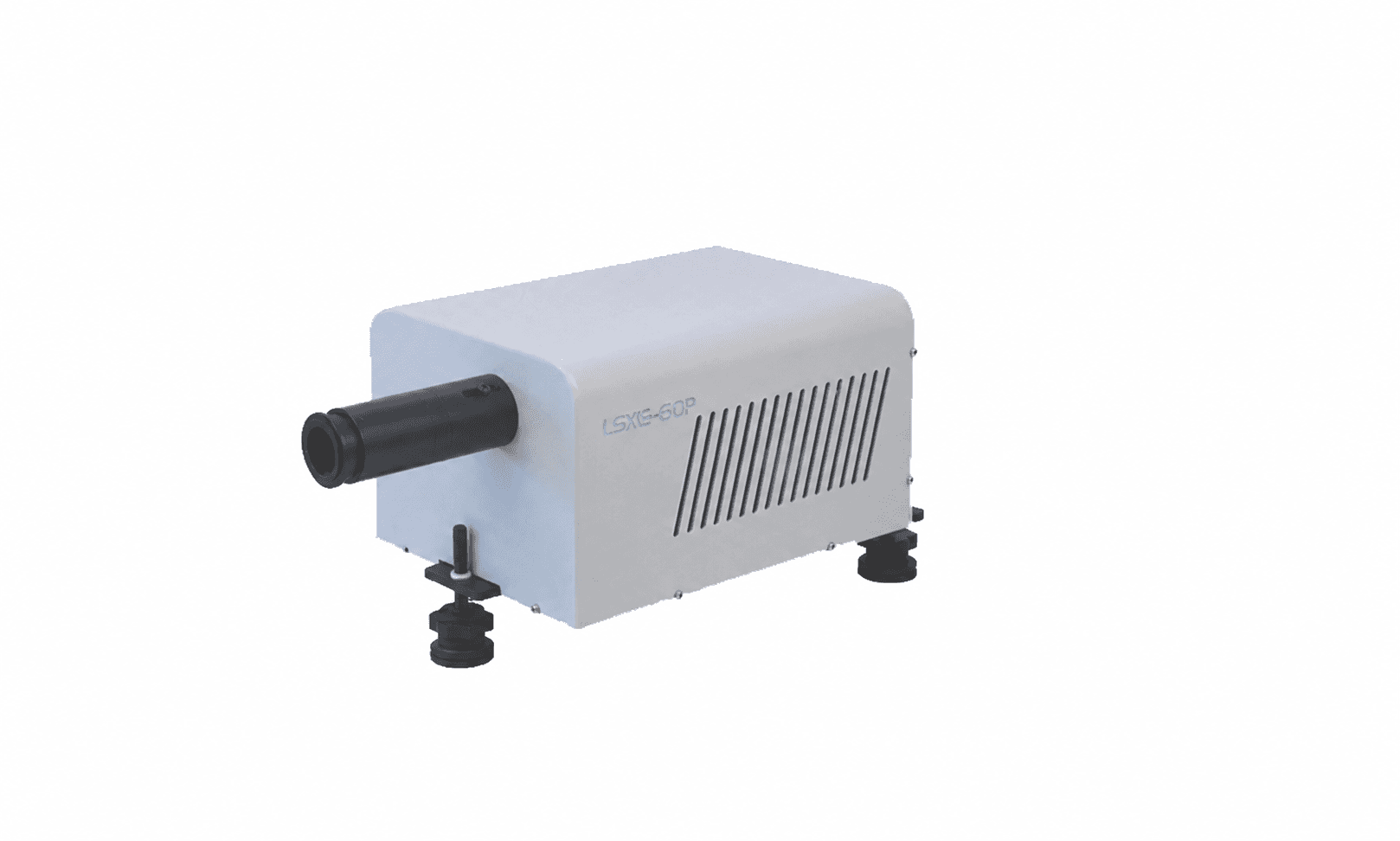
Microsecond Xenon Flash Lamp
Broadband pulsed excitation, principally used over the UV and visible range.
- Output range
- 190–2000 nm; principal use 200–800 nm
- Pulse width
- 2.9 µs
- Typical repetition rate
- 60 Hz; adjustable
OmniFluo900 research-platform options
Configure the excitation, detection and sample environment around your experiment. Browse 7 options in 4 groups for microsecond excitation, spectral detection, sample handling and low-temperature measurements.
These accessories are listed for OmniFluo900 research platforms. Include your existing instrument model and interfaces when requesting a quotation so the complete configuration can be checked.
01 / 1 options
Broadband microsecond excitation for configured fluorescence and phosphorescence measurements.
Broadband pulsed excitation, principally used over the UV and visible range.
Selecting this group: Specify the excitation band, pulse duration and timing interface needed by the acquisition system.
02 / 2 options
Choose spectral coverage, cooling and readout for the emission band and signal level.
Cooled detector assemblies for ultraviolet through near-infrared fluorescence, with selectable internal PMT tubes.
Cooled single-element detectors for near- and mid-infrared emission.
Selecting this group: Confirm the usable spectral range of the complete optical path, along with analogue or photon-counting acquisition compatibility.
03 / 3 options
Control orientation, mixing and liquid-sample conditions at the measurement position.
A graduated manual rotation mount for adjusting solid-sample orientation.
Stir liquid samples during fluorescence measurements to maintain a mixed solution.
Maintain liquid-sample temperature using an external recirculating water bath.
Selecting this group: Select the holder around the sample format, optical collection geometry and required circulation connections.
04 / 1 options
Study temperature-dependent emission with a liquid-nitrogen cryostat.
A liquid-nitrogen system with reduced-pressure operation for temperatures down to 65 K.
Selecting this group: Select the optical windows, sample mounting and temperature range for the experiment.
Share your instrument model, sample format, spectral range, temperature and timing requirements. We will help select compatible sources, detectors and sample accessories.
Discuss your measurement