WDM Channel Monitor (850 to 2000nm)
WDM Channel Monitor (850 to 2000nm)
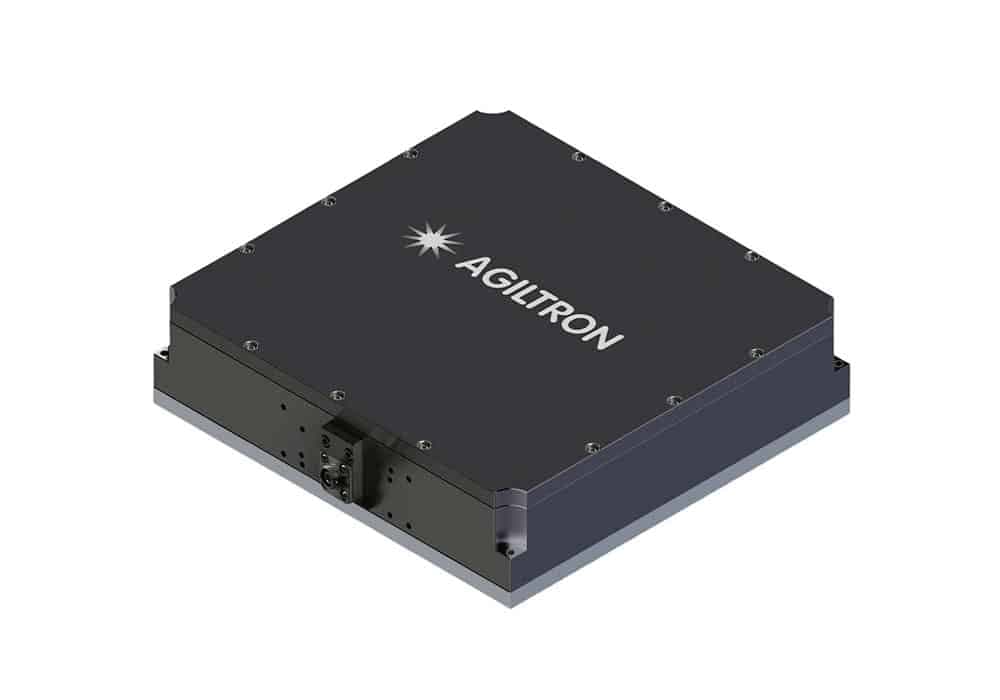
The WDMD Series WDM Channel Monitor scans wavelength channels on ITU grids, covering all channels from the O-band to the U-band. It supports channel spacings ranging from coarse CWDM 30 nm down to DWDM 0.4 nm for 100 GHz and 50 GHz configurations, with scalability to accommodate any number of channels. The integrated detector offers a dynamic range > 50 dB. The system supports both multimode and single-mode fiber. For multimode fiber, the WDMD includes a valuable option to measure the mode field ratio, addressing the strong mode-dependent nature of optical power measurements in multimode operation. Channel optical power readings are provided through RS232 or USB interfaces, with a user-friendly GUI for control and data display. O-band 1260 – 1360 nm E-band 1360 – 1460 nm S-band 1460 – 1530 nm C-band 1530 – 1565 nm L-band 1565 – 1625 nm U-band 1625 – 1675 nm
Configuration options
Build & quote
Configure the options below and add your exact build to the enquiry — we confirm the part number and availability.
We confirm the exact part number for your configuration on enquiry.
Wavelength: C-Band · Wavelength Spacing: 200GHz · Channel: 48 · Fiber Type: SMF-28 · Fiber Cover: 0.9mm tube · Fiber Length: 0.25m · Connector: None
System integration
Integration and compatibility
Use these checks to connect WDM Channel Monitor (850 to 2000nm) to the surrounding optical, mechanical and control system. Every value shown is taken from this model's own specification record.
- Optical interface and fiber
- Fiber Type: SMF-28, 50/125 · Fiber Cover: 0.9mm tube
- Specify connector polish and fiber architecture together. FC/PC, FC/APC and SMA interfaces, and single-mode, multimode and polarization-maintaining fibers, impose different return-loss, mode-field and alignment requirements.
- Wavelength and loss budget
- Wavelength: C-Band, L-Band, C+L-Band, S-Band, O-Band, E-Band, U-Band, N-Band · Wavelength Spacing: 200GHz, 100GHz, 50GHz
- Check the WDM Channel Monitor (850 to 2000nm) passband, insertion loss, return loss and power handling at the actual source wavelength; a nominal telecom-band label is not a substitute for the configured range.
Technical FAQ
Integration questions for WDM Channel Monitor (850 to 2000nm)
Which fiber and connector does the WDM Channel Monitor (850 to 2000nm) use?
Fiber Type: SMF-28, 50/125 · Fiber Cover: 0.9mm tube. Specify connector polish and fiber architecture together. FC/PC, FC/APC and SMA interfaces, and single-mode, multimode and polarization-maintaining fibers, impose different return-loss, mode-field and alignment requirements.
How should the WDM Channel Monitor (850 to 2000nm) be included in an optical power budget?
Wavelength: C-Band, L-Band, C+L-Band, S-Band, O-Band, E-Band, U-Band, N-Band · Wavelength Spacing: 200GHz, 100GHz, 50GHz. Check the WDM Channel Monitor (850 to 2000nm) passband, insertion loss, return loss and power handling at the actual source wavelength; a nominal telecom-band label is not a substitute for the configured range.
Need this configured?
Share your wavelength, fiber type, connector, power handling and control requirements and we will qualify the matching configuration and part number.