Fiber Collimators
Fiber Mini Collimators Distance 1 to 80mm
We offer a comprehensive range of miniature fiber optic collimators designed for low loss, high return loss, and high optical power handling of up to 10W, with no organic materials in the light path. These collimators are integrated into many of our products, and we specialize in delivering custom solutions to meet specific application requirements. Our miniature collimators are optimized for working distances up to 80 mm. For applications requiring longer working distances, we recommend our High-Power Fiber Optic Collimator. For the 1950 nm band, we uniquely provide lower-loss collimating lenses made with NSF11 glass, reducing coupling loss between a pair of collimators by approximately 0.3 dB compared to standard glass lenses.
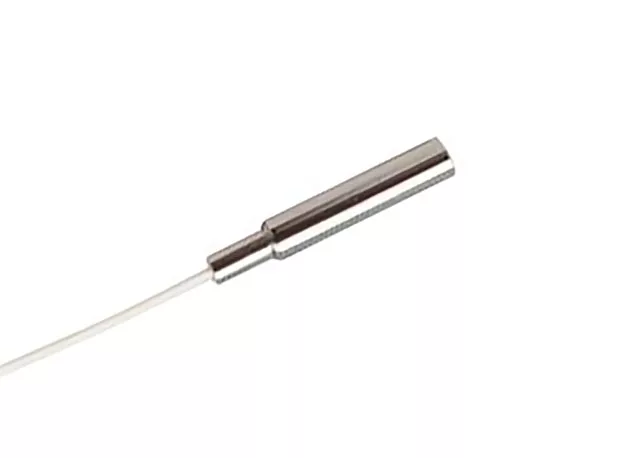
Configuration options
Build & quote
Configure the options below and add your exact build to the enquiry — we confirm the part number and availability.
We confirm the exact part number for your configuration on enquiry.
# Fiber: Single · PM Fiber Orientation: N/A · Wavelength: 1550 · Working Distance (mm): 2 · Beam Diameter (mm): 1 · Outer Diameter (mm): 1.5mm · Power: 0.5W · Fiber Type: SMF-28 · Fiber Cover: Bare fiber · Fiber Length: 0.25m · Connector: None
System integration
Integration and compatibility
Use these checks to connect Fiber Mini Collimators Distance 1 to 80mm to the surrounding optical, mechanical and control system. Every value shown is taken from this model's own specification record.
- Optical interface and fiber
- # Fiber: Single, Dual · PM Fiber Orientation: N/A, I, H, T
- Specify connector polish and fiber architecture together. FC/PC, FC/APC and SMA interfaces, and single-mode, multimode and polarization-maintaining fibers, impose different return-loss, mode-field and alignment requirements.
- Wavelength and loss budget
- Wavelength: 1550, 1060, 2000, 1310, 1480, 1625, 980, 850, 780, 650, 550, 400, 1265~1620, Special
- Check the Fiber Collimators passband, insertion loss, return loss and power handling at the actual source wavelength; a nominal telecom-band label is not a substitute for the configured range.
Technical FAQ
Integration questions for Fiber Mini Collimators Distance 1 to 80mm
Which fiber and connector does the Fiber Mini Collimators Distance 1 to 80mm use?
# Fiber: Single, Dual · PM Fiber Orientation: N/A, I, H, T. Specify connector polish and fiber architecture together. FC/PC, FC/APC and SMA interfaces, and single-mode, multimode and polarization-maintaining fibers, impose different return-loss, mode-field and alignment requirements.
How should the Fiber Mini Collimators Distance 1 to 80mm be included in an optical power budget?
Wavelength: 1550, 1060, 2000, 1310, 1480, 1625, 980, 850, 780, 650, 550, 400, 1265~1620, Special. Check the Fiber Collimators passband, insertion loss, return loss and power handling at the actual source wavelength; a nominal telecom-band label is not a substitute for the configured range.
Need this configured?
Share your wavelength, fiber type, connector, power handling and control requirements and we will qualify the matching configuration and part number.