Open hardware
Arkin shares printable XY and XYZ stage designs on GitLab
The Arkin Project, supported by Precisometer and NLnet, is documenting the development of affordable positioning stages on GitLab. Printable files, editable CAD models, assembly photographs and measurement data cover two design paths: a modular NEMA 11 axis for XY motion and a series of experimental XY and Z designs using 28BYJ-48 stepper motors.
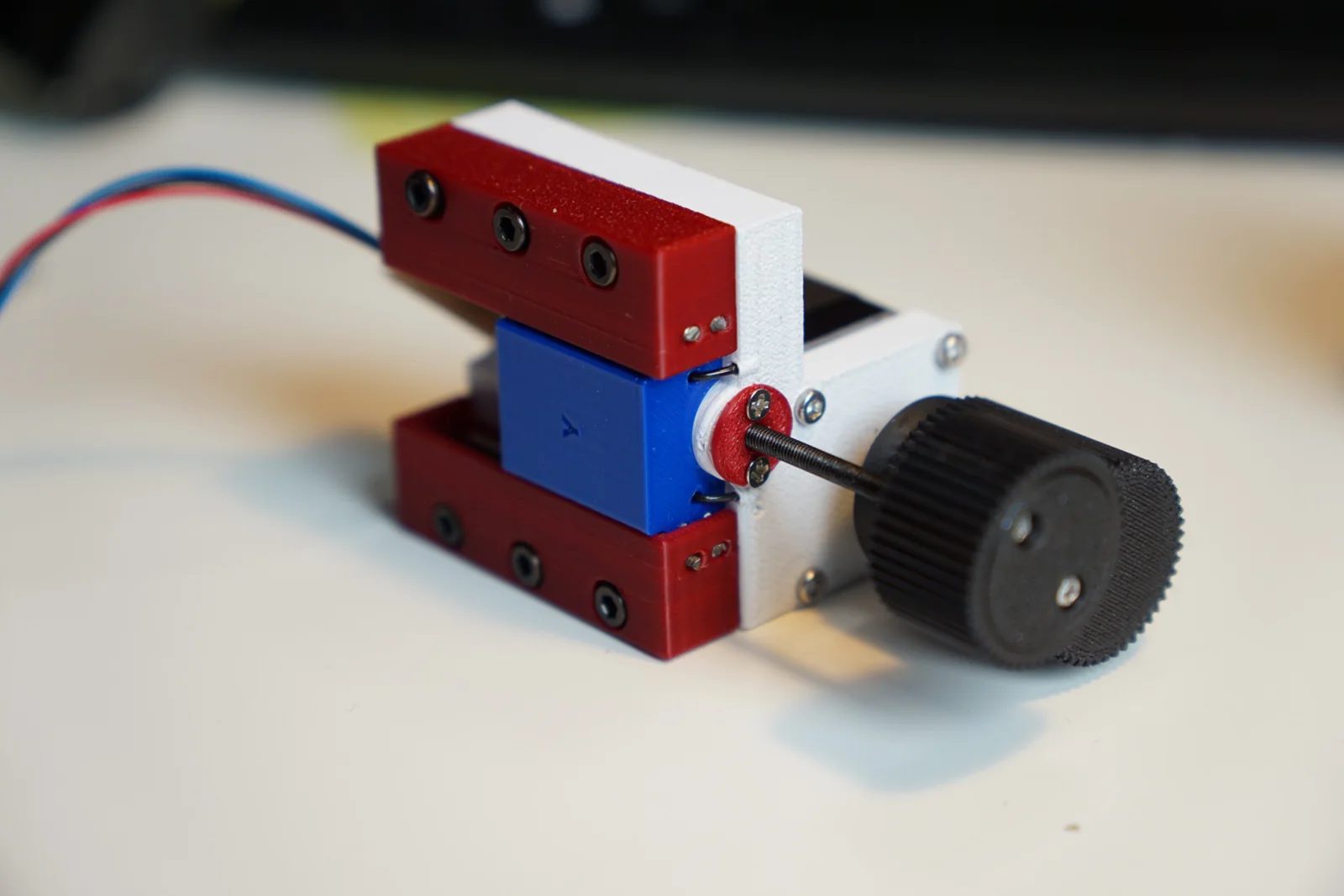
A linear module for modular positioning
The NEMA 11 design combines a printed frame with 2 mm steel guide rods and 3 mm bearing balls. The motor drives an M3 lead screw with a 0.5 mm pitch through two printed gears. Two modules can provide XY motion. The tested control setup uses an Arduino UNO R4 Minima and a TMC2209 driver.
STL, STEP and Fusion files provide access to printable components and editable designs.
Measurements establish the practical limits
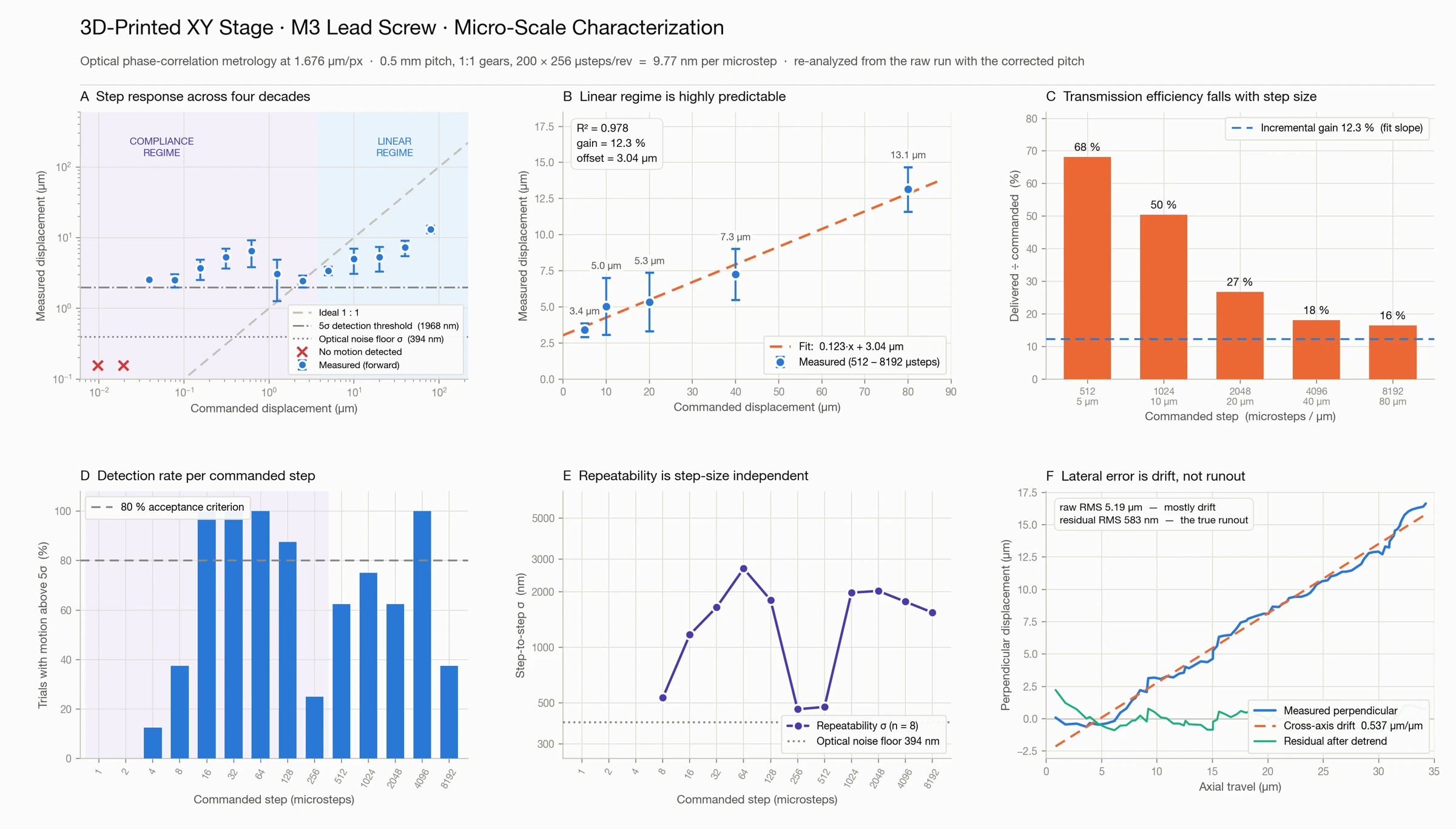
Published optical characterization of one NEMA 11 axis reports minimum useful incremental motion of approximately 2.5 to 4 µm. The calculated 9.77 nm command increment is therefore not an achievable positioning resolution. Commands from 5 to 80 µm produce a near-linear response, but with a slope of only 0.123 and an offset of about 3.04 µm. Actual displacement differs substantially from the command and requires calibration. A separate macro test also shows significant home-return errors.
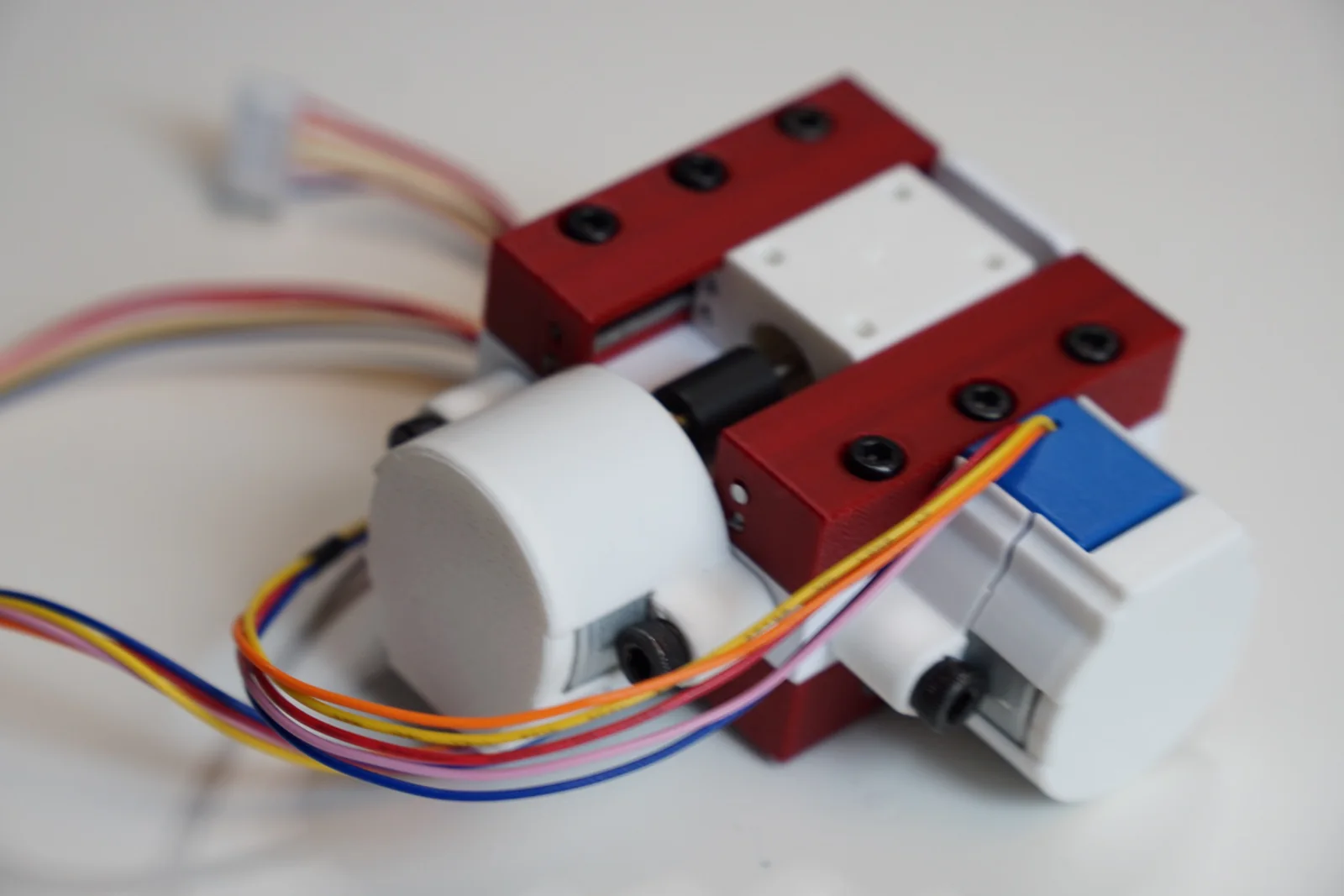
Eight XY revisions and separate Z designs
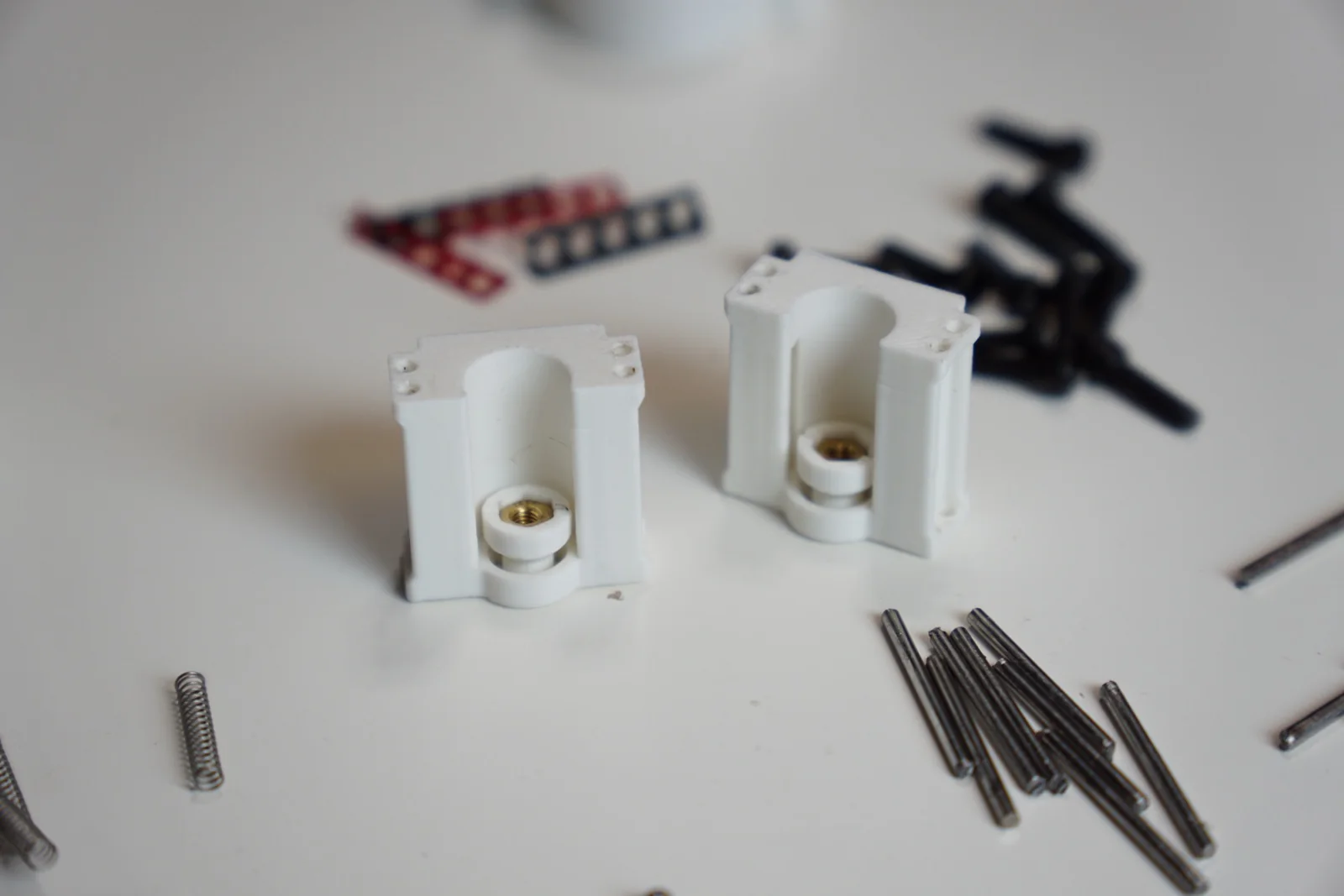
The second design path uses inexpensive 28BYJ-48 motors. The archive contains eight XY revisions and separate Z designs with microscope objective holders. Two modules mounted at right angles form the photographed V8 XY assembly. In this version, the lead-screw nut sits on a compliant flexure intended to reduce the transfer of lateral screw errors to the carriage.
The documentation also explains the remaining limits. Gearbox and shaft play, coupling errors and printed-part tolerances continue to cause unwanted motion. The 28BYJ-48 design is a development and teaching platform; the repository advises against using this version for precision applications requiring wobble-free micrometre positioning.
For engineers, the combination of CAD, assembly instructions and measured results makes the project useful for studying, reproducing and improving mechanical design choices. The stages form part of Arkin’s wider development of an open optical-tweezers microscope for education and research. Hardware and documentation are published under CERN-OHL-S v2. NLnet lists Wavefront as the project operator and funding through the NGI0 Commons Fund; the repository also credits Precisometer as a supporter.