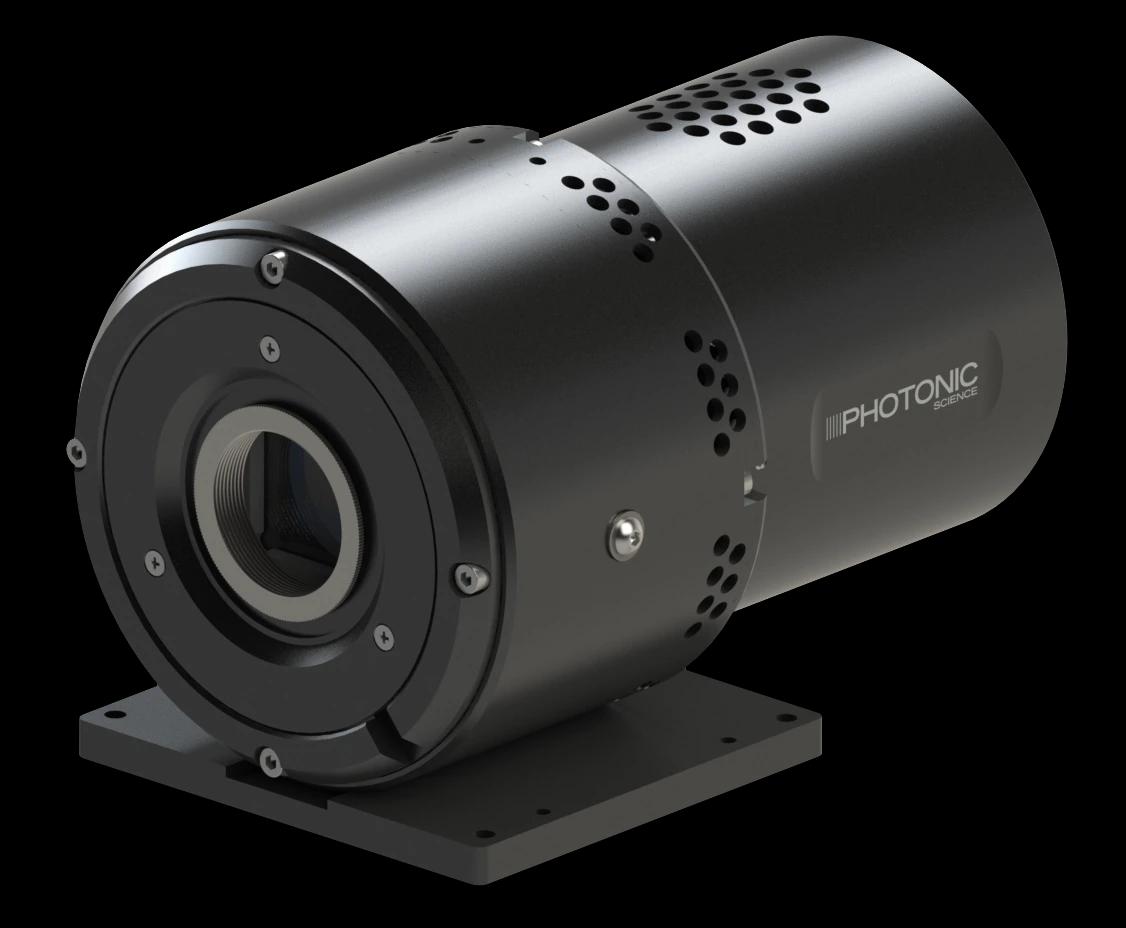
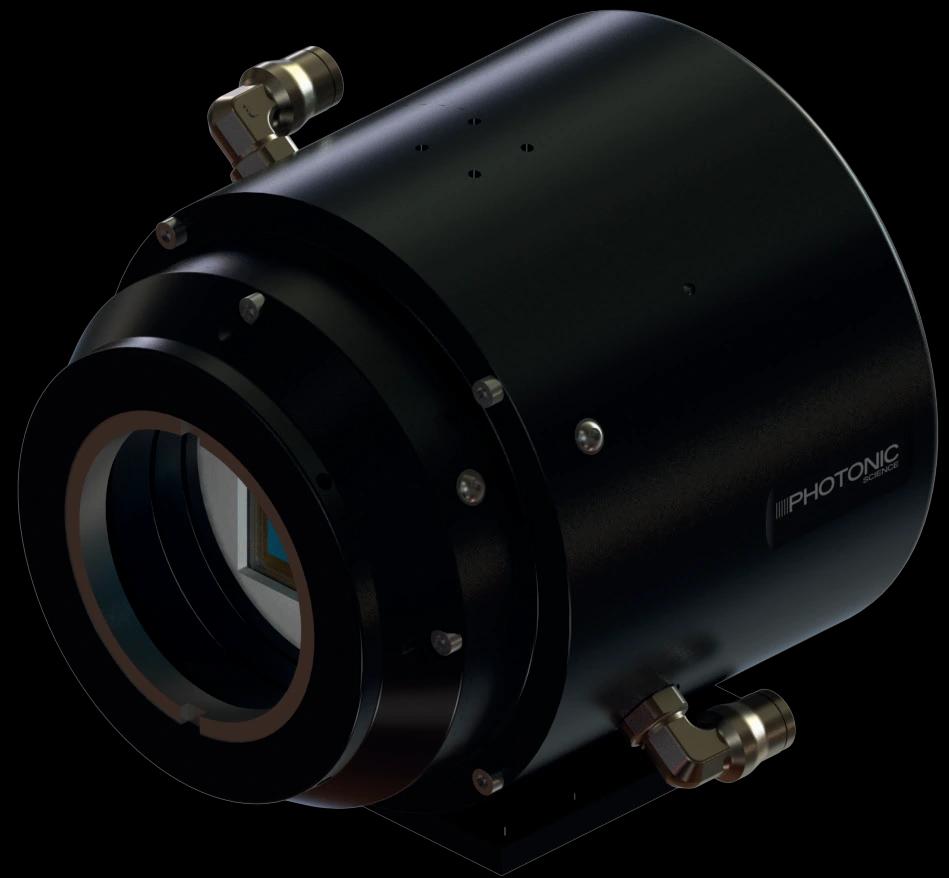
Cooled sCMOS 16MP
Cooled, low-noise scientific imaging with a 36.9 mm square sensor, 9 µm pixels and interface-specific acquisition modes.
- Resolution
- 4096 × 4096 pixels
- Pixel pitch
- 9 µm
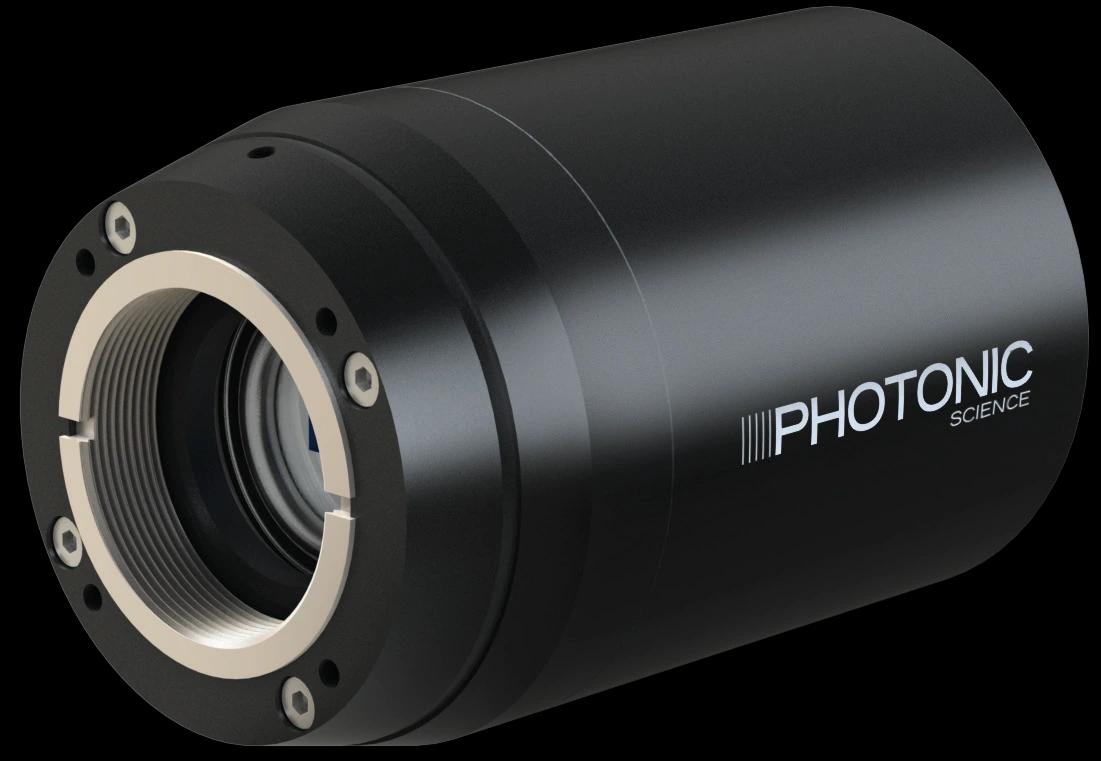
Optical & low light
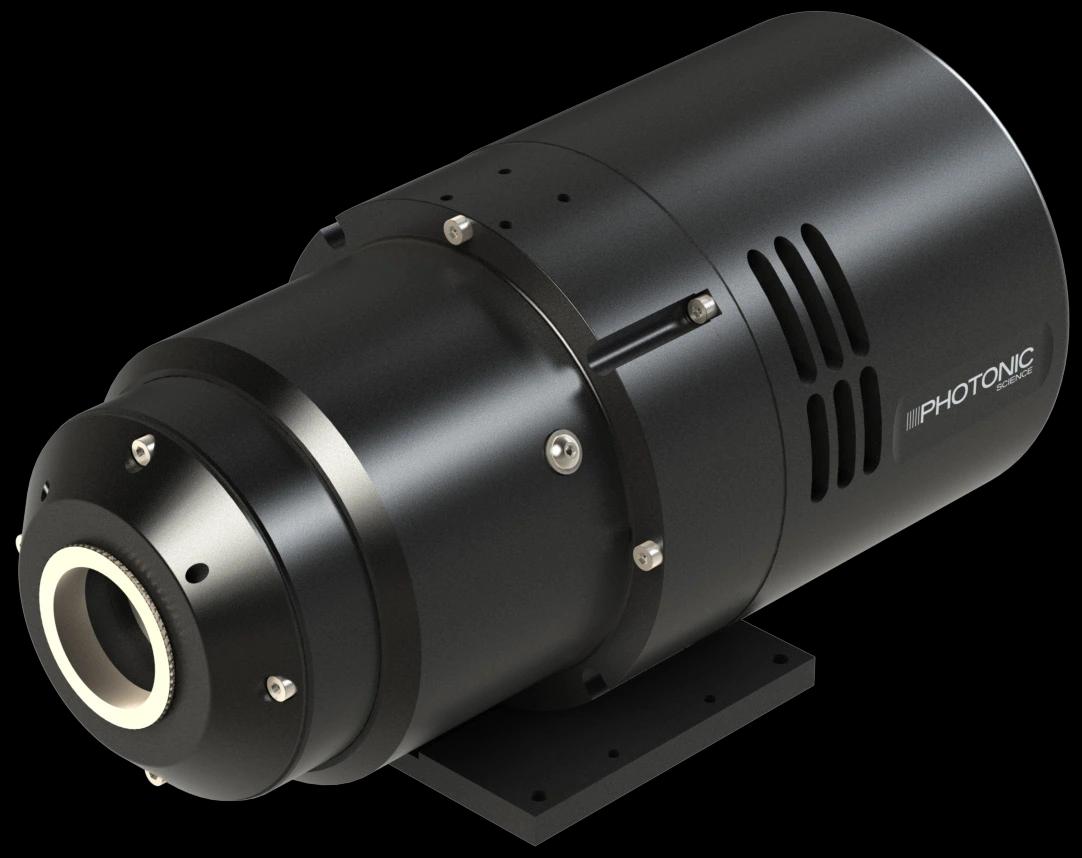
Cooled, low-noise scientific imaging with 11 µm pixels and Camera Link or GigE acquisition.
From photon to signal
The current product table lists 60% peak QE. The manufacturer’s older Issue 2 curves below cover BSI-UV, BSI-TVISB and BSI-VIS options and specify >90% at 650 nm. They are coating references, not a claim that every current 4MP camera has that response.
Select a figure to inspect the original axes, legend and curves.
Historical Issue 2 BSI coating curves with the original QE × fill-factor scale. BSI-UV, BSI-TVISB and BSI-VIS traces belong to the older published configuration; current peak-QE data are listed separately.
The details behind the selection
Compare sensor configurations, coating options, operating limits and integration details directly below. Check the operating mode and temperature alongside each performance value.
| Parameter | Published specification |
|---|---|
| Sensor Resolution | 2048 x 2048 |
| Image Size (mm) | 22.5 x 22.5 |
| Input Size (μm) | 11 x 11 |
| Frame Rate | 18 fps GEV, 23 fps Camera Link |
| Full Well Capacity | 80,000 electrons |
| Read Out Noise | <2 electrons rms |
| Dark Current | Typically 0.2 electron/pixel/second (water cooled) |
| Sensor Temperature (ºC) | Operating at -25°C (water cooled) |
| Digital Output | 16-bit |
| Peak QE | 60% |
| Exposure | 25 µs to 60 minutes |
| Software Corrections | Non-uniform corrections including bright pixel, flat-field, and dark current corrections |
| Camera Interfaces | Camera Link or Gigabit Ethernet |
| Type of Shutter | Rolling shutter |
| Optical Interface | Micro 4/3 |
| Characteristics | sCMOS 4.2 |
|---|---|
| Resolution | 2048 x 2048 |
| Pixel Size (µm) | 11 x 11 |
| Frame Rate | 18/24 |
| Full Well Capacity | 80,000 electrons |
| Read Out Noise | <2 electrons rms |
| Dark Current | <2 electron/pixel/second |
| Sensor Temperature (ºC) | Operating at -20°C |
| Digitization | 16-bit |
| QE at 650nm | >90% |
| Non Uniformity Corrections | Software corrections |
| Camera Interface | Camera link / Gigabit Ethernet |
| Type of Shutter | Rolling shutter |
| Optical Interface | Micro 4/3 |
This older BSI sheet specifies QE >90% at 650 nm and different frame-rate/cooling values. The current product web table specifies 60% peak QE. These refer to different published configurations and must not be combined as one guaranteed camera specification. Confirm the actual sensor coating.
Plan the integration
Enlarge the mounting, connector and camera-outline drawings. Dimensions and model dependencies are retained.
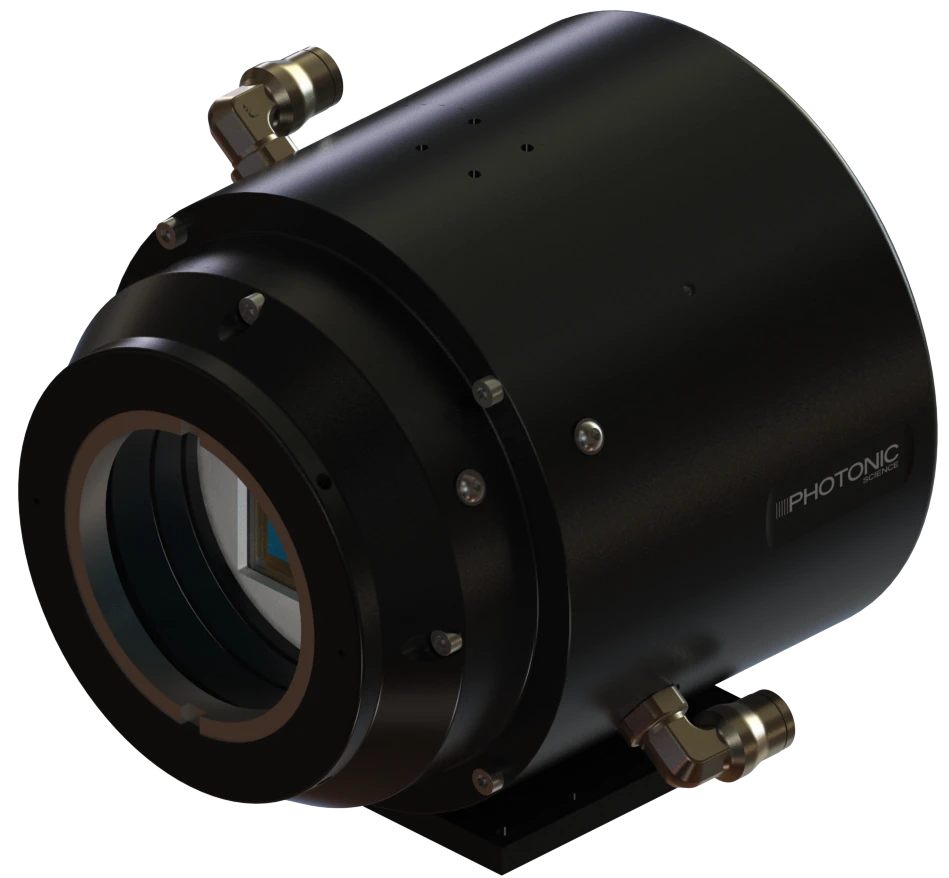
Original camera outline and dimensions for the source-sheet configuration. Confirm the mount and interface for the selected model.
Build your enquiry
Choose a published configuration, add the integration topics you want to discuss, and keep the exact model in your enquiry.
| Configuration | Pixels | Pitch / input | Cooling / acquisition | Read noise |
|---|---|---|---|---|
| 2048 × 2048 | 11 µm 22.5 × 22.5 mm | −25°C with water cooling 18 fps | <2 e− rms | |
| 2048 × 2048 | 11 µm 22.5 × 22.5 mm | −25°C with water cooling 23 fps | <2 e− rms |
Technical overview
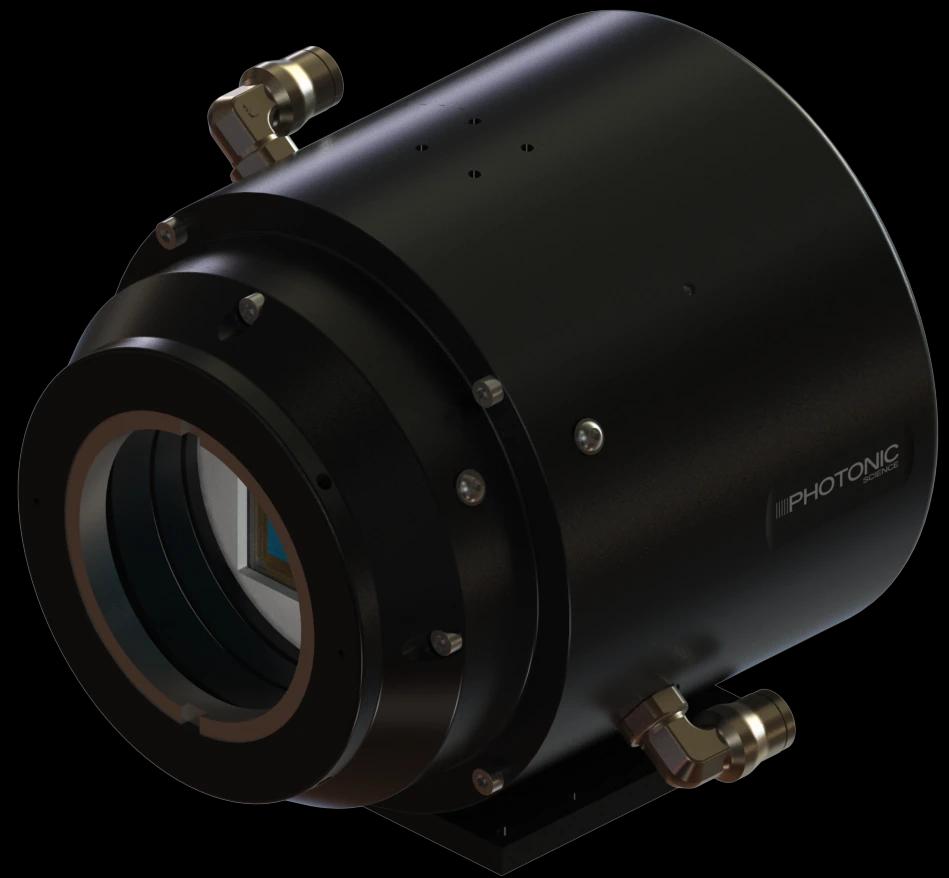
Cooled, low-noise scientific imaging with 11 µm pixels and Camera Link or GigE acquisition.
| Resolution | 2048 × 2048 pixels |
|---|---|
| Pixel pitch | 11 µm |
| Read noise | <2 e− rms |
| Digitization | 16-bit |
Explore the wider range
6 product ranges · 7 camera configurations

Cooled, low-noise scientific imaging with a 36.9 mm square sensor, 9 µm pixels and interface-specific acquisition modes.

Low-noise sCMOS imaging from daylight to starlight, with a compact, low-SWaP HD format.

Low-noise sCMOS imaging from daylight to starlight, with a 9.4MP sensor and 5GigE interface.

An 18 mm image intensifier fibre-coupled to a CCD readout, with nanosecond gating and a choice of photocathode and phosphor.

An 18 mm image intensifier fibre-coupled to a CMOS readout, with nanosecond gating and a choice of photocathode and phosphor.

Representative equipment; the complete configuration depends on your application.
Custom camera and detector integration from sensor selection and cooling through mechanics, interfaces and software.